
Cuba Travel Guide: Havana, Viñales & Beyond
Categories
Tags
Cuba is a Caribbean island where crumbling colonial grandeur, live salsa on every corner, classic American cars, and white-sand beaches collide. First-timers should spend two weeks covering Havana, Viñales, Trinidad, and Varadero between November and April during the dry season, staying in casas particulares for the most authentic experience.
Cuba Travel Guide: Havana, Viñales & Beyond
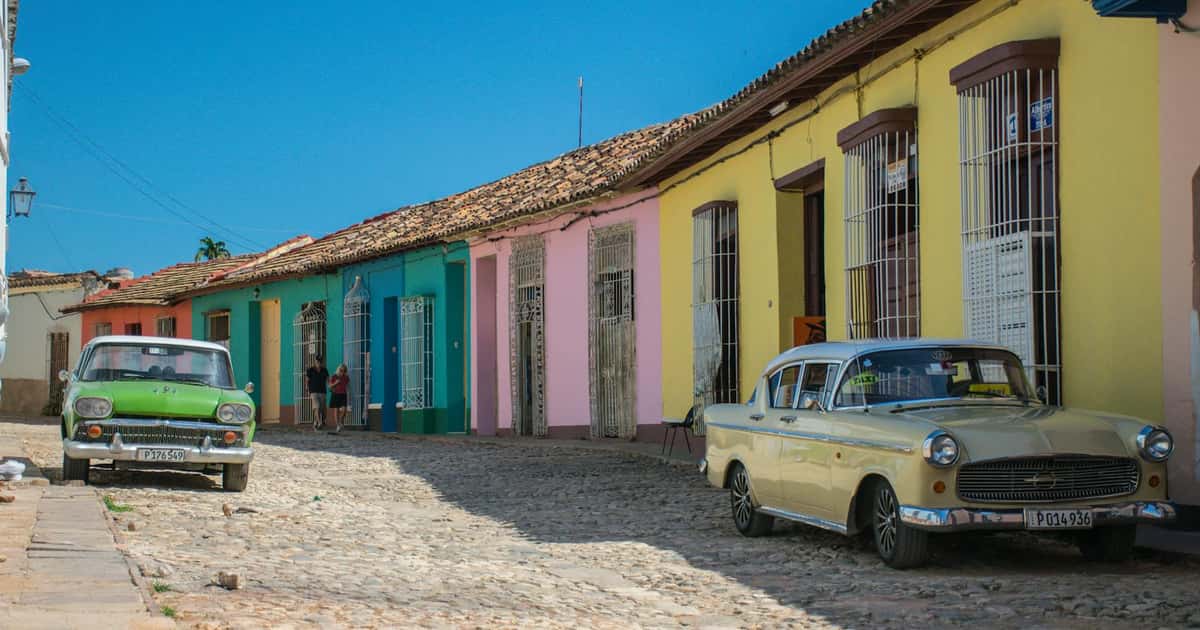
Cuba hits you the moment you step outside the airport terminal—the warm Caribbean air, the pastel facades of buildings that have weathered decades of salt and sun, and the unmistakable growl of a 1950s Chevrolet rolling down the street. This island is like nowhere else in the world: a place where grand colonial plazas sit next to crumbling apartment blocks, where live son music drifts from open doorways on a Tuesday afternoon, and where you can spend the morning in a tobacco field and the afternoon on a white-sand beach. This guide covers everything you need to plan an unforgettable Cuba trip.
Quick Facts at a Glance
- Best time to visit: November–April (dry season)
- Currency: Cuban peso (CUP) — bring cash, preferably euros
- Language: Spanish (English spoken in tourist areas)
- Visa: Most nationalities need a tourist card; check requirements for yours
- Recommended duration: 10–14 days for a first visit
- Budget range: Cuba can be surprisingly affordable if you stay in casas particulares and eat at local spots, but costs add up quickly at resorts and tourist restaurants
- Getting around: Víazul buses, colectivo taxis (shared classic cars), domestic flights for longer stretches
Why Visit Cuba?
Living history. Cuba is a time capsule in the best possible way. Habana Vieja's UNESCO-listed streets, the perfectly preserved colonial core of Trinidad, and the French-inspired boulevards of Cienfuegos all tell the story of centuries of Spanish, French, African, and Caribbean influences layered on top of each other.
Music and culture everywhere. This is an island that moves to a rhythm. Son, salsa, rumba, trova—live music is not something reserved for concert halls here. It happens in living rooms, on street corners, and in small bars at any hour. You do not need to seek it out; it finds you.
Extraordinary landscapes. Beyond the cities, Cuba surprises: the limestone mogotes of Viñales rising from red-earth tobacco fields, the underwater cenotes and coral reefs of the Bay of Pigs, the lush Sierra Maestra mountains, and over three thousand kilometers of coastline ranging from rugged cliffs to powder-white beaches.
The casa particular experience. Staying with a Cuban family in their licensed homestay is not just a budget choice—it is the single best way to understand daily life on the island. Your hosts cook for you, share stories, recommend hidden spots, and treat you like family.
A destination in transition. Cuba is changing, and traveling there now means experiencing a country caught between its revolutionary past and an uncertain but fascinating future. That tension makes every conversation, every meal, every cab ride more interesting.
Cuba Region by Region
Havana (La Habana)
Cuba's capital is the starting point for almost every visitor, and it deserves at least three full days.
Habana Vieja (Old Havana). The UNESCO World Heritage core is a maze of cobblestone streets, grand plazas, and pastel-colored buildings undergoing careful restoration. Start at the Plaza de la Catedral, wander through the Plaza Vieja, and do not miss the Calle Obispo pedestrian street linking the main sights. The Museo de la Revolución in the former Presidential Palace offers a dense, Cuban-perspective history lesson. La Bodeguita del Medio and El Floridita, the bars claiming to have invented the mojito and daiquiri respectively, are touristy but fun.
The Malecón. Havana's eight-kilometer seafront promenade is the city's social artery. Locals gather here at sunset to fish, socialize, drink rum, and play music. Walk it at golden hour, then come back after dark when the wall comes alive with a different energy.
Classic American cars. The 1950s Chevrolets, Buicks, and Pontiacs cruising Havana are not a tourist show—they are daily transport, kept alive with Soviet engines and Cuban ingenuity. You can hire one for a tour along the Malecón or through the neighborhoods, and it is one of the most iconic experiences on the island.
Fusterlandia. In the Jaimanitas neighborhood on Havana's western edge, artist José Fuster has transformed his home and much of the surrounding community into a sprawling, Gaudí-inspired mosaic wonderland. It is colorful, surreal, and worth the short taxi ride.
Live music. Havana's music scene runs deep. For son and salsa, check out La Zorra y el Cuervo in Vedado (a jazz club in a basement), or simply follow the sound of live music drifting from any doorway in Habana Vieja. Buena Vista Social Club–style ensembles play nightly at various venues.
Viñales and the Valley
Roughly two and a half hours west of Havana by road, Viñales is Cuba's green heart and a world away from the capital's chaos.
Valle de Viñales. This UNESCO-listed valley is defined by dramatic limestone formations called mogotes—flat-topped hills rising sheer from the valley floor like something from a Chinese scroll painting. Red-earth tobacco fields, royal palms, and wooden drying barns complete a landscape that is genuinely stunning.
Tobacco farms and cigars. Viñales is Cuba's prime tobacco-growing region. Local farmers will walk you through the entire process—planting, harvesting, air-drying in wooden barns, fermenting, and hand-rolling cigars. You can buy directly from the farmers (often at much better quality-to-price ratios than state stores). Remember that taking Cuban cigars back to the US has specific restrictions; check current customs regulations before you travel.
Horseback riding. One of the best ways to explore the valley is on horseback with a local guide. Rides typically last a few hours and wind through tobacco fields, alongside mogotes, and to viewpoints overlooking the entire valley.
Caves. The karst landscape is riddled with caves. Cueva del Indio features an underground river you explore by boat, and Cueva de José Miguel holds pre-Columbian paintings. The Mural de la Prehistoria, a massive painting on a cliff face, is worth a quick stop even if the art itself is more ambitious than refined.
Plan on two nights in Viñales—long enough to do a horseback ride, visit a tobacco farm, and catch a sunset from a valley-side viewpoint.
Trinidad
Three hours southeast of Havana (or a scenic drive from Viñales via the coast), Trinidad is Cuba's crown jewel of colonial preservation.
The UNESCO colonial core. Trinidad was founded in 1514 and its historic center is remarkably intact—cobblestone streets, pastel-painted houses with terracotta roofs, iron grilles on every window, and bougainvillea spilling over walls. The entire centro histórico is a UNESCO World Heritage Site, and wandering it feels like stepping back several centuries.
Plaza Mayor. The heart of Trinidad is this sloping plaza surrounded by pastel-colored former palaces, now housing museums. The Museo Romántico and Museo de Arquitectura Colonial are both worth a visit. The church on the plaza, the Iglesia Parroquial de la Santísima Trinidad, has a notable wooden altar.
Nightlife. Trinidad punches well above its size for evening atmosphere. The Casa de la Música on the steps near Plaza Mayor hosts live salsa and son every night, and the crowd—locals and travelers mixed together—spills into the street. It is one of the best places in Cuba to dance or simply watch.
Nearby: Valle de los Ingenios. A short drive from Trinidad, this valley was the center of Cuba's 19th-century sugar industry. The Iznaga Tower at the former Manaca Iznaga plantation offers panoramic views from its bell tower—an important historical site that tells the story of the sugar trade and the enslaved people who powered it.
Nearby: Topes de Collantes. In the Sierra del Escambray mountains above Trinidad, this national park offers hiking trails through cloud forest to waterfalls like Salto del Caburní. It is a refreshing contrast to the coastal heat and a good half-day or full-day excursion.
Cienfuegos
Known as the "Pearl of the South," Cienfuegos sits on a stunning natural bay on Cuba's southern coast and is distinct for its French-influenced architecture. Founded by French settlers from Bordeaux and Louisiana in 1819, the city has a cleaner, more neoclassical feel than Havana or Trinidad.
The Parque José Martí is the central square, anchored by the beautiful Teatro Tomás Terry (a 19th-century theater with original frescoes and seating) and the Arco de Triunfo—reportedly the only triumphal arch in Cuba. Stroll the Paseo del Prado, the longest pedestrian street in Cuba, down to the Punta Gorda peninsula where grand historic homes line the water. Cienfuegos makes an easy day trip from Trinidad or an overnight stop.
Varadero and the Cays
Cuba's beach reputation is well-earned, and the north coast delivers.
Varadero. Cuba's most famous beach resort stretches along the Hicacos Peninsula on the north coast, roughly two hours from Havana by road. Twenty-plus kilometers of white sand and turquoise water are lined with all-inclusive resorts ranging from mid-range to luxury. It is not the "real Cuba" most travelers seek, but if you want a few days of uncomplicated beach time, Varadero delivers.
Cayo Coco and Cayo Guillermo. These cays off Cuba's north coast in the Jardines del Rey archipelago are connected to the mainland by a long causeway. The beaches are pristine, the resorts are self-contained, and the birdlife (including a large flamingo colony) is surprisingly rich. They are more isolated than Varadero and have less to offer outside the resort gates.
Cayo Largo del Sur. Farther south, Cayo Largo is a smaller, quieter cay with excellent beaches and a more relaxed atmosphere. Access is primarily by domestic flight. The diving here is some of the best in Cuba.
For most travelers, a few nights in Varadero (or a day trip from Havana) is enough beach time. Those craving remote, unspoiled coastline should consider the cays.
Santiago de Cuba and the East
Cuba's second-largest city, Santiago de Cuba, sits in the island's southeastern corner and has a character entirely its own.
Afro-Cuban culture and music. Santiago is the cradle of Cuban son, the birthplace of the Revolution (Fidel Castro launched his attack from here), and the heartland of Afro-Cuban religious and musical traditions. The city feels rawer and more Caribbean than Havana—hotter, louder, more intense. Casa de la Trova hosts live traditional music nightly, and during the annual Fiesta del Fuego in July, the entire city erupts in celebration.
Sierra Maestra. The rugged mountain range behind Santiago is where Castro and his guerrillas hid in the 1950s. You can hike to Comandancia de la Plata, the rebel headquarters preserved in the jungle. The Sierra Maestra is also home to Pico Turquino, Cuba's highest peak at roughly 1,974 meters.
Santiago is a long journey from Havana (a full day by road, or a short domestic flight). Most first-timers with limited time skip it, but if you have three weeks or a deep interest in Cuban music and history, it is worth the trip.
Bay of Pigs / Playa Girón
The Bahía de Cochinos (Bay of Pigs) on Cuba's southern coast is famous for the failed 1961 US-backed invasion, but today it draws travelers for a different reason: outstanding diving and snorkeling.
Cenotes and reef diving. The coastline here features inland cenotes—sinkholes connected to the sea by underwater cave systems—where you can snorkel or dive in crystal-clear water. The offshore reef is healthy and accessible, with good visibility and abundant marine life. Caleta Buena and Cueva de los Peces (the deepest inland cenote in Cuba) are popular spots.
The Bay of Pigs sits conveniently between Havana and Trinidad, making it an easy stop on an overland route. Even a half-day snorkeling break here is worthwhile.
Top Things to Do
Music and Dance
Cuba's musical heritage is reason enough to visit. Take a salsa lesson in Havana or Trinidad, catch live son at a casa de la música, visit the Buena Vista Social Club–style shows in Havana, or simply follow the drums. Santiago de Cuba's trova tradition is the deepest on the island.
Classic-Car Tours
Hiring a beautifully maintained 1950s American car for a tour of Havana is a quintessential Cuba experience. Drivers double as informal guides, pointing out landmarks as you cruise the Malecón and through Vedado and Miramar. Negotiate the price and duration before you set off.
Beaches
From the all-inclusive comfort of Varadero to the wild sands of Cayo Largo, Cuba's coastline caters to every beach style. For something quieter, seek out the beaches near Trinidad (Playa Ancón) or the remote cays.
Tobacco and Cigars
Visit a tobacco farm in Viñales to see the entire cigar-making process from seed to smoke. The farmers are generous with their time and knowledge, and buying cigars directly supports local families.
Diving and Snorkeling
Cuba's coral reefs are among the healthiest in the Caribbean, thanks in part to limited coastal development. The Bay of Pigs, Jardines de la Reina (a remote marine reserve accessible via liveaboard), and the waters around Cayo Largo all offer excellent diving.
Colonial History
Walk through Habana Vieja, Trinidad, and Cienfuegos to trace five centuries of Spanish, French, and Afro-Caribbean history. Each city tells a different chapter of Cuba's colonial and post-colonial story.
Suggested 14-Day Itinerary
| Days | Destination | Focus |
|---|---|---|
| 1–4 | Havana | Old Havana, Malecón, classic cars, live music, Fusterlandia |
| 5–6 | Viñales | Valley hiking, horseback ride, tobacco farm, caves |
| 7 | Bay of Pigs / en route | Snorkeling at Cueva de los Peces |
| 8–10 | Trinidad | Colonial core, Plaza Mayor, Casa de la Música, Topes de Collantes |
| 11 | Cienfuegos | Day trip or overnight—French architecture, Teatro Tomás Terry |
| 12–13 | Varadero | Beach relaxation |
| 14 | Depart from Havana | Return to Havana for outbound flight |
This route is doable by road without domestic flights. Víazul buses and colectivo taxis connect all of these destinations. If you have extra days, add Santiago de Cuba (fly from Havana) or extend your beach time at one of the cays.
Best Time to Visit
November through April (dry season): This is the ideal window. Humidity drops, rainfall is infrequent, and temperatures sit in the mid-20s to low 30s Celsius—warm and pleasant without being oppressive. December through March is peak tourist season, so book casas and transport in advance during these months.
May through October (wet season): Heat and humidity climb, and afternoon thunderstorms are common. This is low season, meaning fewer crowds and lower prices at resorts—but also the risk of hurricanes, especially from August to October. If you travel during this window, build flexibility into your plans and consider travel insurance that covers hurricane disruptions.
Cuba sits in the tropics, so temperatures stay warm year-round. What changes most is not the temperature but the humidity and rainfall.
Getting There & Around
International flights. Most visitors fly into Havana's José Martí International Airport (HAV). Direct flights operate from Canada, Mexico, Europe, and several Latin American countries. US-based travelers typically fly via a third country or on authorized direct routes, depending on current regulations.
Víazul buses. The main long-distance bus service for travelers, Víazul connects Havana, Viñales, Trinidad, Cienfuegos, Varadero, Santiago de Cuba, and other major destinations. Buses are air-conditioned and reasonably reliable. Book in advance during peak season.
Colectivo taxis. Shared classic-car taxis operate between major cities on roughly fixed schedules. You share the car (usually a 1950s American model) with other travelers going the same direction. They are faster and more atmospheric than buses, and not dramatically more expensive. Your casa host can usually arrange one.
Domestic flights. Cubana de Aviación and other carriers operate domestic routes, most usefully between Havana and Santiago de Cuba or the eastern cays. Schedules can change, and delays happen—build buffer time if you go this route.
Local transport. Within cities, taxis (both classic cars and modern vehicles), bicycle taxis, and local buses are all available. In Havana, the hop-on-hop-off tourist bus covers the main sights.
Where to Stay
Casas Particulares (Strongly Recommended)
The single best accommodation choice in Cuba. Casas particulares are government-licensed homestays where a Cuban family rents a private room (or apartment) in their home. You get a private bedroom, usually a private bathroom, and often the option of a home-cooked breakfast and dinner for a modest extra charge.
Why casas are superior to hotels for most travelers: they are significantly cheaper, you interact directly with Cuban families, you eat home-cooked Cuban food, and your hosts provide local knowledge that no guidebook can match. Book through established platforms or ask your previous casa host to recommend the next one—this chain of referrals is how most travelers move through Cuba.
Hotels and Resorts
Havana has a range of hotels from budget to high-end, including restored grand hotels like the Hotel Nacional de Cuba and the Hotel Saratoga. In Varadero and the cays, the accommodation landscape is dominated by all-inclusive beach resorts—some quite good, others tired. Outside the main tourist zones, hotel quality drops and casas become the clearly better option.
Food & Drink
Cuban food has a reputation for being uninspiring, and state-run restaurants often justify that stereotype. But eat in the right places and you will discover a cuisine worth celebrating.
Signature Dishes
- Ropa vieja — Cuba's national dish: shredded beef simmered in a rich tomato-based sauce with peppers, onions, and garlic. The name means "old clothes," a reference to the shredded appearance.
- Moros y cristianos — Black beans and rice cooked together, a staple side dish served with nearly every meal.
- Lechón asado — Slow-roasted suckling pig, marinated in mojo (a citrus-garlic sauce). Often served at celebrations and on weekends.
- Tostones — Twice-fried green plantain slices, crispy and salty, served as a snack or side.
- Yuca con mojo — Boiled cassava topped with garlic-citrus sauce.
Restaurants vs. Paladares
State-run restaurants (often simply called "restaurants") vary widely in quality. Some are decent; many serve bland, overpriced food.
Paladares are privately owned restaurants, and they are where the exciting eating happens in Cuba. Since the government expanded private restaurant licenses, paladares have multiplied and improved dramatically. They tend to serve better food at fairer prices than state establishments, and the atmosphere is warmer. In Havana, Trinidad, and Cienfuegos, seek out paladares for your evening meals.
Drink
- Rum — Cuban rum (Havana Club being the most widely known brand) is world-class. Sip it neat or mixed.
- Mojito — White rum, fresh mint, lime, sugar, and soda water. Claimed by La Bodeguita del Medio in Havana.
- Daiquiri — White rum, lime juice, and sugar, blended or shaken with ice. Claimed by El Floridita.
- Cristal and Bucanero — Cuba's two main beers. Cristal is lighter; Bucanero is a stronger, darker lager.
Costs & Budgeting
Cuba's cost structure is unusual because of the dual economy and the impact of the US embargo. Prices fluctuate, and what you pay can depend on where you go, how you book, and the current economic situation. The following ranges are qualitative and approximate.
Budget travelers staying in casas particulares, eating at paladares and street stalls, and using Víazul buses or colectivos can travel at a modest daily cost—comparable to budget travel in other Caribbean or Central American nations.
Mid-range travelers combining casas with the occasional hotel, eating at good paladares, taking taxis, and booking a few guided tours will spend a moderate amount per day—less than a comparable trip to a US or Western European destination but more than budget backpacking.
Luxury travelers staying at top-end Havana hotels and Varadero resorts should expect international resort pricing—comparable to upscale Caribbean travel elsewhere.
Key cost considerations: Cash is king. You cannot rely on cards, so budget carefully and bring more cash than you think you need. Casas, paladares, and local transport offer the best value. State restaurants and tourist-oriented shops tend to be poorer value.
Practical Essentials
Money
This is the single most important thing to get right in Cuba:
- Bring cash. Euros are the easiest foreign currency to exchange. Canadian dollars are also accepted. US dollars can carry an additional surcharge when exchanged.
- US-issued credit and debit cards do not work in Cuba due to the financial embargo. Even non-US cards can be unreliable.
- The old convertible peso (CUC) was withdrawn in 2021. Cuba now uses only the Cuban peso (CUP). Exchange your foreign currency at banks or official exchange offices (cadecas).
- ATMs exist but are unreliable and may not accept your card. Do not plan on using them.
- Bring more cash than you expect to spend. Running out of money in Cuba with no way to access more is a real problem.
Connectivity
Internet in Cuba is limited. The main provider is ETECSA through its Nauta service. You purchase scratch-off time cards at ETECSA offices, some hotels, or from street vendors, then connect at designated wifi hotspots in parks, plazas, and hotel lobbies. Connection speeds are slow by international standards. Mobile data is available through ETECSA SIM cards but coverage and speed vary. Set your expectations accordingly: you will be offline much of the time, which many travelers come to appreciate.
Tourist Card / Visa
Most visitors to Cuba need a tourist card (sometimes called a visa), which is typically a separate document from your passport. How you obtain it depends on your nationality and your airline—some airlines include it in the ticket price or sell it at the check-in desk. Check the requirements for your specific nationality before you travel, and confirm with your airline whether the tourist card is handled at the airport.
For US Travelers
US citizens and residents are subject to additional regulations. Travel to Cuba from the United States must fall under an authorized OFAC category. The most commonly used category for independent travelers is "Support for the Cuban People," which requires maintaining a full-time schedule of activities that support ordinary Cubans (staying in casas particulares, eating at paladares, and engaging with local cultural activities generally satisfies this).
Important: US government regulations regarding Cuba travel can and do change. Do not rely on any single source—including this guide—for legal advice. Verify current OFAC regulations directly through the US Department of the Treasury website before making travel plans.
Final Thoughts
Cuba is not an easy destination, and that is part of its power. The internet will frustrate you, the cash-only economy requires planning, and the infrastructure does not always work the way you expect. But in exchange, you get something increasingly rare: a travel experience that feels genuinely different from everywhere else. The music, the architecture, the warmth of the Cuban people, the landscapes, the sheer strangeness of a country frozen in time and yet full of life—Cuba stays with you long after you leave. Come with patience, curiosity, and enough cash, and you will have one of the most memorable trips of your life.
Frequently Asked Questions
Cuba is one of the safest countries in the Caribbean for travelers. Violent crime against tourists is rare, and the police presence in tourist areas is visible. Petty theft can happen in crowded spots, so use the same common sense you would anywhere—keep valuables out of sight and avoid walking alone in poorly lit areas at night.
The best time to visit Cuba is the dry season from November through April, when humidity is lower, rainfall is minimal, and temperatures are pleasant. December to March is peak season. The wet season runs from May to October and brings high humidity, afternoon downpours, and the risk of hurricanes, particularly from August to October.
US citizens can travel to Cuba, but only under authorized categories defined by the US Office of Foreign Assets Control (OFAC). The most common category for independent travelers is 'Support for the Cuban People,' which requires a full-time schedule of activities that support ordinary Cubans. US travelers should verify current OFAC regulations before booking, as rules can change.
No. US-issued credit and debit cards generally do not work in Cuba due to the ongoing financial embargo. Even non-US cards can be unreliable. You should bring enough cash for your entire trip—euros are widely exchanged at banks and cadecas. Bring more than you think you need, since accessing extra funds on the island is extremely difficult.
A well-rounded first visit needs at least ten days to two weeks. This allows time for Havana (three to four days), Viñales (two days), Trinidad (two days), and either Varadero or another beach destination (two to three days). If you want to include Santiago de Cuba and the eastern provinces, plan for three weeks.
Cuba uses the Cuban peso (CUP) as its sole currency—the old convertible peso (CUC) was withdrawn from circulation in 2021. Bring cash in euros or Canadian dollars, which are easily exchanged at banks and official exchange offices (cadecas). US dollars can be exchanged but typically carry an additional surcharge. Do not rely on ATMs or card payments.
Internet access exists but is limited compared to most countries. The main provider is ETECSA (Nauta), and you connect by purchasing time cards at ETECSA offices or hotels, then logging in at designated wifi hotspots in parks, hotels, and some public squares. Mobile data plans are improving but coverage is patchy outside cities. Expect to be offline much of the day.
Casas particulares are licensed Cuban homestays—essentially the Cuban equivalent of a bed and breakfast. The Cuban family rents out a private room (or sometimes an entire apartment) in their home, complete with its own entrance and bathroom. Staying in a casa particular is the most authentic and affordable way to experience daily Cuban life, and your hosts are invaluable sources of local advice, home-cooked meals, and connections.
Adventure Knit Editorial
Destination research compiled and fact-checked by the Adventure Knit editorial team from published sources, operator itineraries, and official tourism boards. Spot something out of date? Tell us at hello@adventureknit.com.
Related Stories
 Ghana
GhanaAccra Ghana: Ultimate Vibrant Capital Travel Guide
Complete Accra travel guide covering Makola Market, Kwame Nkrumah Mausoleum, Labadi Beach, and Ghanaian cuisine. Expert tips for your perfect West African adventure.
 Australia
Sydney Australia: Ultimate Harbor City Travel Guide
Complete Sydney travel guide covering Sydney Opera House, Bondi Beach, Harbour Bridge, and Australian cuisine. Expert tips for your perfect Australian adventure.
 Uruguay
Uruguay Travel Guide: Montevideo, Colonia & Punta del Este
Complete Uruguay travel guide covering Montevideo, Colonia del Sacramento, Punta del Este, the wild Rocha coast and gaucho country, with itinerary, food and tips.
Enjoyed this article?
Explore more stories from our adventures around the world