
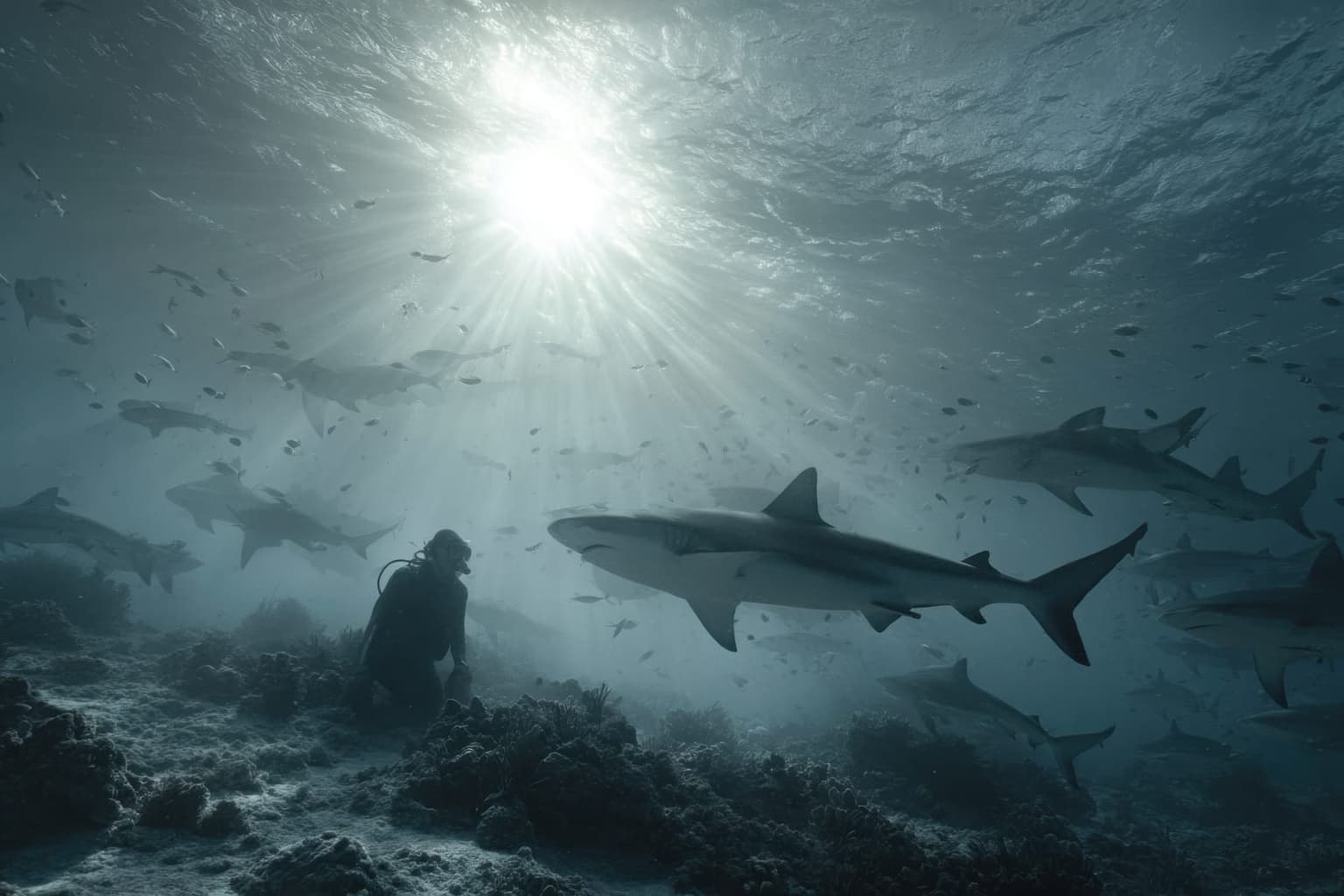
Freediving with Sharks Australia: The Ultimate Cage-Free Shark Experience
Categories
Tags
Cage-free freediving with sharks in Australia takes place at three main locations: Port Lincoln in South Australia for great whites, Ningaloo Reef in Western Australia for tiger sharks, and the Great Barrier Reef for reef shark species. A 3-day guided package costs AUD 1,800 to 3,500, with a total trip budget of roughly AUD 2,300 to 4,800. Participants need an AIDA 2-Star freediving certification or equivalent, at least 2 years of regular freediving experience, and comfortable breath-holds of 2 minutes or more. Optimal conditions fall in April-May and September-October.
Freediving with Sharks Australia: The Ultimate Cage-Free Shark Experience
Descending into the crystal-clear waters off Port Lincoln, your heart races as a 5-meter great white shark approaches with deliberate, graceful movements. Unlike cage diving, you're free—no barriers between you and one of nature's most magnificent predators. This is freediving with sharks in Australia, the ultimate test of trust, understanding, and respect for marine life. After completing over 500 freedives with sharks across Australian waters, I've learned that these encounters aren't about danger—they're about connection, education, and challenging our perceptions of these misunderstood animals. Welcome to the most profound wildlife experience on Earth.
Quick Facts at a Glance
- Primary Locations: Port Lincoln (great whites), Ningaloo Reef (tiger sharks), Great Barrier Reef (reef sharks)
- Shark Species: Great white, tiger, bull, grey reef, whitetip reef
- Maximum Shark Size: Up to 6 meters (great white)
- Water Visibility: 20-50 meters (exceptional clarity)
- Water Temperature: 18°C-26°C (64°F-79°F)
- Dive Duration: 1-3 minutes per breath-hold
- Dive Depth: 5-20 meters (surface-oriented encounters)
- Group Size: 2-4 freedivers per safety team
- Season: April-May and September-October (optimal conditions)
- Safety Equipment: Shark shields, emergency oxygen, full safety team
Why Experience Freediving with Sharks in Australia?
Australia offers the world's most diverse and accessible shark freediving experiences. From the legendary great whites of South Australia to the tiger sharks of Western Australia and the abundance of reef sharks on the Great Barrier Reef, these waters provide unparalleled opportunities for intimate, cage-free encounters with multiple shark species.
What Makes This Experience Extraordinary:
- Cage-Free Freedom: Experience sharks without barriers or cages
- Multiple Species: Encounter up to 5 different shark species on one trip
- World-Class Visibility: Exceptional water clarity for optimal encounters
- Conservation Focus: Support shark conservation through eco-tourism
- Professional Safety: Expert teams with shark behavior expertise
- Scientific Contribution: Participate in citizen science and shark research
- Life-Changing Perspective: Transform your understanding of shark behavior
Understanding Australia's Prime Shark Freediving Locations
Port Lincoln, South Australia (Great White Sharks)
The Neptune Islands, accessible from Port Lincoln, are world-famous for great white shark encounters. This location offers the most reliable great white sightings globally, with sharks ranging from 3-6 meters. The area's fur seal colonies attract resident great whites year-round.
Best Experience:
- Shark Size: 3-6 meters
- Water Temperature: 14°C-18°C (wetsuit required)
- Visibility: 15-30 meters
- Season: May-September (peak great white activity)
Ningaloo Reef, Western Australia (Tiger Sharks)
Ningaloo Reef's pristine waters attract tiger sharks during their annual migration. These magnificent predators, reaching 4-5 meters, are known for their curiosity and distinctive tiger-like stripes. The reef's diverse ecosystem also hosts reef sharks, manta rays, and whale sharks.
Best Experience:
- Shark Size: 3-5 meters
- Water Temperature: 22°C-26°C
- Visibility: 20-40 meters
- Season: April-July (tiger shark migration)
Great Barrier Reef, Queensland (Reef Sharks)
The Great Barrier Reef offers accessible encounters with multiple reef shark species: grey reef, whitetip reef, blacktip reef, and occasionally lemon sharks. This location is ideal for beginners due to warmer waters, excellent visibility, and multiple shark encounter opportunities.
Best Experience:
- Shark Size: 1.5-3 meters
- Water Temperature: 24°C-28°C
- Visibility: 20-50 meters
- Season: Year-round (April-October optimal)
Perfect 3-Day Shark Freediving Adventure Itinerary
Day 1: Arrival & Training
Arrive at selected location (Port Lincoln, Exmouth, or Cairns). Complete comprehensive safety briefing, equipment orientation, and shark behavior workshop. Practice freediving techniques in pool or controlled conditions. Evening dinner with safety team and discussion of tomorrow's shark encounter plan.
Day 2: First Shark Encounter
Early morning departure to dive site. Pre-dive briefing with current shark activity and positioning strategy. First freediving session with sharks (2-3 hours). Focus on relaxed breathing, body positioning, and shark observation. Afternoon debriefing and optional second session. Evening shark conservation presentation.
Day 3: Advanced Encounters
Extended freediving session focusing on multiple shark species and advanced techniques. Photography opportunities, citizen science data collection (if applicable), and final shark encounters. Afternoon equipment return, final debriefing, and departure preparation.
Essential Freediving Equipment
Provided by Tour Operators
- Wetsuit: 5mm-7mm wetsuit (Port Lincoln), 3mm (Ningaloo/Great Barrier Reef)
- Fins: Long-blade freediving fins for efficient propulsion
- Mask & Snorkel: Low-volume mask, flexible snorkel
- Weight Belt: Properly weighted for neutral buoyancy
- Safety Equipment: Shark shield, emergency oxygen, safety floats
- Communication: Underwater signaling devices
What You Need to Bring
- Personal Freediving Gear: If you own preferred equipment
- Sun Protection: Reef-safe sunscreen, rash guard, hat
- Waterproof Camera: GoPro or underwater housing (optional)
- Towel & Change of Clothes: For after diving
- Hydration: Water bottle for surface intervals
- Personal Items: Medications, seasickness medication
Shark Behavior & Encounter Protocols
Understanding Shark Body Language
Sharks communicate through body positioning and movement:
- Relaxed Posture: Horizontal swimming, relaxed fin movements
- Curiosity: Slow approach, circling behavior
- Stress/Tension: Arched back, rapid fin movements, erratic swimming
- Aggression: Lowered pectoral fins, hunched posture, rapid turns
Best Encounter Practices
- Maintain Eye Contact: Sharks approach from behind less when observed
- Stay Vertical: Descend and ascend vertically, don't swim horizontally at sharks
- Controlled Breathing: Maintain slow, relaxed breathing before diving
- Don't Touch: Never attempt to touch or feed sharks
- Respect Space: Allow sharks to initiate approach, don't chase them
Safety Positioning
Always position yourself with escape routes and maintain awareness of shark movements. Safety teams use shark shields and position boats for rapid response if needed.
Safety Protocols & Emergency Procedures
Pre-Dive Safety Checklist
- Verify weather conditions and sea state
- Complete thorough equipment check
- Review emergency procedures with safety team
- Confirm shark shield operation
- Check communication devices
- Verify medical fitness and hydration status
Emergency Procedures
- Shark Aggression: Ascend slowly, maintain eye contact, signal safety team
- Equipment Failure: Surface immediately, signal for assistance
- Lost Diver: Follow emergency search procedures, activate full team response
- Marine Stings/Bites: Immediate first aid, evacuate if necessary
- Medical Emergency: Activate emergency medical evacuation plan
Shark Shield Technology
Modern shark shields emit electrical fields that deter sharks without harming them. While not 100% effective, they significantly increase safety and are mandatory for cage-free shark freediving.
Costs & Budget Breakdown
Guided Shark Freediving Experience (3 Days)
- Tour Package: AUD 1,800-3,500
- Includes: Professional guides, equipment, safety team, boat transportation, accommodation (1-2 nights)
- Flights: AUD 300-800 (domestic flights within Australia)
- Travel Insurance: AUD 100-200 (must cover extreme water sports)
- Personal Items: AUD 100-300
- Total Budget: AUD 2,300-4,800
Additional Costs to Consider
- Photography Equipment: AUD 500-2,000 (underwater cameras, housings)
- Freediving Certifications: AUD 300-800 (if not already certified)
- Extended Stay: AUD 150-300 per night
- Meals Outside Package: AUD 50-100 per day
- Souvenirs: AUD 50-200
Photography & Filming Tips
Best Camera Angles
Capture the relationship between freediver and shark by shooting from slightly below, emphasizing the shark's grace and size. Include surface shots showing the freediver's relationship with the ocean and the sharks' natural behavior.
GoPro Settings for Shark Freediving
- Resolution: 4K at 60fps for smooth motion
- Frame Rate: Higher frame rates for slow-motion shark movement
- Field of View: Wide to capture shark and freediver in frame
- White Balance: Auto or manual adjustment for blue water conditions
- Protune: Flat color profile for post-processing flexibility
Photography Tips
- Respect Shark Space: Don't harass sharks for better photos
- Natural Light: Use available light for authentic shark behavior
- Silhouette Shots: Dramatic surface silhouettes against the sky
- Eye Contact: Capture sharks looking directly at the camera when safe
- Wide Angle: Show the scale and grace of these magnificent animals
Best Time to Visit
Peak Season (April-May, September-October)
Advantages:
- Optimal water visibility and conditions
- Multiple shark species present
- Milder temperatures (comfortable for extended sessions)
- Good shark activity levels
Disadvantages:
- Higher demand for tours
- May require booking 3-6 months in advance
Summer Season (December-February)
Advantages:
- Warmer water temperatures (especially northern locations)
- Longer daylight hours
- Great Barrier Reef prime conditions
Disadvantages:
- Possible stinger season (jellyfish) in northern waters
- Increased boat traffic
- Less predictable great white activity
Winter Season (June-August)
Advantages:
- Peak great white season in South Australia
- Fewer crowds at popular locations
- Excellent water clarity
Disadvantages:
- Cold water (7mm wetsuit required)
- Shorter daylight hours
- Some locations less accessible
Essential Requirements Before Freediving
Experience Prerequisites
- AIDA 2-Star Freediving Certification (or equivalent)
- Minimum 2 years of regular freediving experience
- Comfortable with breath-holds of 2+ minutes
- Excellent swimming abilities in open water conditions
- Mental preparation for close wildlife encounters
- Understanding of shark behavior and conservation
Medical Requirements
- Diving Medical Examination within 12 months
- No contraindications for freediving or extreme water sports
- Good cardiovascular health
- Ability to handle cold water (especially Port Lincoln)
- No severe anxiety around marine wildlife
Physical Preparation
- Breath-Hold Training: Practice 2-4 minute breath-holds
- Cardiovascular Fitness: Regular swimming and cardio training
- Core Strength: For body positioning and control
- Stress Management: Techniques for calm underwater presence
- Cold Tolerance: Cold water acclimatization (especially for South Australia)
Shark Conservation & Education
Australia is a global leader in shark conservation research and protection. Freediving with sharks contributes directly to conservation efforts through:
- Citizen Science: Collecting data on shark sightings and behavior
- Education: Promoting understanding and reducing fear
- Research Support: Funding shark research through eco-tourism
- Protection Advocacy: Supporting marine protected areas
- Sustainable Practices: Responsible wildlife interaction guidelines
Conservation Organizations
Several organizations work to protect Australian shark populations:
- Australian Marine Conservation Society
- Great Barrier Reef Marine Park Authority
- Oceanwide Science Institute
- Flinders University Shark Research Group
Cultural & Ethical Considerations
Indigenous Knowledge
Aboriginal Australians have lived in harmony with sharks for over 65,000 years. Many communities have deep spiritual connections to sharks as totem animals and guardians of the sea. Respect and learn from this traditional knowledge.
Ethical Wildlife Interaction
- No Feeding: Never bait or feed sharks
- No Touching: Respect sharks' space and boundaries
- Minimal Impact: Don't alter natural shark behavior
- Environmental Respect: Don't damage coral or marine habitat
- Photography Ethics: Don't harass for photos
Responsible Tourism
Choose operators who:
- Prioritize shark welfare over tourist experience
- Support conservation and research
- Follow strict wildlife interaction guidelines
- Provide comprehensive education
- Employ local guides and support communities
Training & Progression
Day 1-30: Fundamentals
- Breath-Hold Training: 2-3 minute breath-holds with proper recovery
- Equipment Mastery: Comfort with freediving gear
- Pool Techniques: Static apnea, dynamic apnea, rescue procedures
- Theory: Freediving physiology, equalization, safety protocols
Day 30-90: Open Water Skills
- Ocean Diving: 15-20 meter dives in open water
- Comfort in Waves: Surface swimming and recovery in choppy conditions
- Wildlife Basics: General marine life encounter experience
- Advanced Techniques: Freediving descent and ascent styles
Day 90-180: Shark Preparation
- Shark Education: Shark behavior, body language, safety procedures
- Mental Preparation: Psychological preparation for shark encounters
- Fitness: Extended training for cold water and longer sessions
- Specialized Equipment: Shark shield operation and safety equipment
Day 180+: Advanced Shark Freediving
- Multi-Species Encounters: Experience with different shark species
- Photography Skills: Underwater photography with sharks
- Conservation Contribution: Citizen science and research support
- Leadership: Guiding others and promoting shark conservation
Future of Shark Freediving in Australia
Australia continues to lead the world in shark conservation and responsible wildlife tourism. The future of shark freediving includes:
- Enhanced Technology: Improved shark deterrents and tracking
- Research Integration: Greater citizen science contributions
- Education Programs: Expanded awareness and understanding
- Protected Areas: Expansion of marine protected areas
- Sustainable Tourism: Models for responsible wildlife interaction
Final Thoughts & Planning Tips
Why Shark Freediving Changes You
Freediving with sharks transforms your relationship with nature. The trust required to share the ocean with these magnificent predators creates a profound respect for marine life. You'll return home not just with incredible stories, but with a deeper understanding of sharks' critical role in ocean ecosystems.
Best Planning Tips
- Book 3-6 months in advance: Peak season requires early booking
- Choose appropriate location: Match your skills and interests to the right destination
- Prepare physically: Train for breath-holds and cold water tolerance
- Mental preparation: Understand shark behavior and safety procedures
- Pack appropriately: Cold water gear for South Australia, reef-safe sunscreen for northern locations
- Stay flexible: Weather and shark activity may require itinerary adjustments
When to Book
Peak seasons (April-May, September-October) book 3-6 months in advance. Summer and winter shoulder seasons may have availability with shorter notice. Great white shark expeditions in Port Lincoln require the longest booking window due to limited permits.
Making the Most of Your Experience
- Invest in training: Proper freediving certification is essential
- Learn shark behavior: Understanding sharks enhances the experience
- Support conservation: Choose operators who contribute to research
- Document respectfully: Photography without harassment
- Share your story: Educate others about shark conservation
- Return home with purpose: Advocate for shark protection
Conclusion
Freediving with sharks in Australia represents one of the most profound wildlife experiences available to humans. The combination of exceptional water clarity, diverse shark species, world-class safety standards, and Australia's leadership in shark conservation creates an adventure that is both thrilling and transformative.
Whether you're freediving with great whites off Port Lincoln, swimming alongside tiger sharks at Ningaloo Reef, or encountering reef sharks on the Great Barrier Reef, these cage-free experiences challenge perceptions, build understanding, and create memories that last a lifetime.
As you descend into the blue and watch a great white shark approach with deliberate grace, you'll understand why these encounters are so powerful. They're not just about adrenaline—they're about connection, education, and becoming an advocate for the conservation of one of Earth's most misunderstood predators. Australia's sharks await, and the experience will change you forever.
Frequently Asked Questions
A 3-day guided shark freediving package in Australia costs AUD 1,800 to 3,500, including professional guides, equipment, a safety team, boat transportation, and 1 to 2 nights of accommodation. With domestic flights of AUD 300 to 800 and travel insurance covering extreme water sports at AUD 100 to 200, a realistic total budget is AUD 2,300 to 4,800.
Operators require an AIDA 2-Star freediving certification or equivalent, a minimum of 2 years of regular freediving experience, and comfort with breath-holds of 2 minutes or longer. A diving medical examination within the past 12 months is also required, along with strong open-water swimming ability and tolerance for cold water, especially in South Australia.
April-May and September-October offer the best overall combination of visibility, shark activity, and comfortable conditions. Great white activity around Port Lincoln peaks from May to September, tiger sharks migrate through Ningaloo Reef from April to July, and the Great Barrier Reef offers reef shark encounters year-round with April to October optimal.
The three prime locations are Port Lincoln in South Australia, where the Neptune Islands host great whites of 3 to 6 meters; Ningaloo Reef in Western Australia, visited by tiger sharks of 3 to 5 meters; and the Great Barrier Reef in Queensland, home to grey reef, whitetip, and blacktip reef sharks of 1.5 to 3 meters. The Great Barrier Reef is the most beginner-friendly option thanks to warmer water and excellent visibility.
Cage-free shark freediving is run with strict protocols: groups of 2 to 4 freedivers per safety team, mandatory shark shields that emit electrical deterrent fields, emergency oxygen, and boats positioned for rapid response. Shark shields are not 100 percent effective, so divers are trained in shark body language, keep escape routes open, and never touch or feed sharks.
Book 3 to 6 months in advance for the peak seasons of April-May and September-October. Great white shark expeditions from Port Lincoln require the longest booking window because operator permits are limited, while summer and winter shoulder seasons may have availability on shorter notice.
Adventure Knit Editorial
Destination research compiled and fact-checked by the Adventure Knit editorial team from published sources, operator itineraries, and official tourism boards. Spot something out of date? Tell us at hello@adventureknit.com.
Related Stories
 Philippines
Freediving with Whale Sharks Philippines: Ultimate Donsol Guide
Complete guide to freediving with whale sharks in Donsol, Philippines. Experience gentle giants in their natural habitat. Expert tips, best season, costs, and ethical guidelines.
 Norway
Arctic Cave Diving Spitsbergen: The Ultimate Ice Cave Diving Guide
Expert guide to Arctic cave diving in Spitsbergen, Svalbard. Explore beneath frozen glaciers in extreme conditions with professional diving tips, safety protocols, and equipment guide.
 Mexico
Cave Diving Mexico Yucatan: Explore the World's Best Cenotes
Ultimate guide to cave diving in Mexico's Yucatan Peninsula. Explore breathtaking cenotes, underwater caves, and ancient Mayan sacred sites. Expert tips, certification requirements, costs, and safety protocols.
Enjoyed this article?
Explore more stories from our adventures around the world