
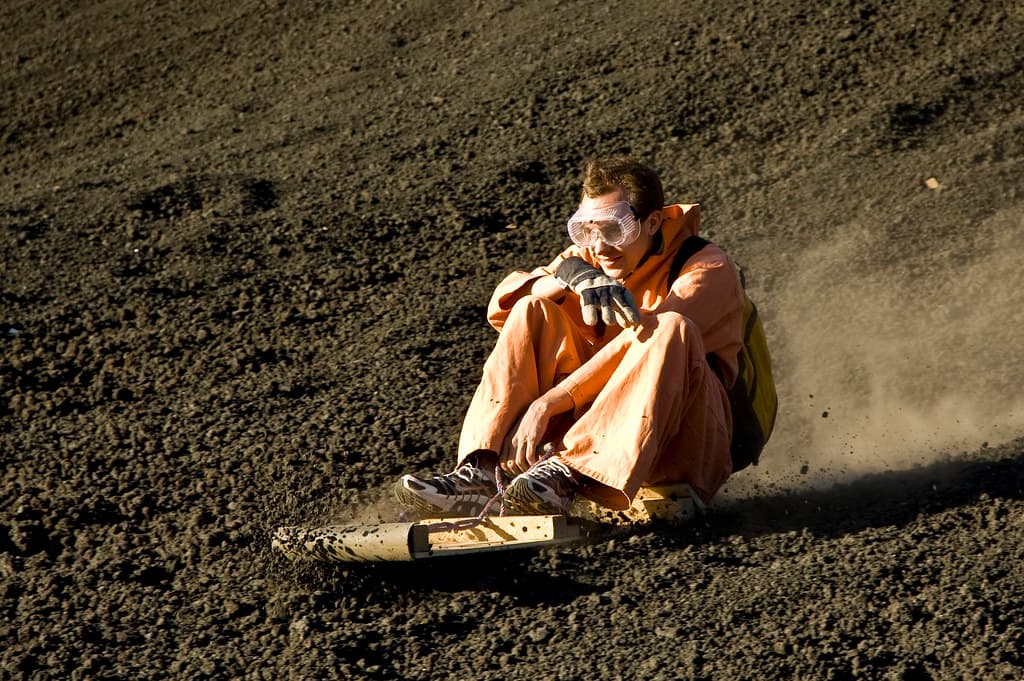
Volcano Boarding Nicaragua: Surf Down Active Volcanoes
Categories
Tags
Volcano Boarding Nicaragua: Surf Down Active Volcanoes
When you stand at the edge of Cerro Negro's active crater at 728 meters (2,388 feet), feeling the heat rising through your board and smelling sulfur from the smoking crater below, you understand why volcano boarding is called "the most extreme sport on Earth." As you push off and begin your descent down 41-degree black volcanic slopes at speeds up to 80 km/h (50 mph), with volcanic ash and rock flying beneath you, you experience adrenaline like nowhere else. Volcano boarding in Nicaragua isn't just an extreme sport—it's a journey through Earth's raw, volcanic power that few humans ever experience.
Quick Facts at a Glance
- Location: Leon, Nicaragua (Cerro Negro, Telica, Momotombo)
- Volcano Height: 728 meters (2,388 feet) - Cerro Negro
- Slope Gradient: 28-41 degrees depending on volcano
- Descent Speed: 30-80 km/h (20-50 mph) depending on conditions
- Board Type: Volcano board (wooden plank with metal runners)
- Volcanoes Available: Cerro Negro (active), Telica (active), Momotombo (dormant)
- Season: November-May (dry season, optimal conditions)
- Descent Type: Standing or sitting position
- Difficulty: Expert (requires good fitness and balance)
- Age Requirement: 18+ years old
- Weight Limit: No specific limit (fitness dependent)
- Average Cost: $30-50 USD per descent
- Duration: 2-3 hours total experience
- Certification: Professional volcano boarding guide required
Why Experience Volcano Boarding in Nicaragua?
Nicaragua offers some of the world's most accessible and spectacular volcano boarding opportunities. Cerro Negro, located just outside the colonial city of Leon, provides the perfect combination of an active volcano, relatively accessible slopes, and experienced local guides. The unique geology of Nicaragua's Pacific volcanic range creates conditions that allow for safe yet extreme descents. As one of the few places on Earth where you can legally and safely surf down an active volcano, Nicaragua delivers an experience that's both terrifying and exhilarating in equal measure.
What Makes This Experience Extraordinary:
- Active Volcano: Cerro Negro is one of Nicaragua's most active volcanoes
- Steepest Volcano Boarding: 41-degree slopes are world's steepest volcano boarding runs
- Volcanic Views: See smoke rising from crater and volcanic landscape from above
- Unique Experience: One of few places to legally board down active volcanoes
- Professional Guides: Local experts with 20+ years of volcano boarding experience
- Volcanic Ash: Slide through fresh volcanic ash and rock
- Adrenaline Rush: Speeds up to 80 km/h down steep volcanic slopes
- Nicaraguan Culture: Experience genuine Nicaraguan adventure culture
- Pacific Volcanoes: Part of Central America's dramatic Pacific volcanic range
- Life-Changing: An experience that redefines "extreme adventure"
Understanding Volcano Boarding Locations in Nicaragua
Primary Volcanoes
Cerro Negro (Most Popular - Active):
- Location: 20 km (12 miles) from Leon
- Height: 728 meters (2,388 feet)
- Status: Active (last eruption: 1999)
- Slope Gradient: 28-41 degrees (steepest volcano boarding on Earth)
- Experience Level: All levels (beginner to expert)
- Best For: First-time volcano boarders, extreme descent experience
- Access: 45-minute drive from Leon, then 45-minute hike to crater
Volcan Telica (Alternative - Active):
- Location: 30 km (19 miles) from Leon
- Height: 1,061 meters (3,481 feet)
- Status: Active (fumarolic activity)
- Slope Gradient: 25-30 degrees
- Experience Level: Intermediate to expert
- Best For: Experienced volcano boarders, active crater views
- Access: 1-hour drive from Leon, then 1-hour hike to crater
Volcan Momotombo (Scenic - Dormant):
- Location: Near Managua
- Height: 1,297 meters (4,252 feet)
- Status: Dormant (last eruption: 1905)
- Slope Gradient: 20-25 degrees
- Experience Level: Beginner to intermediate
- Best For: Scenic views, introduction to volcano boarding
- Access: 30-minute drive from Managua
Perfect 1-Day Cerro Negro Volcano Boarding Adventure
Morning: Arrival and Preparation
5:00 AM - Early Start from Leon
Depart Leon early for the drive to Cerro Negro. The early morning start is crucial for two reasons: cooler temperatures and less volcanic activity during early hours. The drive takes you through the Nicaraguan countryside, passing small villages and seeing the volcano rising in the distance. Your guide will provide background on Cerro Negro's volcanic history and what to expect during the descent.
6:00 AM - Base of Volcano
Arrive at the base of Cerro Negro. Meet your volcano boarding guide and complete any necessary paperwork. Your guide will provide a safety briefing covering the descent technique, emergency procedures, and what to expect on the volcanic slopes. This is your time to ask questions and mentally prepare for the extreme adventure ahead.
6:30 AM - Gear Check and Preparation
Receive your volcano boarding equipment: a specialized wooden board with metal runners designed specifically for volcanic surfaces. Practice your stance on flat ground before the ascent. Your guide will demonstrate both standing and sitting descent positions. Safety equipment includes goggles (to protect from ash), gloves, and sturdy hiking boots for the ascent.
Ascent and Descent
7:00 AM - Hike to Crater
Begin the 45-minute hike to Cerro Negro's crater. The trail winds through volcanic rock and ash, offering increasingly spectacular views of the Nicaraguan countryside. As you ascend, you'll feel the heat rising from the active volcano and smell sulfur. Your guide will provide frequent breaks to rest and hydrate. The final approach to the crater rim is dramatic—steep black volcanic slopes drop away from you, with smoke rising from the active crater below.
7:45 AM - Crater Rim Preparation
At the crater rim, your guide will conduct final safety checks. Review your board positioning, descent stance, and emergency procedures. Take time to appreciate the view from the crater rim—smoke rising from the active crater, panoramic views of Nicaragua's Pacific coast, and the dramatic volcanic landscape you're about to descend. This is your moment to mentally commit to the descent.
8:00 AM - The Descent Begins
On your guide's signal, push off from the crater rim and begin your descent down Cerro Negro's steep black volcanic slopes. Feel the board sliding over volcanic ash and rock, picking up speed immediately. Maintain your stance and balance as you accelerate down the slope—speeds can reach up to 80 km/h (50 mph) on the steepest sections. The sensation is unlike any other sport: part surfing, part sledding, entirely unique.
8:15 AM - Volcanic Slope Descent
Continue your descent for approximately 15-20 minutes, covering 728 vertical meters. The slope gradient varies, with some sections reaching 41 degrees—the steepest volcano boarding in the world. Navigate around volcanic rocks and ash flows, maintaining speed and control. Your guide will be ahead, showing the best line and providing guidance through the most technical sections. The adrenaline rush is intense, enhanced by the heat rising from the active volcano beneath you.
8:20 AM - Base of Volcano
Reach the base of Cerro Negro, completing your descent. The rush of adrenaline is intense, followed by immediate relief and exhilaration. Celebrate your achievement with your guide and group. The descent you just completed is one of the most extreme experiences available on Earth—you've surfed down an active volcano!
Afternoon: Recovery and Celebration
9:00 AM - Return to Leon
Drive back to Leon, reflecting on your volcano boarding experience. The 45-minute drive provides time to process the incredible adrenaline rush and begin appreciating what you've just accomplished. Arrive in Leon with a new perspective on extreme adventure and Earth's volcanic power.
10:00 AM - Traditional Nicaraguan Lunch
Enjoy a celebratory lunch in Leon's historic center. Try traditional Nicaraguan dishes like gallo pinto (rice and beans), quesillo (cheese tortilla), or baho (meat stew). This is the perfect time to share stories with your group and learn more about Nicaragua's volcanic history and culture.
12:00 PM - Leon Exploration
Spend the afternoon exploring Leon's beautiful colonial architecture, including the magnificent León Cathedral and the UNESCO-listed historic center. Walk through the charming streets and reflect on your morning's volcano boarding experience. The contrast between the colonial city's peaceful atmosphere and the extreme volcano adventure you just completed is striking.
3:00 PM - Volcano Boarding Certificate
Return to meet with your guide and receive your Cerro Negro Volcano Boarding Certificate—proof of your extreme adventure. Review photos and videos from your descent (your guide often has a photographer). This certificate and the memories of your descent will last a lifetime.
4:00 PM - Departure or Extended Stay
Depart Leon for your next destination or extend your stay to explore more of Nicaragua's volcanoes and natural wonders. Many volcano boarders return to attempt Telica or explore Nicaragua's other volcanic treasures.
Essential Volcano Boarding Equipment
Provided by Guides
Volcano Board:
- Wooden board (approximately 120cm long)
- Metal runners for volcanic surfaces
- Hand strap for control
- Specifically designed for volcano boarding
- Regularly inspected for safety
Safety Equipment:
- Goggles (ash protection)
- Gloves (heat and rock protection)
- Knee pads (recommended)
- Backpack for personal items
- First aid kit (carried by guide)
What You Need to Bring
Clothing:
- Long pants (protect from volcanic rock)
- Long-sleeve shirt (sun and ash protection)
- Sturdy hiking boots (for ascent)
- Hat for sun protection (during ascent)
- Extra clothing for after descent (often covered in ash)
Essential Items:
- Government-issued ID or passport
- Water bottle (at least 1 liter)
- Sunscreen (high SPF)
- Snacks (energy bars, fruit)
- Small backpack
- Camera (for before/after photos)
Optional Items:
- Change of clothes
- Lip balm
- Sunglasses (for ascent only)
- GoPro for video (check with guide)
Health and Safety Considerations
Volcano Boarding Safety
Physical Requirements:
- Good cardiovascular fitness required for ascent
- Strong legs and core for descent control
- Good balance and coordination
- No recent injuries to legs or ankles
- Reasonable physical health
- No vertigo or severe fear of heights
Medical Considerations:
- Must complete medical questionnaire
- Certain conditions may preclude participation:
- Heart conditions or high blood pressure
- Asthma (volcanic ash can irritate)
- Severe respiratory conditions
- Recent surgeries (especially legs or back)
- Pregnancy
- Blood clotting disorders
Age and Weight:
- Minimum age: 18 years
- No maximum age (fitness dependent)
- No specific weight limit (fitness and balance dependent)
- Must provide valid government ID
Environmental Safety
Volcanic Hazards:
- Active volcano with potential eruptions (extremely rare)
- Hot volcanic surfaces (can reach 50°C/122°F)
- Volcanic ash (irritates lungs and eyes)
- Unstable volcanic rock
- Sudden volcanic activity (unpredictable)
Weather Considerations:
- Optimal in dry season (November-May)
- Rain makes volcanic ash extremely slippery
- Wind can affect descent direction
- Extreme heat on volcanic slopes
- Visibility important for control
Safety Protocols
Before Descent:
- Complete medical questionnaire honestly
- Attend comprehensive safety briefing
- Practice stance on flat ground
- Understand emergency procedures
- Know your descent line
- Check all equipment
During Descent:
- Follow your guide's instructions exactly
- Maintain control and balance
- Know your abilities and limits
- Be aware of volcanic hazards
- Communicate with guide
- Stay in control of your descent
After Descent:
- Check for volcanic ash burns
- Hydrate immediately
- Clean volcanic ash from skin
- Rest and recover
- Review the experience with your guide
Choosing Your Volcano Boarding Experience
Cerro Negro Descent Options
Standard Descent (Standing Position):
- Content: Cerro Negro descent standing
- Experience Level: All levels
- Best For: First-time volcano boarders
- Speed: Up to 80 km/h (50 mph)
- Cost: $30-40 USD
- Includes: Guide, board, safety equipment
Sitting Descent (Beginner-Friendly):
- Content: Cerro Negro descent sitting
- Experience Level: Beginner
- Best For: Less experienced boarders
- Speed: Up to 50 km/h (31 mph)
- Cost: $30-40 USD
- Includes: Guide, board, safety equipment
VIP Package:
- Content: Cerro Negro descent + professional photography
- Experience Level: All levels
- Best For: Those wanting high-quality documentation
- Cost: $50-60 USD
- Includes: Guide, board, safety equipment, professional photos/videos
Multi-Volcano Packages
Two-Volcano Adventure:
- Content: Cerro Negro + Telica volcanoes
- Duration: 2 days
- Experience Level: Intermediate to expert
- Best For: Experienced volcano boarders
- Cost: $80-100 USD
- Includes: Both descents, guides, transportation, equipment
Cost Breakdown: Nicaragua Volcano Boarding
Single Descent Costs
Cerro Negro Descent:
- Standard descent: $30-40 USD
- VIP package (with photos): $50-60 USD
- Professional video: +$20-30 USD
- Equipment rental: Included in descent cost
Additional Costs:
- Transportation from Leon: $10-20 USD (shared vehicle)
- Water and snacks: $5-10 USD
- Tips for guide: $5-10 USD (optional but appreciated)
- Professional photography: $20-30 USD (if not included)
Total Budget Estimate:
- Budget option: $40-55 USD
- Standard option: $45-70 USD
- Premium option: $65-100 USD
Multi-Day Adventure Costs
Two-Volcano Package (2 days):
- Both descents: $60-80 USD
- Transportation: $30-50 USD
- Accommodation (1 night): $20-40 USD
- Food: $15-25 USD
- Total: $125-195 USD
Complete Nicaragua Volcano Adventure (3-4 days):
- Multiple volcano descents: $120-180 USD
- Transportation: $80-120 USD
- Accommodation (2-3 nights): $60-120 USD
- Food: $40-60 USD
- Additional activities: $50-100 USD
- Total: $350-560 USD
Getting to Nicaragua Volcano Boarding Locations
International Access
Flying to Managua (MGA):
- Managua Augusto C. Sandino International Airport
- Direct flights from major US cities (Miami, Houston, Atlanta)
- Direct flights from Central American capitals
- Flight time from Miami: 2.5 hours
- Flight time from Houston: 3 hours
Travel to Leon
From Managua Airport to Leon:
- Distance: 90 km (56 miles)
- Drive time: 1.5-2 hours
- Transportation options:
- Private transfer: $40-60 USD
- Shared shuttle: $15-25 USD
- Public bus: $5-10 USD (budget option)
Getting to Volcanoes
To Cerro Negro:
- Drive from Leon: 20 km (12 miles)
- Drive time: 45 minutes
- Transportation to base: Usually included in volcano boarding package
- Hike to crater: 45 minutes
To Volcan Telica:
- Drive from Leon: 30 km (19 miles)
- Drive time: 1 hour
- Transportation to base: Usually included in package
- Hike to crater: 1 hour
To Volcan Momotombo:
- Drive from Managua: 25 km (15 miles)
- Drive time: 30 minutes
- Hike to crater: 45 minutes
Photography and GoPro Tips
Best Photo Opportunities
Before Descent:
- Crater rim views with smoke rising
- Group preparation shots
- Volcanic landscape from above
- Panoramic views of Nicaraguan countryside
- Equipment and board shots
During Descent:
- Mid-descent action shots (if photographer available)
- Speed and dust trail behind boarder
- Guide ahead showing the line
- Volcanic slopes perspective
After Descent:
- Celebration at base of volcano
- Ash-covered participants
- Group photos with volcanic background
- Certificate presentation
Camera Equipment
Recommended:
- Smartphone (good for before/after shots)
- Compact camera (for ascent shots)
- GoPro (check with guide first)
- Extra batteries (heat drains batteries)
- Protective case (ash is abrasive)
Settings:
- Fast shutter speed (1/500s or faster)
- Continuous autofocus
- Burst mode for sequences
- Wide-angle lens (for landscapes)
Safety Tips
- Never compromise safety for photos
- Protect camera from volcanic ash
- Secure all equipment
- Don't stop during descent for photos
- Respect guide's instructions regarding photos
Best Time to Visit
Dry Season (November-May) ⭐⭐⭐⭐⭐
Conditions:
- Minimal rainfall
- Good visibility
- Cooler temperatures (for ascent)
- Optimal volcanic surface conditions
Pros:
- Best volcano boarding conditions
- Good visibility
- Cooler hiking temperatures
- Peak tourist season
Cons:
- Most crowded
- Higher prices
- Need to book in advance
Rainy Season (June-October) ⭐⭐
Conditions:
- Frequent rainfall
- Reduced visibility
- Slippery volcanic conditions
- Hot and humid
Pros:
- Fewer crowds
- Lower prices
- Lush green landscape
Cons:
- Dangerous volcanic conditions (slippery)
- Poor visibility
- May be canceled for safety
- Not recommended for first-timers
Shoulder Season (May-June, October-November) ⭐⭐⭐
Conditions:
- Transitional weather
- Variable conditions
- Some rainfall possible
- Moderate temperatures
Pros:
- Fewer crowds
- Lower prices
- Still reasonable conditions
Cons:
- Less predictable weather
- Some volcanic condition variability
Final Thoughts & Planning Tips
Why Volcano Boarding Nicaragua Changes You
Volcano boarding down Cerro Negro is more than just an extreme sport—it's a confrontation with Earth's raw power and human vulnerability. Standing on the edge of an active volcano, preparing to descend down steep black volcanic slopes at speeds that blur your vision, you experience adrenaline that few humans ever feel. The combination of extreme speed, volcanic heat, and the knowledge that you're on an active volcano creates an experience that fundamentally changes your perspective on adventure and natural phenomena. Every descent is a testament to human courage and the raw power of our planet.
Best Planning Tips
- Visit During Dry Season: November-May offers the safest and best conditions
- Book Well in Advance: Popular guides and dates book out, especially in peak season
- Choose Experienced Guides: Volcano boarding requires expert local knowledge
- Prepare Physically: The ascent and descent demand good fitness
- Respect the Volcano: Never underestimate volcanic hazards
- Wear Appropriate Clothing: Long pants and sleeves protect from ash and rock
- Stay Hydrated: The combination of heat and exertion requires hydration
- Listen to Your Guide: Follow all instructions exactly
- Consider Photography: Professional photos capture this extreme experience
- Explore Leon: Take time to explore this beautiful colonial city
When to Book
- High Season (November-May): Book 2-4 weeks in advance
- Shoulder Season (May-June, October-November): Book 1-2 weeks in advance
- Rainy Season (June-October): Contact guides directly (may not operate)
Making the Most of Your Experience
- Arrive rested and well-hydrated
- Eat a good breakfast before the ascent
- Wear comfortable, protective clothing
- Bring appropriate footwear
- Trust your guide completely
- Respect volcanic conditions
- Document your experience
- Celebrate your achievement
- Explore Nicaragua's other volcanoes
- Connect with Nicaraguan culture
Safety Reminders
- Never attempt without a professional guide
- Follow all safety instructions
- Stay within your abilities
- Respect volcanic hazards
- Stay hydrated and well-fed
- Know emergency procedures
- Listen to your body and mind
- If uncertain, don't descend
- Understand the risks involved
- Appreciate the privilege of experiencing this unique adventure
Conclusion
Volcano boarding in Nicaragua, particularly descending Cerro Negro, is one of the most extreme and unique adventures available on Earth. The combination of an active volcano, steep volcanic slopes, and incredible speed creates an experience found nowhere else. Whether you're an extreme sports enthusiast or someone who never imagined surfing down a volcano, this Nicaraguan adventure will change your perspective on what's possible.
From the moment you stand at Cerro Negro's crater rim, feeling the heat rising from the active volcano beneath you, to the rush of adrenaline as you descend at speeds up to 80 km/h, every moment of this experience is etched into memory. The views of the Nicaraguan countryside, the smell of sulfur, and the sensation of volcanic ash flying past you create a story you'll tell for the rest of your life.
Book your volcano boarding adventure today and discover why thrill-seekers from around the world make pilgrimages to Nicaragua's active volcanoes. It's an adventure that will test your courage, thrill you beyond imagination, and create memories that will last forever. Viva Nicaragua and happy volcano surfing!
Adventure Knit Editorial
Destination research compiled and fact-checked by the Adventure Knit editorial team from published sources, operator itineraries, and official tourism boards. Spot something out of date? Tell us at hello@adventureknit.com.
Related Stories
 Nicaragua
Volcano Boarding Nicaragua: Ride Cerro Negro's Active Volcano
Extreme volcano boarding adventure on Cerro Negro, Nicaragua. Expert guide to sledding down an active volcano at 50mph, complete with safety tips, costs, and adrenaline-pumping experience.
 Ethiopia
Danakil Depression Ethiopia: The Ultimate Alien Landscape Adventure Guide
Expert guide to Danakil Depression Ethiopia. Sulfuric hot springs, lava lakes, active volcanoes, Afar culture, and Earth's most alien landscape adventure.
 Greenland
Greenland Ice Sheet Crossing 2024: The Ultimate Polar Expedition Adventure
Expert guide to Greenland Ice Sheet Crossing 2024. Polar ice cap expedition, Arctic wilderness adventure, glacier hiking, and extreme ice cap crossing experience in Greenland.
Enjoyed this article?
Explore more stories from our adventures around the world