
Paragliding Interlaken Switzerland: The Ultimate Alpine Flight Guide
Categories
Tags
Paragliding in Interlaken, Switzerland offers tandem flights over Lake Thun, Lake Brienz, and the Jungfrau massif with no previous experience required, launching from more than 15 official sites led by Harder Kulm at 2,322 meters. Tandem flights cost CHF 150 to 250, last 15 to 60 minutes depending on conditions, and run May through October with June to September optimal. Solo flying requires an SHV pilot license, earnable through local courses costing CHF 2,500 to 4,000.
Paragliding Interlaken Switzerland: The Ultimate Alpine Flight Guide
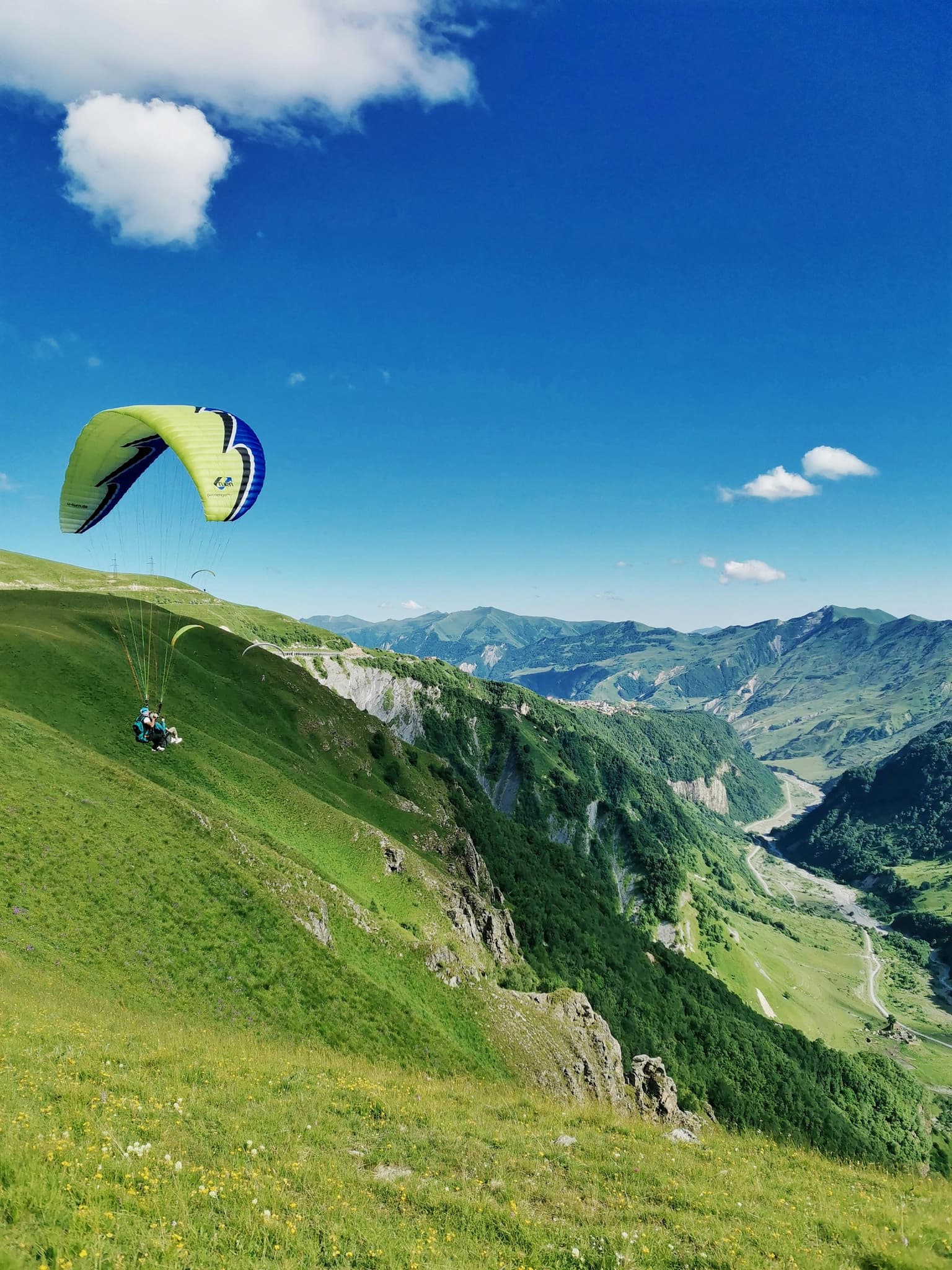
Imagine running along a mountain ridge at 2,000 meters, the wind catching your wing as you lift off the ground, soaring upward into crystal-clear alpine air. Below you, two turquoise lakes sparkle against emerald meadows, while the Eiger, Mönch, and Jungfrau peaks tower into the sky like ancient sentinels. Paragliding in Interlaken isn't just a flight—it's a journey through one of the world's most spectacular alpine playgrounds. After 16 years flying these mountains and teaching over 2,000 students, I can tell you that Interlaken offers some of the most diverse and breathtaking paragliding experiences on Earth. From gentle thermal flights to high-altitude mountain crossings, this Swiss paradise delivers adventures that will transform your understanding of flight.
Quick Facts at a Glance
- Location: Interlaken, Bernese Oberland, Switzerland
- Flight Sites: 15+ official launch sites within 30 minutes
- Elevation Range: 1,100-2,600 meters (3,600-8,500 feet)
- Flight Duration: 15-60+ minutes depending on conditions
- Season: May through October (June-September optimal)
- Wind Conditions: 5-25 knots depending on site and time
- Temperature: 15-25°C (59-77°F) at launch, 20-30°C (68-86°F) at landing
- Requirements: No previous experience for tandem flights, pilot license for solo
- Best For: All skill levels from beginner to expert
- Iconic Views: Jungfrau, Mönch, Eiger, Lake Thun, Lake Brienz
- Average Cost: CHF 150-250 per tandem flight
- Flight Schools: 5+ certified schools in Interlaken area
Why Paraglide in Interlaken?
Interlaken sits in the heart of the Bernese Oberland, sandwiched between Lake Thun and Lake Brienz, with some of the most dramatic alpine scenery in the world as its backdrop. The unique geography creates exceptional paragliding conditions: reliable thermal activity, varied terrain for all skill levels, and spectacular views from every flight. Whether you're taking your first tandem flight, earning your pilot license, or pushing the limits with cross-country adventures, Interlaken offers experiences unmatched anywhere in Europe. The combination of world-class infrastructure, Swiss safety standards, and incredible scenery makes this the paragliding capital of the Alps.
What Makes Interlaken's Paragliding Extraordinary:
- Spectacular Alpine Scenery: Fly over iconic Swiss peaks including Jungfrau, Mönch, and Eiger
- Diverse Flight Conditions: Thermals, ridge soaring, and dynamic alpine winds
- Multiple Launch Sites: From gentle beginner sites to advanced mountain launches
- Excellent Flight Schools: Swiss-certified instructors with multilingual capabilities
- Predictable Weather: Reliable alpine weather patterns with good forecasting
- Incredible Views: Two turquoise lakes, emerald meadows, and dramatic peaks
- International Community: Paragliders from 50+ countries visit annually
- Year-Round Accessibility: Peak season May-October, winter flying possible
Understanding Interlaken's Paragliding Sites
Harder Kulm (Beginner-Friendly)
Elevation: 2,322 meters (7,619 feet) Access: Cable car from Interlaken (10-minute ride) Conditions: Gentle thermals, predictable mountain breezes Best For: First tandem flights, beginner training, thermal practice Flight Time: 15-30 minutes typical Landing Zone: Large meadow in Matten, multiple landing options
This is Interlaken's most popular launch site, accessible by funicular and offering spectacular views of Lake Thun and the Jungfrau massif. The launch area is spacious with excellent wind indicators, making it perfect for beginners and training. Thermal activity is consistent during mid-day hours, creating opportunities for extended flights.
Niederhorn (Intermediate)
Elevation: 1,950 meters (6,400 feet) Access: Cable car from Beatenberg (20 minutes from Interlaken) Conditions: Stronger thermals, ridge soaring opportunities Best For: Intermediate pilots, cross-country attempts Flight Time: 30-60+ minutes possible Landing Zone: Beatenberg golf course or Interlaken West
Niederhorn offers intermediate pilots excellent opportunities for longer flights and cross-country exploration. The ridge structure allows for ridge soaring in moderate winds, while thermal activity can carry you far beyond the landing zone. Views of Lake Thun and the Simmental Valley are spectacular.
Schynige Platte (Advanced)
Elevation: 2,072 meters (6,797 feet) Access: Cog railway from Wilderswil (15 minutes from Interlaken) Conditions: Variable alpine conditions, strong thermals Best For: Advanced pilots, alpine flight practice Flight Time: 20-45 minutes typical Landing Zone: Wilderswil or Interlaken West
Schynige Platte is the most technical of Interlaken's main launch sites, offering challenging conditions that test pilot skills. The site requires good launch technique and the ability to handle variable mountain winds. Rewarding flights can carry you toward the Jungfrau region for incredible alpine scenery.
Habkern (Expert)
Elevation: 2,600 meters (8,530 feet) Access: Hiking (1.5 hours) or 4WD vehicle from Habkern Conditions: Strong alpine winds, complex terrain Best For: Expert pilots, high-altitude flying Flight Time: 30-90+ minutes possible Landing Zone: Habkern or Interlaken area
Habkern offers serious alpine flying with high altitude launches and complex terrain. This site requires significant experience and the ability to handle strong, variable conditions. The rewards are spectacular flights over remote alpine valleys and the opportunity to explore areas few paragliders ever reach.
Perfect 5-Day Interlaken Paragliding Adventure
Day 1: Arrival, Orientation, and First Tandem Flight
Morning (9:00 AM): Arrive in Interlaken, check into accommodation. Interlaken offers everything from budget-friendly hostels (CHF 40-70/night) to luxury hotels (CHF 150-300/night), with most paragliding-friendly options costing CHF 80-150/night within walking distance of launch points.
Mid-Morning (10:30 AM): Visit one of Interlaken's certified paragliding schools. Complete orientation covering:
- Paragliding basics and safety introduction
- Weather assessment and forecast review
- Equipment overview and fitting
- Flight planning for your first tandem experience
- Introduction to Swiss paragliding culture and regulations
Afternoon (1:00 PM): First tandem flight from Harder Kulm!
- Cable car ride to launch site with spectacular views
- Pre-flight briefing and equipment check
- Launch run and takeoff from 2,322 meters
- 15-30 minute flight over Lake Thun and Interlaken
- Gentle landing in Matten meadow
- Flight debriefing and photo review
Evening (6:00 PM): Explore Interlaken's pedestrian zone, enjoy dinner at traditional Swiss restaurant. Review GoPro footage from your flight and discuss Day 2's adventure with your instructor.
Total Flight Time: 20 minutes Difficulty: Beginner (tandem)
Day 2: Thermal Practice and Skill Development
Early Morning (7:30 AM): Weather check and equipment preparation. Today focuses on thermal techniques with your instructor (if enrolled in pilot course) or additional tandem flights for experience building.
Morning (9:00 AM): Second flight from Harder Kulm, focusing on:
- Thermaling techniques and finding lift
- Airspace awareness and flight planning
- Landing approaches and control
- Radio communication during flight
Mid-Morning (11:00 AM): Ground school session covering:
- Understanding thermal mechanics
- Reading terrain and wind indicators
- Basic flight planning and airspace
- Swiss paragliding regulations and zones
Afternoon (1:30 PM): Third flight from a different site (Niederhorn):
- Experience different launch conditions
- Practice thermal flying in varied terrain
- Extend flight time through thermaling
- Work on landing accuracy
Late Afternoon (4:00 PM): Flight debriefing and video analysis. Review footage from multiple flights, identify areas for improvement, and plan for Day 3.
Evening (7:00 PM): Relax in Interlaken, enjoy Swiss hospitality, and prepare for tomorrow's mountain adventure.
Total Flight Time: 45-60 minutes across multiple flights Difficulty: Beginner to Intermediate
Day 3: Alpine Adventure - Schynige Platte
Early Morning (7:00 AM): Depart for Schynige Platte launch site. Take cog railway from Wilderswil, enjoying spectacular mountain scenery en route.
Morning (9:00 AM): Technical flight briefing covering:
- Alpine weather patterns and safety
- Complex terrain navigation
- Launch techniques for challenging sites
- Emergency procedures and landing options
Mid-Morning (10:00 AM): Flight from Schynige Platte:
- Launch from 2,072 meters with dramatic views
- Navigate varied alpine terrain
- Thermal flying in complex environment
- Potential for ridge soaring if conditions allow
- Landing approach and control in variable conditions
Afternoon (1:00 PM): Extended debriefing and skill development:
- Review alpine flight performance
- Discuss advanced techniques
- Plan cross-country opportunities (if experienced)
- Equipment maintenance and inspection
Late Afternoon (3:00 PM): Optional second flight or advanced ground school covering:
- Cross-country flight planning
- Weather forecasting and assessment
- Swiss airspace navigation
- Advanced thermal techniques
Evening (6:30 PM): Dinner with instructors and fellow paragliders. Share stories, experiences, and learn from Swiss paragliding community.
Total Flight Time: 30-45 minutes Difficulty: Intermediate to Advanced
Day 4: Cross-Country Experience (for intermediate+ pilots)
Early Morning (6:30 AM): Advanced weather assessment and cross-country planning. Today's goal: fly from Harder Kulm toward distant landing zones.
Morning (8:00 AM): Launch and cross-country attempt:
- Strategic launch timing for optimal conditions
- Navigate along ridgelines and thermal corridors
- Potential to reach remote areas of Bernese Oberland
- Flight duration of 60+ minutes if successful
- Landing at predetermined zone (possibly far from Interlaken)
Mid-Morning (10:30 AM): Retrieve team meets pilot at landing zone. Transportation back to Interlaken for debriefing.
Afternoon (2:00 PM): Cross-country flight analysis:
- Review track and decisions made during flight
- Identify successful strategies and areas for improvement
- Discuss route planning and weather assessment
- Plan for Day 5's final adventure
Late Afternoon (4:30 PM): Equipment maintenance and final preparations. Pack and check all gear for tomorrow's flights.
Evening (7:00 PM): Farewell dinner with paragliding community. Certificate presentation and sharing of week's highlights.
Total Flight Time: 60-90 minutes Distance Covered: 20-40+ kilometers Difficulty: Advanced
Day 5: Final Flights and Certification
Morning (9:00 AM): Final solo flights (if enrolled in pilot course) or additional tandem flights focusing on skill consolidation:
- Practice techniques from the week
- Work on specific areas for improvement
- Enjoy final flights over spectacular scenery
- Demonstrate competency for certification (if applicable)
Mid-Morning (11:00 AM): Skills assessment and certification:
- Review all flights from the week
- Assess competency and progress
- Issue pilot certifications or recommendations
- Provide feedback for future development
Afternoon (1:00 PM): Optional additional flights or free time to explore Interlaken and surrounding region. Visit local paragliding shops for gear browsing and community connections.
Late Afternoon (3:30 PM): Final debriefing, equipment return, and packing. Receive flight certificates, course completion documents, and personal recommendations for future paragliding adventures.
Evening (6:00 PM): Departure or extend stay for additional flying. Reflect on an incredible week of alpine paragliding experiences.
Total Flight Time: 30-45 minutes Difficulty: Beginner to Advanced (depending on individual progress)
Interlaken's Top 15 Paragliding Experiences
Beginner-Friendly Experiences
- Harder Kulm Tandem Flight - Iconic first flight experience over Lake Thun and Jungfrau massif
- Mattensberg Training Hill - Perfect site for basic skills and launch practice
- Wilderswil Soaring Flights - Gentle ridge soaring ideal for building confidence
- Matten Thermal Practice - Learning thermaling in predictable conditions
Intermediate Experiences
- Niederhorn Ridge Soaring - Extended flights along spectacular ridgelines
- Beatenberg Cross-Country - First cross-country attempts toward Lake Thun
- Schynige Platte Alpine Flight - Complex terrain navigation experience
- Interlaken Valley Tour - Circling Interlaken while gaining altitude
Advanced Experiences
- Habkern High-Altitude Launch - Serious alpine flying from 2,600 meters
- Jungfrau Region Flight - Flying toward iconic Swiss peaks (requires experience)
- Bernese Oberland Crossing - Crossing valleys to reach remote launch sites
- Grimsel Pass Adventure - Alpine flying at remote high-altitude location
Cross-Country Challenges
- Lake Brienz to Lake Thun Crossing - Classic 30km cross-country route
- Jura Mountain Excursion - Long-distance flight toward distant mountain range
- Alpine Triangle - Three-site tour connecting multiple launch zones
Essential Paragliding Equipment
For Tandem Flights (Provided by School)
Paraglider:
- Certified tandem wing (EN-B/C certified)
- Appropriate for pilot and passenger combined weight
- Regularly inspected and maintained
Harness:
- Certified tandem harness with comfortable seating
- Integrated reserve parachute system
- Properly adjusted for each passenger
Safety Equipment:
- Protective helmet (certified EN 966)
- Reserve parachute (inspected and packed regularly)
- Radio communication system
- Flight instrument (variometer with altimeter)
Personal Items (Bring):
- Sturdy footwear (hiking boots or sneakers)
- Weather-appropriate clothing (layers recommended)
- Sunglasses with strap
- GoPro or camera (if desired, school may provide)
- Light backpack for personal items
For Solo Pilots (Own or Rental Equipment)
Wing (Paraglider):
- Appropriate certification level (EN-A/B/C/D depending on experience)
- Size matched to pilot weight
- Regular inspection and re-pack schedule (recommended every 50-100 flights)
- Investment: CHF 2,500-5,000 for new wing
Harness:
- Certified harness with reserve parachute integration
- Comfortable for extended flights (2+ hours)
- Backpack storage for equipment and supplies
- Investment: CHF 500-1,500
Flight Instrument:
- Variometer with altimeter (essential for thermaling)
- GPS for navigation and airspace awareness
- Recommended models: Flytec, Brauniger, Syride
- Investment: CHF 800-1,500
Safety Equipment:
- Certified helmet (EN 966, preferred with visor)
- Reserve parachute (annually repacked)
- Knife for emergency line cutting
- Whistle and emergency signaling devices
- Satellite communicator (Garmin inReach) for remote flying
- Total Safety Investment: CHF 1,000-2,500
Clothing and Protection:
- Layered system (base layer, insulating layer, windproof shell)
- Gloves (insulated, dexterous)
- Hiking boots with ankle support
- Sunglasses with UV protection and strap
- Investment: CHF 300-600
Paragliding Safety in Interlaken
Pre-Flight Safety Checklist
Weather Assessment:
- Check detailed weather forecast (meteocentrale.ch, windy.com)
- Verify wind speeds and directions for launch site
- Check cloud base and potential for overdevelopment
- Assess thermal conditions and timing
- Plan alternative activities if conditions unsuitable
Equipment Check:
- Visual inspection of wing (lines, fabric, attachment points)
- Harness and reserve parachute functionality
- Flight instrument battery and calibration
- Helmet fit and condition
- Radio communication check
Launch Site Assessment:
- Wind speed and direction at launch
- Obstacle identification (trees, power lines, cables)
- Landing zone condition and suitability
- Emergency landing options identified
- Other air traffic awareness
In-Flight Safety Protocols
Positional Awareness:
- Maintain orientation relative to terrain and landing zone
- Monitor altitude constantly (maintain safe margins)
- Be aware of other aircraft (helicopters, gliders, other paragliders)
- Understand airspace restrictions and corridors
Weather Monitoring:
- Watch for sudden wind changes or gusts
- Monitor cloud development and potential for storms
- Recognize signs of thermal weakening
- Have contingency plans for deteriorating conditions
Emergency Procedures:
- Know reserve parachute deployment procedure
- Understand emergency landing techniques
- Have radio communication plan
- Carry emergency contact information
- Know location of nearest emergency services
Swiss Airspace Regulations
Restricted Areas:
- Military zones (active when indicated)
- Helicopter landing areas
- Power line corridors
- Airports and approach paths
- Protected natural areas
Communication:
- Use designated radio frequencies (published by SHV)
- Monitor other aircraft announcements
- Announce intentions at launch and landing
Certification Requirements:
- Tandem flights: No certification required
- Solo flights: SHV pilot license (or recognized equivalent)
- Cross-country: Additional certification often required
Weather & Conditions Guide
Optimal Paragliding Weather
Wind Conditions:
- Launch speed: 5-15 knots (ideal)
- Maximum launch: 20-25 knots (site-dependent)
- Direction: Consistent with launch site orientation
- Gust factor: Under 8 knots above base speed
Thermal Conditions:
- Timing: 11:00 AM - 5:00 PM (peak 1:00-3:00 PM)
- Strength: Moderate to strong (1-3 m/s lift)
- Cloud base: 1,500-2,500 meters ideal
- Overdevelopment: Monitor for cumulus buildup
Temperature Ranges:
- Launch: 15-25°C (59-77°F) comfortable
- Landing: 20-30°C (68-86°F) typical
- Altitude lapse: -6.5°C per 1,000 meters
Weather to Avoid
Dangerous Conditions:
- Wind speed over 25 knots at launch
- Storm fronts approaching or active
- Overdeveloped cumulus clouds (thunderstorm risk)
- Low visibility (fog, heavy clouds)
- Rotor conditions (in strong winds)
- Night flights (generally prohibited)
Marginal Conditions:
- Wind at upper limits (requires advanced skills)
- Light or variable thermals
- High density altitude (very hot, humid days)
- Early morning (weak thermals)
Seasonal Patterns
Summer (June-August):
- Strongest thermal activity
- Most consistent flying conditions
- Longer flight days (sunrise to sunset)
- Most crowded season
Spring (May) & Fall (September-October):
- Good conditions, fewer crowds
- Variable weather patterns
- Cooler temperatures comfortable
- Good for skill development
Winter (November-April):
- Limited flying opportunities
- Snow and ice conditions
- Requires advanced skills and winter gear
- Some schools offer winter operations
Interlaken's Paragliding Schools
Certified Schools (SHV Approved)
Airtime Paragliding:
- Established 1995, highly experienced
- Multiple launch sites and equipment options
- English, German, French, Italian instruction
- CHF 180-250 per tandem flight
- Full pilot courses available
FlyInterlaken:
- Modern equipment and experienced instructors
- Focus on beginner and intermediate training
- Multilingual team (10+ languages)
- CHF 160-220 per tandem flight
- Competitive pricing for multi-day packages
Swiss Paragliding Academy:
- Advanced training focus
- Cross-country specialization
- Pilot certification programs
- CHF 200-280 per tandem flight
- Professional instruction for serious pilots
Choosing the Right School
For First-Timers:
- Look for schools with beginner focus
- Check instructor certifications and experience
- Ask about equipment quality and maintenance
- Consider group vs. private lessons
For Pilot Training:
- Verify SHV certification and licensing
- Check course structure and certification pathway
- Inquire about rental equipment availability
- Ask about cross-country opportunities
For Advanced Pilots:
- Look for schools with alpine expertise
- Check equipment options (performance wings)
- Inquire about cross-country support
- Ask about local pilot community and events
Costs & Budget Breakdown
5-Day Paragliding Adventure Package
Tandem Flight Experience:
- 5 tandem flights: CHF 800-1,250
- Equipment provided, no certification needed
- Professional instruction and safety equipment
- Photo/video packages: CHF 50-100 extra
Pilot Training Course (if pursuing license):
- Complete beginner course (B-license): CHF 2,500-4,000
- Equipment rental included in most courses
- Flight testing and certification
- Includes theoretical and practical training
Accommodation:
- Budget hostel: CHF 200-350 (5 nights)
- Mid-range hotel: CHF 400-700 (5 nights)
- Luxury hotel: CHF 1,000-1,800+ (5 nights)
Food & Expenses:
- Meals: CHF 150-300 for 5 days
- Transportation: CHF 50-100 (local)
- Miscellaneous: CHF 50-100
Total Estimated Costs:
- Tandem Experience Package: CHF 1,200-1,950 ($1,350-2,200)
- Pilot Training Package: CHF 3,250-5,550 ($3,700-6,300)
Equipment Investment (if purchasing own gear)
Complete Setup:
- Wing: CHF 2,500-5,000
- Harness: CHF 500-1,500
- Flight instrument: CHF 800-1,500
- Safety equipment: CHF 1,000-2,500
- Clothing: CHF 300-600
- Total: CHF 5,100-11,100 ($5,800-12,500)
Rental Options:
- Daily rental: CHF 50-80
- Weekly rental: CHF 250-400
- Pilot course often includes equipment
Photography Tips: Capturing Interlaken's Paragliding
Best Photo Opportunities
Launch Sites:
- Harder Kulm sunrise shots with Jungfrau background
- Niederhorn launch with Lake Thun view
- Schynige Platte dramatic alpine scenery
In-Flight Shots:
- Aerial views of turquoise lakes and meadows
- Jungfrau massif from unique angles
- Paragliding formations (group flights)
- Landing approaches with mountain backdrops
Landing Zones:
- Matten meadow landing with Interlaken backdrop
- Beatenberg golf course precision landings
- Wilderswil scenic landings
Equipment Recommendations
Camera:
- Action camera (GoPro Hero11/12) mounted to helmet or harness
- Lightweight DSLR/mirrorless for higher quality
- Drone photography (check Swiss regulations - drones restricted near launch sites and airspace)
Mounting Options:
- Helmet mount (most common for POV shots)
- Chest harness mount for wider angle
- Pole mount for selfie-style shots
- Remote camera for in-flight selfies
Technical Tips:
- Use high frame rate (60fps) for smooth footage
- Secure camera with tether strap
- Check battery life (cold altitude drains faster)
- Consider waterproof housing for weather protection
Getting to Interlaken
International Access
Nearest Major Airports:
- Zurich (ZRH): 2 hours by train (most international connections)
- Geneva (GVA): 2.5 hours by train
- Basel (BSL): 1.5 hours by train
- Bern (BRN): 30 minutes by train (closest domestic)
Recommended Route: Fly to Zurich and take Swiss Federal Railway (SBB) to Interlaken West station.
Regional Transportation
Train Travel:
- SBB (Swiss Federal Railway) frequent service to Interlaken
- From Zurich: 2 hours (direct trains available)
- From Geneva: 2.5 hours (transfer at Bern)
- Purchase Swiss Travel Pass for unlimited travel
Car Rental:
- Available in Interlaken and nearby cities
- Useful for accessing remote launch sites
- Winter tires required during cold months
- Mountain parking can be challenging
Local Transport:
- Local buses and cable cars to launch sites
- Many schools provide transportation
- Walking possible to some launch zones
Best Time to Visit
Peak Season (June-August) ⭐⭐⭐⭐⭐
Temperature: 20-30°C (68-86°F) Conditions: Strongest thermals, most consistent weather Pros: Optimal flying conditions, long daylight hours Cons: Most crowded, higher prices, advance booking essential
Shoulder Season (May, September-October) ⭐⭐⭐⭐
Temperature: 15-25°C (59-77°F) Conditions: Good weather, variable thermals Pros: Fewer crowds, lower prices, good for skill development Cons: More variable weather, shorter days
Off-Season (November-April)
Conditions: Limited flying opportunities, snow/ice Recommendation: Only for experienced winter paragliders
Physical Preparation
Fitness Requirements
For Tandem Flights:
- Able to run 20-30 meters for launch
- Comfortable with moderate physical exertion
- No major mobility limitations
- Good overall health recommended
For Pilot Training:
- Moderate cardiovascular fitness
- Good upper body and core strength
- Ability to hike to remote launch sites (when required)
- Endurance for multiple flights per day
Training Timeline
2-4 Weeks Before Trip:
- Begin light cardio training (walking, cycling, swimming)
- Practice leg strengthening (squats, lunges)
- Improve core stability (planks, rotations)
- Ensure good hydration and nutrition habits
1 Week Before Trip:
- Test hiking with light pack (if visiting remote sites)
- Practice balance exercises
- Review weather terminology and concepts
- Begin mental preparation for flight experience
Cultural & Local Information
Interlaken Region
Geography: Situated between Lake Thun and Lake Brienz at 570 meters elevation Population: 5,500 permanent residents Languages: German (local dialect), English widely spoken Currency: Swiss Franc (CHF) Emergency: 112 (general), 1414 (air rescue)
Swiss Outdoor Culture
Interlaken has a rich outdoor sports tradition with paragliding as a prominent activity. The Swiss approach emphasizes:
- Safety first attitude
- Professional instruction and certification
- Environmental stewardship
- Respect for mountains and weather
- Community support among outdoor enthusiasts
Local Regulations
Paragliding Rules:
- SHV pilot license required for solo flying
- Launch only from authorized sites
- Respect airspace restrictions and corridors
- Obtain permission for private land launches
- Follow Swiss Federal Aviation regulations
Environmental Protection:
- Avoid disturbing wildlife (especially during breeding seasons)
- Stay on marked paths to launch sites
- Pack out all trash and waste
- Respect private property
- Follow Leave No Trace principles
Final Thoughts & Planning Tips
Why Interlaken Changes You
Paragliding in Interlaken isn't just about flight—it's about experiencing the Alps from a perspective that ground-bound travelers never see. The combination of physical challenge, spectacular scenery, and the pure joy of soaring creates transformative experiences. Every flight teaches you something new about yourself, about the mountains, and about the remarkable gift of human flight.
Best Planning Tips
- Book Early: Tandem flights and courses fill quickly during peak season (June-August)
- Check Weather Daily: Alpine weather changes rapidly—always verify conditions before heading to launch
- Come Prepared: Good physical preparation enhances the experience dramatically
- Choose the Right School: Research instructors and certifications before booking
- Start with Tandem Flights: Even if planning pilot training, start with tandem experience
- Be Flexible: Weather may require schedule changes—embrace the adventure
- Document Everything: Photos and videos capture memories that last a lifetime
- Connect with Community: Swiss paragliding community is welcoming and knowledgeable
- Respect the Environment: Interlaken's alpine landscape is fragile—protect it
- Stay Safe: Never push beyond your abilities or ignore weather warnings
When to Book
Peak Season (June-August): 2-3 months in advance for popular schools and times Shoulder Season (May, September-October): 4-6 weeks in advance Last Minute: Sometimes possible, but selection limited
Making the Most of Your Experience
The best paragliding experiences come from combining thorough preparation, open-minded adventure, and appreciation of Interlaken's spectacular setting. Whether you're taking your first tandem flight, earning your pilot license, or pushing the limits with cross-country adventures, Interlaken delivers experiences that will stay with you forever.
Take time to learn, appreciate the mountains, and savor every moment of flight. The Swiss Alps offer paragliding opportunities found nowhere else on Earth—make the most of this incredible alpine paradise.
Conclusion
Paragliding in Interlaken, Switzerland, represents the ultimate accessible alpine flying experience. With diverse launch sites for all skill levels, world-class instruction, and breathtaking scenery at every turn, Interlaken offers paragliding adventures unmatched anywhere in Europe.
From gentle tandem flights over turquoise lakes to high-altitude alpine adventures near the Jungfrau, from training to become a certified pilot to pushing limits with cross-country flights, Interlaken provides the perfect combination of safety, scenery, and challenge. The Swiss commitment to excellence, combined with a spectacular alpine environment, creates paragliding experiences that will transform your understanding of flight forever.
Whether you're seeking your first taste of human flight, pursuing your pilot license, or an experienced paraglider looking for alpine challenges, Interlaken delivers experiences that will create memories to last a lifetime. With proper preparation, respect for the environment and safety, and a spirit of adventure, you'll discover why Interlaken is considered one of the world's premier paragliding destinations.
So pack your courage, prepare for the thrill of launch, and get ready to experience the Swiss Alps from the most spectacular vantage point possible. The mountains are calling, and the sky is waiting.
Have you paraglided in Interlaken? Share your experience in the comments below!Questions about planning your paragliding adventure? Ask away—I'm here to help you start your Swiss alpine flying journey!
Frequently Asked Questions
Tandem flights average CHF 150 to 250, with schools ranging from CHF 160 to 220 at FlyInterlaken, CHF 180 to 250 at Airtime Paragliding, and CHF 200 to 280 at Swiss Paragliding Academy. Photo and video packages add CHF 50 to 100. A complete beginner pilot course for the B-license costs CHF 2,500 to 4,000 including equipment rental.
No experience or certification is needed for tandem flights, which are flown with instructors from SHV-certified schools who provide all equipment including the wing, harness, helmet, and reserve parachute. You only need to be able to run 20 to 30 meters for the launch and be in good overall health. Solo flying requires an SHV pilot license or a recognized equivalent.
The season runs May through October, with June to August delivering the strongest thermals and most consistent weather at 20 to 30 degrees Celsius. May and September to October offer good conditions with fewer crowds and lower prices. Winter flying from November to April is limited and suited only to experienced pilots with winter gear.
Harder Kulm at 2,322 meters is the most popular launch, reached by a short cable car ride from town and ideal for first tandem flights over Lake Thun. Niederhorn at 1,950 meters suits intermediate pilots, Schynige Platte at 2,072 meters offers advanced alpine conditions, and Habkern at 2,600 meters is expert-only terrain, all within about 30 minutes of Interlaken.
Flights last 15 to 60 or more minutes depending on the site and thermal conditions: a typical Harder Kulm tandem runs 15 to 30 minutes, Niederhorn flights can exceed 60 minutes with ridge soaring, and cross-country flights from higher launches can reach 90 minutes covering 20 to 40 kilometers. Thermal activity peaks between 1:00 and 3:00 PM.
Book 2 to 3 months in advance for popular schools during the June to August peak season, and 4 to 6 weeks ahead for May or September to October. Last-minute spots are sometimes available but selection is limited. Alpine weather changes quickly, so verify conditions daily and be ready for schedule changes.
Adventure Knit Editorial
Destination research compiled and fact-checked by the Adventure Knit editorial team from published sources, operator itineraries, and official tourism boards. Spot something out of date? Tell us at hello@adventureknit.com.
Related Stories
 Switzerland
Base Jumping Eiger Switzerland: Ultimate Extreme Sport Guide
Experience the thrill of base jumping from the iconic Eiger mountain in Switzerland - one of Europe's most challenging and spectacular extreme adventures
 Switzerland
Skydiving Interlaken Switzerland: The Ultimate Alpine Freefall Experience
Experience the thrill of skydiving over Interlaken, Switzerland - tandem jumps with spectacular views of the Swiss Alps, Jungfrau, and pristine lakes
 Switzerland
Skydiving Switzerland Matterhorn: Ultimate Alpine Peak Freefall Adventure
Experience the thrill of skydiving over Switzerland's iconic Matterhorn. Spectacular tandem jumps with views of the most photographed mountain in the world, alpine glaciers, and pristine Swiss valleys. Complete guide to locations, costs, and preparation for Switzerland's ultimate mountain adventure.
Enjoyed this article?
Explore more stories from our adventures around the world