
Hiking the Caucasus: Svaneti & Georgia Trekking Guide
Categories
Tags
Svaneti trekking centres on the classic four-day Mestia to Ushguli route through Georgia's Greater Caucasus, passing medieval stone towers, glacial valleys, and high passes above 2,500 m. The best window is June through September. The trail is waymarked and popular, but long days, big elevation changes, and a cold glacial river crossing demand solid fitness and mountain awareness.
Hiking the Caucasus: Svaneti & Georgia Trekking Guide
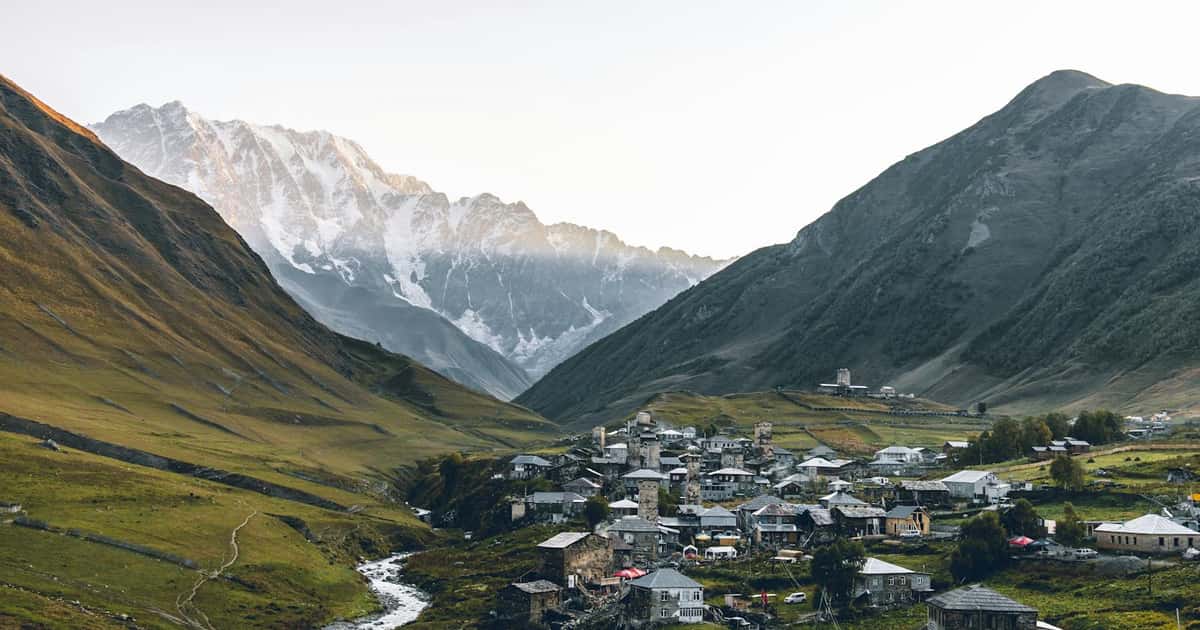
Somewhere between the cobalt rush of a glacial river and the silhouette of a medieval stone tower against a ridge, you realise that Svaneti is unlike anywhere you have hiked before. This remote highland region in the Greater Caucasus of northwest Georgia has been home to the Svans — an ancient, fiercely independent people — for millennia. The landscape they inhabit is staggeringly beautiful: jagged peaks rising above 4,000 and even 5,000 metres, alpine meadows carpeted in wildflowers, and valleys where defensive towers dating back to the ninth century still stand guard over scattered villages.
If you are drawn to mountain trekking that combines physical challenge with deep cultural immersion, Svaneti delivers both in ways that few destinations can match.
Quick Facts at a Glance
- Country: Georgia (Transcaucasia)
- Region: Upper Svaneti, Greater Caucasus Mountains, northwest Georgia
- Main hub: Mestia (approximately 1,500 m elevation)
- Classic trek: Mestia to Ushguli — 4 days / 3 nights
- Difficulty: Challenging — long days, significant elevation gain/loss, one glacial river crossing
- Best time to hike: June through September (high passes snow-free, most reliable weather)
- Currency: Georgian lari (GEL)
- Language: Georgian (Svan locally); English is increasingly spoken in guesthouses
- Visa: Georgia offers visa-free entry to citizens of many countries — verify requirements for your nationality before travel
- Recommended trip length: 7–10 days including travel time from Tbilisi
- Budget level: Georgia is one of the most affordable trekking destinations in the world — guesthouse half-board is inexpensive by European standards
- Getting there: Overnight marshrutka (shared minibus) from Tbilisi, daytime marshrutka from Kutaisi, or small domestic flight to Mestia
Why Trek in Svaneti?
Svaneti is not just a hiking destination. It is a place where the boundary between the natural world and human culture feels unusually thin. Several things make it genuinely stand out among mountain trekking regions.
The Svan towers. Across Upper Svaneti, narrow stone defensive towers — known locally as koshki, or Svan towers — punctuate every village. Most date from the ninth to thirteenth centuries and were built as refuge during blood feuds and invasions. The result is a landscape that looks almost medieval even today: clusters of towers rising from green valleys with snow-capped peaks behind them. The towers of Ushguli are a UNESCO World Heritage Site, and they are not museum pieces — families still live among them.
Dramatic peaks without the Himalayan price tag. The Caucasus form one of the most impressive mountain ranges on Earth, yet Georgia remains remarkably affordable. From various points on the trek you can see Ushba (approximately 4,700 m), a striking twin-peaked mountain that draws climbers from around the world; Tetnuldi (approximately 4,858 m), now also a ski area; and Shkhara (approximately 5,200 m), Georgia's highest peak, towering above Ushguli at the head of the Enguri valley.
Genuine cultural immersion. You stay not in trekking lodges designed for tourists but in the homes of Svan families. You eat their food, share their table, and wake to the sound of cowbells in the meadow. The Svan people have their own language, their own traditions, and a pride in their land that is palpable. This is not staged authenticity — it is simply how people here live.
Accessibility without crowds. The Mestia to Ushguli trail is popular enough to have a waymarked route and a guesthouse infrastructure, but you will not encounter the kind of traffic that defines classic treks in Nepal or the European Alps. On some sections, you might walk for an hour without seeing another group.
Upper Svaneti: A Short Region Overview
Svaneti sits in the northwest corner of Georgia, bordered by the Russian republics of Kabardino-Balkaria and Karachay-Cherkessia to the north and the breakaway region of Abkhazia to the west. It is divided into two parts: Lower Svaneti, centred on the town of Lentekhi, and Upper Svaneti, which is the focus of this guide.
Upper Svaneti is itself split into two main valleys. The Enguri valley runs southeast from the headwaters near Ushguli down through a string of villages to Mestia and beyond. This is the heartland of Svan tower architecture and the setting for the classic trek. A side valley leads to Tetnuldi, where a modern ski resort operates in winter and serves as a base for summer hiking at higher elevations.
Mestia is the administrative centre and the main hub for travellers. It has an airport, a small museum, a growing number of guesthouses and cafés, and the best provisioning options in the region. It sits at roughly 1,500 metres, meaning you start the trek already at moderate altitude.
Ushguli, at approximately 2,200 metres, is one of the highest continuously inhabited villages in Europe. Its cluster of towers, with Shkhara looming at the end of the valley, is one of the iconic images of the Caucasus. Ushguli is the terminus of the classic four-day trek and a destination in its own right.
The Classic Mestia to Ushguli Trek (4 Days / 3 Nights)
The Mestia to Ushguli route is the quintessential Svaneti trekking experience. It covers roughly 55 to 60 kilometres through three distinct valleys, crossing two high passes and one major river. The trail passes through a string of traditional villages where guesthouse accommodation and home-cooked meals are available, meaning you can trek with a light pack and no camping gear.
The route is generally waymarked with red and white paint blazes, and GPS tracks are widely available. It is popular enough in summer that you will usually encounter other trekkers, but it is not crowded in the way that major European routes can be.
Day 1: Mestia to Zhabeshi
- Distance: Approximately 12–14 km
- Time: 5–6 hours
- Ascent: Approximately 600 m
- Descent: Approximately 400 m
Leave Mestia heading east, following the trail as it climbs gently through pine forest and open meadow toward the first pass of the trek, the Chkhutnieri Pass at approximately 2,340 metres. On a clear day, the views open up dramatically as you gain height, with Ushba potentially visible to the northwest.
The descent from the pass brings you into the next valley and down to the village of Zhabeshi, a small settlement of traditional Svan houses and stone towers. This is your overnight stop. The guesthouses here are family-run and welcoming, and dinner will likely be your first proper taste of Svan home cooking — think freshly baked bread, local cheese, bean stews, and perhaps kubdari if you are lucky.
Day 2: Zhabeshi to Adishi
- Distance: Approximately 10–12 km
- Time: 5–7 hours
- Ascent: Approximately 700 m
- Descent: Approximately 600 m
From Zhabeshi, the trail follows the valley upstream before climbing to the Chunchushi Pass at approximately 2,380 metres. The ascent is steady rather than brutal, and the meadows on the approach are spectacular in July when wildflowers are at their peak.
The descent leads into the Adishi valley, where the small village of Adishi sits beneath dramatic peaks. Adishi is one of the most atmospheric stops on the route — a cluster of towers and traditional homes in a wide, peaceful valley. The guesthouses here have some of the best food on the entire trek.
This is also where you get your first close view of the Adishi Glacier, which hangs in the mountains above the village. Tomorrow morning you will be crossing the river that flows from it.
Day 3: Adishi to Iprari (via the Adishi River Crossing)
- Distance: Approximately 14–16 km
- Time: 6–8 hours
- Ascent: Approximately 700 m
- Descent: Approximately 900 m
This is the most demanding and memorable day of the trek. You leave Adishi early and head up-valley toward the Adishi Glacier. The trail crosses several side streams before reaching the main Adishi River crossing — a cold, fast-flowing glacial stream that is one of the defining features of this trek.
The crossing is typically done in the morning when water levels are at their lowest. Many trekkers opt to hire one of the local horses that wait at the river — the Svan horsemen charge a modest fee and ferry you and your pack across. Whether you ride or wade, the water is bracing.
After the crossing, the trail climbs steeply to the Lakhamula Pass (also sometimes called the Chkhutnieri or Adishi Pass depending on the source) at approximately 2,650 metres — the highest point on the standard route. From the top, views stretch across multiple valleys of the Greater Caucasus.
The descent is long and can be tough on the knees, dropping through alpine pasture and eventually reaching the village of Iprari (sometimes called Khalde or Ipari in different transliterations). This is a smaller village but has basic guesthouse accommodation. By the time you arrive, you will have earned your dinner.
Day 4: Iprari to Ushguli
- Distance: Approximately 12–14 km
- Time: 5–6 hours
- Ascent: Approximately 300 m
- Descent: Approximately 200 m (net descent to Ushguli)
The final day is the easiest in terms of elevation, though it still involves several hours of walking. The trail follows the valley through a series of small settlements — you may pass through Bogi, Lalkhori, and other hamlets — as it gradually approaches Ushguli.
As you near Ushguli, the towers come into view: first one cluster, then another, and then the full panorama of the Ushguli community — a spread of towers and homes with the massive white pyramid of Shkhara (approximately 5,200 m) filling the head of the valley. It is one of the great mountain views anywhere.
Ushguli has several guesthouses, a small museum, and the Lamaria Church, perched on a hilltop above the village, which dates to the ninth or tenth century and contains important medieval frescoes. Plan to spend at least one full night here before moving on.
Day Hikes from Mestia
If you have extra days in Svaneti — and you should try to build them in — Mestia is an excellent base for shorter hikes that do not require overnight commitment.
Chalaadi Glacier
A popular half-day hike following a trail through forest and alongside a river up to the terminal moraine of the Chalaadi Glacier. The round trip is roughly four to five hours from Mestia, with moderate elevation gain. The glacier sits on the northeast face of the Caucasus range, and the scenery is dramatic — ice walls, boulder fields, and the sound of the glacier shifting. Start early in the day for the best light and fewer people.
Koruldi Lakes
The hike to the Koruldi Lakes is a longer day trip — roughly six to seven hours round trip — climbing from Mestia into the mountains to the west. The two alpine lakes sit at approximately 2,800 metres, and on a clear day, the views of Ushba and the surrounding peaks are among the finest in the entire region. The ascent is sustained, so this is best saved for a day when you are feeling strong and the weather is settled.
Mestia Cross Viewpoint
For a shorter outing, the trail up to the cross on the hill above Mestia takes about one to two hours from the centre of town and rewards you with a panoramic view over Mestia, the surrounding valley, and the towers below. It is an excellent warm-up hike on your first day or a gentle option for a rest afternoon.
Difficulty & Fitness
The Mestia to Ushguli trek is rated challenging. Let's be specific about why.
- Long days: Most stages take five to eight hours of walking. You are on your feet for a significant portion of the day, and there is limited option to shorten stages once committed.
- Elevation changes: The daily ascents and descents range from roughly 400 to 900 metres. The cumulative elevation gain over the four days is approximately 2,300 metres. The descents are often steeper and more taxing on the joints than the climbs.
- High passes: Two passes above 2,300 metres and one approaching 2,650 metres. These are not extreme altitudes, but the air is noticeably thinner than at sea level, and weather at the passes can change rapidly.
- The Adishi River crossing: This is the single most discussed feature of the trek. The water comes directly from the Adishi Glacier and is extremely cold even in midsummer. Flow rates depend on recent temperatures and the time of day — mornings are safer. The river is typically knee-deep to thigh-deep, but the current is strong. Many trekkers hire a local horse for the crossing, which is a sensible choice even for experienced hikers.
- Variable mountain weather: Summer in Svaneti generally means warm days and cool nights, but mountain weather is inherently unpredictable. Rain, fog, and even snow at higher elevations can arrive with little warning, and the temperature can drop rapidly on the passes.
Fitness requirements: You do not need to be an elite athlete, but you should be a regular hiker comfortable with full-day walks involving sustained climbing. If you regularly hike in mountainous terrain at home — the kind of days that involve six to eight hours on the trail with significant elevation — you will be well prepared. If your hiking experience is limited to shorter valley walks, invest four to six weeks in training before the trip: long walks with a loaded pack, hill repeats, and any activity that builds cardiovascular endurance and leg strength.
Guided vs Self-Guided Trekking
The Mestia to Ushguli trail sits in a comfortable middle ground between a fully supported guided expedition and a wild, remote wilderness experience.
Self-guided trekking is entirely feasible for experienced hikers. The trail is waymarked, GPS tracks are widely shared online, and the guesthouse network means you do not need to carry food, fuel, or shelter. You do need competence in mountain navigation — fog can make the passes disorienting — and the self-reliance to manage the river crossing and changing conditions.
Guided treks are available through operators based in Mestia and Tbilisi. A guide handles route-finding, arranges guesthouses in advance, provides cultural context you would otherwise miss, and offers a safety net for the river crossing and high passes. For hikers new to multi-day trekking or unfamiliar with mountain environments, a guide is a sound investment.
Porters or pack horses can be arranged if you want to trek with just a daypack. Given that the guesthouses provide bedding and meals, most hikers find their packs light enough to carry themselves, but the option exists.
Accommodation: Svan Guesthouses
The guesthouse network is one of the defining features of Svaneti trekking and one of its greatest strengths. Rather than staying in trekking lodges or campsites, you sleep in the homes of Svan families in each village along the route.
What to expect: Rooms are simple — usually a bed with clean bedding, sometimes a shared bathroom, occasionally a hot shower (though this is not guaranteed in every village). The focus is not on luxury but on warmth, hospitality, and authenticity.
Half-board is standard. Nearly all guesthouses offer dinner and breakfast included in the room price. The food is home-cooked, substantial, and deeply local — this is not a tourist menu. You will eat what the family eats: fresh bread baked that afternoon, local cheeses, bean and vegetable stews, salads, and often meat dishes. In Adishi and Zhabeshi, kubdari — the Svan spiced meat bread — may appear fresh from the oven.
Booking: In the peak months of July and August, it is wise to have your guesthouses arranged in advance, either through a local contact in Mestia or via the messaging groups and informal booking networks that have developed around the trek. Outside peak season, you can often find a bed by simply arriving in the village and asking, but this carries some risk of being turned away if a large group has already filled the available rooms.
The social side: Dinner is often a communal affair. You may eat with the family, with other trekkers, or both. These evenings — sharing food and sometimes chacha (Georgian grape brandy) around a table in a Svan home with the mountains dark outside — are what many trekkers remember most vividly from the entire trip.
Getting to Svaneti
Svaneti's remoteness is part of its appeal, but it does require some logistical planning.
From Tbilisi by marshrutka: The most common route is an overnight shared minibus (marshrutka) from Tbilisi's Didube station to Mestia. The journey takes roughly eight to ten hours on mountain roads, departing in the evening and arriving in Mestia in the early morning. It is an experience in itself — winding roads, dramatic scenery as you enter the Caucasus foothills, and a sense of genuine journey. Buy tickets a day in advance in peak season.
From Kutaisi by marshrutka: Kutaisi is closer to Svaneti than Tbilisi and is a common entry point for travellers arriving on budget airlines. Marshrutkas run from Kutaisi to Mestia during daylight hours and take approximately four to five hours. Some services require a change in Zugdidi.
By air: A small domestic flight operates between Natakhtari airfield (near Tbilisi) and Mestia's tiny mountain airstrip, weather permitting. The flight takes about an hour and offers sensational aerial views of the Caucasus. Schedules change from year to year, and flights are frequently cancelled due to weather — treat this as a bonus if it works out, not a plan you depend on.
Returning from Ushguli: After the trek, you can take a shared 4x4 vehicle from Ushguli back to Mestia (roughly two to three hours on a rough road) and then continue by marshrutka to Tbilisi or Kutaisi. Some travellers opt to hire a private vehicle for the return.
Svan Culture & Food
Understanding something of Svan culture enriches the trek enormously. The Svans are a distinct ethnic group within Georgia, with their own unwritten language (Svanuri), their own religious traditions blending Orthodox Christianity with older animist practices, and a deep attachment to their land.
Food is central to Svan hospitality. Several dishes define the culinary landscape of the region:
- Kubdari — perhaps the signature Svan dish. A round bread filled with finely chopped spiced meat (usually beef or pork, sometimes both), seasoned with local herbs and spices. When freshly baked in a stone oven, it is extraordinary.
- Svan salt — a deeply flavoured seasoned salt made with garlic, dried herbs, and spices. It appears at every table and is sold in markets as a souvenir. It is worth bringing home.
- Khachapuri — the famous Georgian cheese bread, found throughout the country but prepared with local variations in Svaneti.
- Tashmjabi — a rich, comforting dish of mashed potatoes mixed with local Sulguni cheese, sometimes with the addition of shredded meat.
- Chacha — a potent grape brandy that functions as both a social lubricant and a gesture of hospitality. Accepting a small glass when it is offered is good manners, but pace yourself — it is strong.
Respectful behaviour in villages: Svaneti's villages are living communities, not open-air museums. Dress modestly when visiting churches (the Lamaria Church in Ushguli is a particular highlight). Ask permission before photographing people or the interiors of homes. Be aware that some towers are family property — admire them from the outside unless invited in. Georgia is a country where hospitality is a point of honour; respond to it with courtesy and you will be warmly welcomed.
Best Time to Visit
Svaneti's trekking season is dictated by snow cover on the high passes and the behaviour of the glacial rivers.
June: The passes are usually clear by mid-June, though late-lying snow can linger in cooler years. Meadows are green and lush with snowmelt. Fewer trekkers on the trail. Some guesthouses may not yet be fully operational. Weather can be mixed.
July: Peak season begins. Wildflowers are at their best — the alpine meadows between Zhabeshi and Adishi are particularly spectacular. Long daylight hours and the most reliable weather window. All guesthouses are open. The Adishi River is manageable in the mornings. This is the safest bet for first-time visitors.
August: Still excellent, with warm, stable weather generally holding through the month. The busiest month on the trail, though "busy" is relative — you will not be queueing. River levels may be slightly higher later in the day due to increased glacial melt.
September: A beautiful time to trek, with cooler temperatures, autumn colours beginning to appear, and far fewer people on the trail. Weather becomes less predictable — rain and even early snow at the passes are possible. Daylight hours shorten noticeably. A good choice for experienced trekkers who prefer solitude and can handle a bit more uncertainty.
October through May: The high passes are generally snowbound and the trek is not recommended. Some sections may be accessible as day hikes from Mestia, but the full Mestia-to-Ushguli route is effectively closed for the winter.
Costs & Budgeting
One of Svaneti's great attractions is that Georgia is one of the most affordable mountain-trekking destinations anywhere. While it is not possible to give exact prices that will remain accurate, the following qualitative guidance should help with planning.
Guesthouse half-board in the Svaneti villages is inexpensive — substantially less than comparable trekking accommodation in the European Alps, the Dolomites, or even Nepal's Annapurna region. For the quality of food and the experience of staying in a family home, it represents outstanding value.
Transport costs are low. Marshrutkas within Georgia are cheap. The domestic flight to Mestia costs more than the bus but is still very reasonable by international standards.
Meals and drinks in Mestia — at the guesthouses and small restaurants that serve the growing number of visitors — are also inexpensive. A hearty meal with a beer or glass of wine costs a fraction of what you would pay in Western Europe.
Guides and horse hire for the Adishi River crossing add cost but are still affordable. A local guide for the full four-day trek, if you choose to hire one, is much less expensive than guided trekking in most other mountain regions.
Overall budget: A trekker visiting Svaneti from Tbilisi, completing the four-day Mestia to Ushguli route with guesthouse accommodation, and spending a couple of extra days in Mestia for day hikes, can expect the in-country portion of the trip to cost very little compared to equivalent experiences in Europe or North America. Georgia's affordability is genuine and consistent — this is not a destination where you arrive to find that the budget prices advertised online bear no relation to reality.
Safety & Practical Tips
Georgia is generally very safe for travellers. Crime against tourists is rare, and the hospitality culture means that help is usually close at hand. The main safety considerations on the Svaneti trek are mountain-related.
Weather: Check conditions before setting out each morning. Ask your guesthouse host about the state of the trail and river crossings — they have current, local knowledge. Carry rain gear and warm layers even on days that start clear.
River crossings: The Adishi River is the most significant hazard. Cross in the morning when water levels are lowest. If the river looks dangerously high — which can happen after sustained rain or a hot spell accelerating glacial melt — wait or find an alternative. Do not attempt a crossing barefoot; use sturdy sandals or trail shoes that you do not mind getting wet.
Navigation: Carry a GPS device or a phone with offline maps and downloaded GPX tracks. The trail is generally clear, but fog on the passes can reduce visibility dramatically. A basic compass is a sensible backup.
Communication: Mobile phone coverage is patchy on the trail and non-existent on the passes and in some valleys. Do not rely on your phone for emergencies. Consider carrying a personal locator beacon if you are trekking independently.
Cash: This is critical. Svaneti is remote and ATMs are extremely limited. Mestia has one or two ATMs that may or may not be working on any given day and may not accept foreign cards. Ushguli's ATM situation is even less reliable. Bring enough cash in Georgian lari to cover your entire stay, including guesthouses, meals, transport, and the horse crossing at the Adishi River. Guesthouses generally accept cash only.
First aid: Carry a basic first-aid kit with blister treatment, pain relief, plasters, antiseptic, and any personal medications. Guesthouse hosts can help with minor issues, but you are hours from formal medical care on the trail.
Water: Stream water in the Svaneti mountains is generally clean, but treat or filter it as a precaution, especially downstream of villages and pastureland.
Beyond Svaneti: A Note on Other Georgian Destinations
Most international visitors arrive in Georgia through Tbilisi, the capital, and it is worth allowing at least a day or two there on either side of your Svaneti trip. Tbilisi is a beautiful, walkable city with a fortified old town, thermal baths, outstanding food, and a cultural energy that makes it one of the most appealing cities in the region.
For hikers wanting more of Georgia's mountains after Svaneti, the other iconic destination is Kazbegi (officially Stepantsminda) in the east of the Greater Caucasus range, roughly two to three hours north of Tbilisi by road. The Gergeti Trinity Church, sitting at 2,170 metres beneath the volcanic cone of Mount Kazbek (approximately 5,047 m), is one of the most photographed scenes in the entire Caucasus. Day hikes and longer trails are available in the area, and it makes a natural complement to a Svaneti-focused trip.
But Svaneti is the crown jewel of Georgian mountain trekking, and it deserves to be the centrepiece of your visit.
Final Thoughts
Svaneti trekking offers something that has become rare in the world of mountain travel: a genuinely remote, culturally rich, physically demanding experience that remains accessible and affordable. The Mestia to Ushguli route is the kind of trek that changes the way you think about what hiking can be — not just a physical journey through a landscape, but a passage through a living culture that has occupied that landscape for thousands of years.
The Caucasus are not as well known as the Alps or the Himalayas, and that is part of their power. The peaks are every bit as dramatic, the hospitality is warmer than almost anywhere in the mountains, and the sense of stepping into a world apart — one of stone towers and glacial rivers and home-cooked meals shared with strangers who quickly feel like friends — is immediate and lasting.
Plan for summer. Bring good boots and enough cash. Pack a sense of adventure. Georgia's mountains are waiting.
Frequently Asked Questions
The trek is rated challenging. Daily stages range from five to eight hours with significant ascent and descent, and one day involves crossing the cold, fast-flowing Adishi River — often done on horseback. No technical mountaineering skills are needed, but you should be comfortable with sustained full-day hiking in mountainous terrain and be prepared for variable weather at high altitude.
The standard Mestia to Ushguli trek takes four days and three nights, sleeping in village guesthouses along the route. Some hikers add an extra rest day in Ushguli at the end. If you include travel time to and from Tbilisi, allow at least six to seven days for the full trip.
June through September is the reliable trekking season. July and August offer the most stable weather and the best chance that high passes are clear of snow. September brings cooler temperatures and fewer trekkers but slightly less predictable conditions. Avoid the winter and early spring months, when deep snow closes the passes.
A guide is not required. The trail is well waymarked and popular during the summer months, and many independent hikers complete it each year. However, conditions can change quickly in the mountains, the Adishi River crossing demands care, and route-finding in fog is not trivial. A local guide adds cultural insight and peace of mind, especially if you are new to self-supported multi-day trekking.
The most common route is an overnight marshrutka (shared minibus) from Tbilisi or a daytime marshrutka from Kutaisi to Mestia, the main hub of Upper Svaneti. A small domestic flight between Natakhtari and Mestia also operates when weather permits and is a dramatic way to arrive. Allow a full day for overland travel each way.
Accommodation is in family-run guesthouses in the villages along the route — Zhabeshi, Adishi, Iprari, and Ushguli. Most offer half-board with dinner and breakfast featuring home-cooked Svan food. Rooms are simple but comfortable, typically with shared bathrooms. This guesthouse network is one of the trek's great pleasures and means you do not need to carry camping gear.
Georgia is widely regarded as very safe for travellers, including solo hikers. Crime against tourists is rare, and Georgian hospitality is legendary. In Svaneti specifically, the local communities are welcoming and accustomed to foreign trekkers. The main risks are mountain-related — weather changes, river crossings, and the usual hazards of alpine terrain — rather than personal security.
Adventure Knit Editorial
Destination research compiled and fact-checked by the Adventure Knit editorial team from published sources, operator itineraries, and official tourism boards. Spot something out of date? Tell us at hello@adventureknit.com.
Related Stories
 Montenegro
Montenegro Travel Guide: Bay of Kotor & Durmitor
Complete Montenegro travel guide covering the Bay of Kotor, the walled towns of Budva and Kotor, Durmitor National Park, the Adriatic coast and the northern mountains.
 Romania
Transylvania & the Carpathians: Romania Adventure Guide
Complete Romania travel guide covering Transylvania, Bran and Peleș castles, the Carpathian mountains, painted monasteries of Bucovina and the Danube Delta.
 Rwanda
Gorilla Trekking in Rwanda: Volcanoes National Park Guide
Complete guide to gorilla trekking in Rwanda's Volcanoes National Park. Permit reality, best time, fitness prep, a 5-day itinerary, costs and safety for your mountain gorilla trek.
Enjoyed this article?
Explore more stories from our adventures around the world