
Montenegro Travel Guide: Bay of Kotor & Durmitor
Categories
Tags
Montenegro is a compact Balkan country on the Adriatic where a dramatic mountainous interior meets a stunning coastline. Travelers come for the fjord-like Bay of Kotor, the walled old towns of Kotor and Budva, the peaks and Tara Canyon of Durmitor National Park, and the beaches of the Budva Riviera. The best months are May–June and September–October; ten days lets you combine the coast with the northern mountains.
Montenegro Travel Guide: Bay of Kotor & Durmitor
For a country smaller than Wales, Montenegro packs an absurd amount of drama. A wild tangle of the Dinaric Alps crashes straight into the Adriatic, gouging out the fjord-like Bay of Kotor, while inland the peaks of Durmitor and the Tara Canyon — Europe's deepest gorge — offer some of the most underrated hiking in Europe. Between them, walled Venetian towns, hidden mountain monasteries, and a glittering coast have made Montenegro one of the Mediterranean's fastest-rising destinations. It is more affordable than Croatia next door, more mountainous, and far less crowded once you leave the Budva Riviera. The trick is to do both the coast and the north — most visitors never leave the sea, and they miss the best of the country.
Quick Facts at a Glance
- Capital: Podgorica (the historical capital is Cetinje)
- Currency: Euro (EUR), even though Montenegro is not in the eurozone officially
- Language: Montenegrin (very close to Serbian, Croatian, and Bosnian); English widely spoken on the coast
- Religion: Predominantly Serbian Orthodox, with Muslim and Catholic minorities
- Visa: Visa-free up to 90 days for US, Canada, EU, UK, Australia, and many others
- Population: Around 620,000
- Best for: Mountains, walled towns, the Adriatic coast, hiking, rafting
- Recommended duration: 7–10 days
- Budget: More affordable than Croatia; cheaper still in the north
- Getting around: Rental car ideal; decent buses between main towns
- Time zone: Central European Time (CET)
Why Visit Montenegro?
Montenegro's appeal is how much it crams into a short drive, and how dramatic all of it is.
What Makes Montenegro Special
- The Bay of Kotor: One of the most beautiful bays in the Mediterranean, a flooded river valley ringed by mountains.
- Walled Venetian towns: Kotor, Budva, and smaller settlements preserve medieval stone cores.
- Serious mountains: The Dinaric Alps, Durmitor, Prokletije, and the Tara Canyon.
- Compact size: You can swim in the sea and stand in mountain snow on the same day.
- Value: Less expensive than Croatia and far cheaper than Western Europe.
- Still under the radar: Outside Kotor and Budva in August, the country feels uncrowded.
Montenegro Region by Region
The Bay of Kotor (Boka Kotorska)
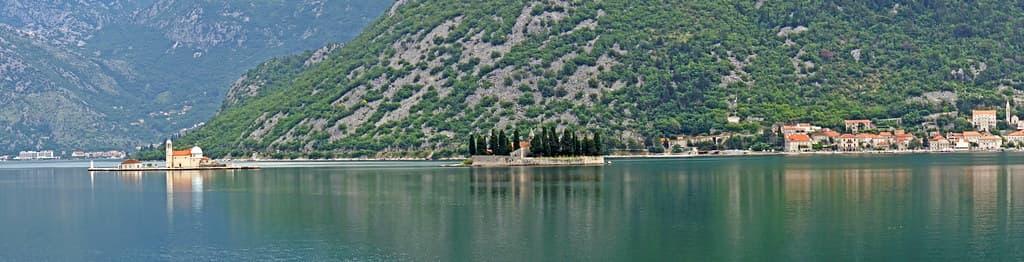
The Boka is the headline act — a series of interconnected bays ringed by steep, gray mountains, dotted with churches, palazzos, and tiny stone villages. Kotor itself has a beautifully preserved medieval old town hemmed by walls that climb the mountain to the fortress of San Giovanni (a steep but essential hike for the view). Across the bay, Perast is a baroque gem of palaces and church towers, with two picture-perfect islets — Our Lady of the Rocks and St. George. Tivat has been transformed by the Porto Montenegro marina into a luxury yachting hub, while Herceg Novi at the bay's entrance has a relaxed, garden-rich charm.
The Budva Riviera and the Coast
South of the Boka, the Budva Riviera is Montenegro's beach capital. Budva has a lovely walled old town on a small peninsula, though in peak summer it is loud and crowded. Better are the quieter coves around Sveti Stefan — a fortified islet turned luxury hotel — and the long sandy beach at Jaz and Bečići. Further south, Bar has old-town ruins and beaches, Ulcinj (with its Albanian-influenced culture) has a spectacular sandy beach at Velika Plaža, and the saltwater Lake Skadar on the Albanian border is a vast national park of birds, water lilies, and hidden monasteries.
Cetinje and the Old Royal Capital
Inland from the coast, Cetinje is Montenegro's old royal capital, a quiet town of historic embassies, the Cetinje Monastery, and museums that tell the story of Montenegro's remarkable survival as an independent principality under the Ottomans. It is a worthwhile cultural stop and a cooler, calmer contrast to the coast. Nearby, the Njeguši village and the dramatic road up to the Lovćen national park and the Mausoleum of Njegoš deliver some of the country's best panoramas.
Durmitor and the Northern Mountains
The north is where Montenegro reveals its wild heart. Durmitor National Park, a UNESCO site, is a plateau of peaks over 2,300 m, alpine lakes (including the famous Black Lake / Crno Jezero), dense pine forest, and the Tara River Canyon — at 1,300 m deep, the deepest gorge in Europe and a magnet for rafting. The town of Žabljak is the base. Beyond Durmitor lie the Prokletije ("Accursed Mountains") on the Albanian border, the Piva canyon and lake, and the Biogradska Gora national park with its primeval forest.
Ostrog Monastery
Halfway between the coast and Podgorica, the Ostrog Monastery is one of the Balkans' great pilgrimage sites — a gleaming white monastery carved into a vertical cliff face, dedicated to the 17th-century Saint Basil. Even for non-religious visitors, the setting and the devotion on display make it unforgettable. Visit early in the day to avoid the worst crowds.
Top Things to Do
The Boka and the Coast
- Wander Kotor's old town and climb to the San Giovanni fortress
- Boat to Our Lady of the Rocks from Perast
- Photograph Sveti Stefan from above
- Swim at Jaz, Mogren, or the long beach at Velika Plaža
Mountains and Adventure
- Hike around Crno Jezero (Black Lake) in Durmitor
- Raft the Tara River Canyon
- Drive the dramatic Piva Canyon road
- Hike a peak in Lovćen or Prokletije
Culture and History
- Visit the cliff-clinging Ostrog Monastery
- Explore the old royal capital of Cetinje
- Browse the Venetian stonework of Kotor and Budva
- Birdwatch on Lake Skadar
Suggested 7–10 Day Montenegro Itinerary
Days 1–3 — The Bay of Kotor
Base yourself in or near Kotor; explore the old town and fortress, take a boat to Perast and Our Lady of the Rocks, and drive the full loop of the bay.
Days 4–5 — The Budva Riviera
Move south to Budva or Sveti Stefan; enjoy the beaches, the walled town of Budva, and a day on Lake Skadar.
Day 6 — Cetinje, Lovćen, and Njeguši
Drive the dramatic serpentines from the coast to Cetinje, up to Lovćen for the mausoleum view, and back down through Njeguši for smoked ham.
Days 7–9 — Durmitor and the North
Head north to Žablijak; hike around Black Lake and a Durmitor peak, raft the Tara Canyon, and drive the spectacular Piva Canyon.
Day 10 — Ostrog and Departure
Stop at Ostrog Monastery on the way back to Podgorica or the coast, then depart.
Best Time to Visit
Shoulder Seasons (May–June, September–October) — Best Overall
Warm weather, warm-enough sea, clear visibility in the mountains, and a fraction of the summer crowds. The sweet spot for combining coast and mountains.
Summer (July–August)
Hot, busy, and at peak prices along the coast, but the mountains are at their best — alpine wildflowers, clear trails, and relief from the coastal heat.
Winter (December–March)
Cold and quiet on the coast, with snow in the mountains and a small ski season at Kolašin and Žabljak. Good for snowshoeing, empty old towns, and low prices.
Getting There and Around
Fly into Podgorica (TGD) or Tivat (TIV) on the coast, or — most popularly — into Dubrovnik (DBV) in Croatia and drive south across the border to the Bay of Kotor (about an hour). Once there:
- Rental car: The best way to see both coast and mountains; roads are generally good, though mountain routes are winding.
- Buses: Frequent and decent between the coast, Podgorica, and the northern towns.
- Boats: Water taxis and tours ply the Bay of Kotor.
- Taxis: Plentiful in tourist areas; agree fares in advance.
Where to Stay
- Budget: Guesthouses and apartments (sobe) throughout the coast and mountains.
- Mid-range: Small hotels and stone guesthouses in Kotor, Budva, and Žabljak.
- Boutique: Restored Venetian-era stone houses in the Boka villages.
- Luxury: A handful of high-end resorts, including the famous Aman Sveti Stefan and Porto Montenegro.
Food and Drink
Montenegrin food blends coastal Mediterranean and mountain Balkan traditions:
- Seafood: Fresh fish, calamari, and mussels on the coast, especially around the Boka.
- Njeguši pršut: Famous smoked and air-dried ham from the mountains.
- Kajmak: A rich clotted dairy spread served with meats and bread.
- Ćevapi: Grilled minced-meat sausages with onions and kajmak.
- Lamb in milk (jagnjetina u mlijeku): A slow-cooked mountain specialty.
- Wine: Local Vranac red wine is robust and food-friendly.
- Rakija: Fruit brandy (loza from grapes, šljivovica from plums), offered as a welcome.
Costs and Budgeting
Montenegro sits below Croatia on price and well below Western Europe. The Budva Riviera and Kotor's old town in July and August are the most expensive spots, while the northern mountains, Lake Skadar, and the off-season coast are very affordable. Accommodation ranges from cheap apartments to luxury resorts; local konobas serve generous meals at moderate prices; and the Tara rafting and Durmitor activities are reasonably priced. A rental car for a week is the single biggest cost for most travelers and unlocks the whole country. Prices here are intentionally qualitative, as they vary sharply with the season.
Safety and Practical Tips
- Mountain safety: Stick to marked trails, carry water, a map or GPS, and check the weather before serious hikes; conditions change fast at altitude.
- Driving: Mountain roads are winding and narrow; drive defensively and watch for livestock.
- Sun and heat: July and August are scorching on the coast — hydrate and use sun protection.
- Summer crowds: Book accommodation and the Kotor fortress entry well ahead in peak season.
- Earthquakes: Montenegro is seismically active; follow local guidance if one occurs.
- Cash: Cards are widely accepted on the coast and in towns, but carry some cash in the mountains.
Beyond the Headlines: Lake Skadar, Prokletije, and the Wild East
Most first-time visitors concentrate on the Boka and Budva, but Montenegro's deeper rewards lie beyond them. Lake Skadar (Skadarsko Jezero), the largest lake in the Balkans and a national park shared with Albania, is a watery world of birdlife (including rare Dalmatian pelicans and pygmy cormorants), floating meadows of water lilies, hidden island monasteries, and traditional fishing villages — explore it by boat from Virpazar and you'll see a side of Montenegro most visitors miss. The Prokletije ("Accursed Mountains") on the Albanian border are the country's wildest and least-visited range, a rugged alpine playground of glacial lakes, sharp peaks, and remote valleys around Plav and Gusinje, including the spectacular Hrid Lake and the Visitor peaks. This is genuine frontier hiking with few other tourists and a strong Albanian-influenced culture. Add the Biogradska Gora primeval forest and lake, one of Europe's last tracts of untouched old-growth woodland, and the eastern itinerary reveals a Montenegro that feels completely different from the postcard Boka.
The Tara Canyon and Mountain Adventures
The Tara River Canyon, 82 km long and up to 1,300 m deep, is the deepest gorge in Europe and the second-deepest in the world after the Grand Canyon in some measures. The river that carved it — nicknamed the "Tear of Europe" for its startling clarity — is the centerpiece of the country's adventure scene. White-water rafting trips run from half-day taster runs to full-day descents through the canyon's most spectacular section, with rapids up to class IV–V in spring high water and gentler summer flows that suit near-beginners. Operators based in Žabljak and along the river arrange everything, with experienced guides, equipment, and riverside lunches of fresh trout. Beyond rafting, the canyon offers zip-lines, hiking along the rim, and viewpoints that drop vertiginously to the green river far below. Combine the Tara with Durmitor's peaks, Prokletije's wildness, and the Piva Canyon road — one of the most dramatic drives in the Balkans, hugging a turquoise reservoir between sheer cliffs — and the northern mountains deliver a genuine adventure alternative to the Mediterranean coast.
Kotor's Walls, Perast, and the Boka in Depth
The Bay of Kotor rewards slow exploration, and the more time you give it, the more it gives back. Kotor's old town is a maze of small squares, churches (the 12th-century St. Tryphon Cathedral is the highlight), palazzos, and cats — the city's beloved stray population is a minor tourist attraction of its own. The climb up the walls to the San Giovanni (St. John) fortress, 1,350 steps in the heat, is challenging but the panorama over the bay is the iconic image of Montenegro; go early morning or near sunset to beat both the heat and the cruise-ship crowds that flood the town during the day. Across the bay, Perast is a single elegant street of baroque palaces and churches running along the water, with boat trips out to the twin islets — Our Lady of the Rocks, an artificial island with a church and museum built by generations of local sailors depositing stones, and the natural St. George islet with its ancient Benedictine monastery. Beyond Perast, the villages of Prcanj, Stoliv, and Dobrota offer quieter, more atmospheric bases than Kotor itself, with waterfront cafes, restored stone houses, and the same staggering backdrop of mountains falling into the sea. Spend a few days in the Boka rather than a single night, and it becomes the heart of the trip.
Kotor to Durmitor: The Drive and the Piva Canyon
The journey from the Bay of Kotor up to the northern mountains is itself one of the great experiences of a Montenegro trip, and travelers who rush it miss half the fun. The road climbs steeply out of the Boka through a series of switchbacks — the famous serpentine of Kotor, with its 25 numbered hairpin bends, each opening a more dramatic view back down over the bay — to the high Krstac pass and the plateau around Njeguši, the village famous for its pršut (smoked ham) and sir (cheese), which make the perfect roadside lunch stop. From there the road continues over the Lovćen massif toward Cetinje, Montenegro's old royal capital, a quiet, leafy town of historic foreign embassies, the Cetinje Monastery (which holds relics of immense religious significance), and absorbing museums on Montenegrin history and culture.
Continuing north toward Durmitor, the road enters the Piva Canyon, one of the most spectacular drives in the Balkans. The canyon was carved by the Piva River and then partly flooded by a hydroelectric dam to create the Piva Lake, a long, impossibly turquoise reservoir wedged between sheer cliffs for dozens of kilometers. The road was literally carved into the cliff face in places, with unlit tunnels and dizzying drop-offs; even confident drivers should take it slowly and stop frequently for the views. Allow a full day for the Kotor-to-Žabljak drive with stops at Njeguši, Cetinje, the Piva Monastery (relocated stone-by-stone before the valley was flooded), and the Piva Lake viewpoints — it is one of the most rewarding road-trip days in southeastern Europe and a perfect bridge between the country's coast and mountains.
A Deep Dive on Montenegrin Food and Drink
Montenegrin food is more varied than its small size might suggest, splitting cleanly between a Mediterranean coast and a hearty mountain interior, with strong influences from Italy, the Balkans, and the long Ottoman presence. On the coast and around the Boka, the cuisine leans Italian and Adriatic: fresh grilled fish, calamari, black risotto colored with cuttlefish ink, brodet fish stew, octopus salad, and excellent olive oil and wine. The fishing villages of the Boka — Rose, Bigova, Bjelila — serve some of the best seafood in the country in simple waterfront settings. A meal of grilled sea bass or squid, a glass of local Vranac red wine, and a view over the bay is one of the great small pleasures of a Montenegro trip.
In the mountains, the table changes entirely. The signature product is Njeguši pršut, smoked and air-dried in the cold, dry mountain air, served thinly sliced with kajmak (a rich clotted cream) and crusty bread. Ćevapi — small grilled skinless sausages of minced beef and lamb, served with chopped onion and somun flatbread — are the everyday fast food. Jagnjetina u mlijeku, lamb slow-roasted in milk until impossibly tender, is the celebration dish of the north; kačamak, a hearty polenta-like dish of potato and cornmeal enriched with kajmak, was the staple of mountain shepherds and is now served in traditional restaurants. The strong plum brandy (šljivovica) and grape brandy (loza) that greet you at every guesthouse and restaurant are both fuel and welcome; sip slowly, as they are often fiercely strong. Finish with priganice (sweet fried dough balls) dipped in honey or jam. For a small country, the Montenegrin table is generous and distinctive.
Practical Tips for a Montenegro Trip
A few practicalities smooth a Montenegro trip considerably. English is widely spoken on the coast and in tourist areas, less so in the northern mountains, where a few words of Serbian/Montenegrin — dobar dan (good day), hvala (thank you), molim (please/excuse) — earn real warmth. The country uses the euro despite not being an EU member, and ATMs and card acceptance are good in towns and on the coast, though you'll want cash in the mountains. Tipping of around 10% is customary in restaurants. Rental cars are the single best investment, and you can pick one up at Tivat, Podgorica, or Dubrovnik airports; an economy car is fine for the whole country, though mountain roads reward a slightly higher clearance. Driving is generally relaxed but mountain routes are winding and narrow — take them slowly and use the numbered lay-bys to let faster local drivers past. Cruise ships flood Kotor on port days (check the schedule online), so visit the old town and fortress in the early morning or evening if you want it quieter. Sun protection and hydration are essential in summer, and mountain gear — sturdy boots, layers, rain shell, map or GPS — is non-negotiable for any hiking in Durmitor or Prokletije, where weather changes fast and signage can be sparse. Travel with a buffer day, embrace the slower Balkan pace, and Montenegro rewards you generously.
Combining Montenegro with Croatia, Albania, and Bosnia
Montenegro sits at the heart of one of Europe's most rewarding corners, and many travelers stitch it into a wider Balkan trip. The classic combination pairs Montenegro with Croatia's Dubrovnik — most visitors arrive via Dubrovnik airport and the short coastal drive south to the Bay of Kotor, and a loop taking in Dubrovnik, the Pelješac peninsula, and the Boka makes a spectacular one- to two-week itinerary. To the south, Albania is an increasingly popular pairing: cross from Ulcinj into Albania's Albanian Alps and the Valbona and Theth valleys (a genuinely spectacular trekking region), or head south to Tirana and the Albanian Riviera for a wilder, cheaper take on the Adriatic coast. To the east, Bosnia and Herzegovina offers the unforgettable old towns of Mostar and Sarajevo, reachable overland from Montenegro's coast or Podgorica.
Within this corner of the Balkans, Montenegro is the natural anchor — small enough to explore thoroughly, varied enough to satisfy both beach-seekers and mountain-lovers, and central enough to combine easily with its neighbors. A two-week "Balkans loop" — Dubrovnik, the Bay of Kotor, the Montenegrin mountains, a crossing into Albania's Alps, and back through Kosovo or Bosnia — is one of the most satisfying and under-traveled itineraries in all of Europe. Even a focused week split between Dubrovnik and the Bay of Kotor, with a couple of days in the Durmitor mountains, delivers a vivid taste of why this corner of the Mediterranean has become one of travel's great rising stars. Whatever combination you choose, build in flexibility for the slow pace of border crossings and mountain roads, and you'll find the western Balkans one of Europe's most rewarding and surprising regions.
Final Thoughts
Montenegro is the rare destination that delivers on both fronts of a great trip — accessible Mediterranean beauty and genuine, under-explored wilderness — within a country you can cross in an afternoon. The coast and the Bay of Kotor are as photogenic as anywhere in Europe, but it is the contrast with the wild north — the peaks of Durmitor, the Tara Canyon, the hidden villages of Prokletije, the birds of Lake Skadar — that makes Montenegro memorable rather than merely pretty. Come for Kotor and a beach, but leave time for the mountains, and you'll understand why so many travelers who arrive for a long weekend end up planning a return. Whatever combination you choose, build in flexibility for the slow pace of border crossings and mountain roads, carry a spirit of adventure, and you will find the western Balkans one of Europe’s most rewarding and surprising regions. Find Montenegro itineraries and operator listings on the tours marketplace and more Balkans stories on the travel blog.
Frequently Asked Questions
Montenegro is a very safe country for travelers, with low violent crime and a relaxed, welcoming atmosphere. Normal common sense with belongings in busy coastal towns and on buses is sufficient. The main hazards are mountain-related — stick to marked trails, carry water and a map in Durmitor and the Dinaric Alps, and check weather before serious hikes.
May to June and September to October are ideal, with warm weather, clear water, and far fewer crowds than midsummer. July and August are the busiest and hottest months, when the coast and Kotor fill with visitors and prices peak. Winter (December–March) brings snow to the mountains and a small ski season around Kolašin and Žabljak.
Seven to ten days lets you cover the Bay of Kotor, the Budva coast, and the northern mountains of Durmitor at a relaxed pace. You can sample the Bay of Kotor in a long weekend, and many visitors do Montenegro as a side trip from Dubrovnik in Croatia, but to see both coast and mountains you need at least a week.
Citizens of the United States, Canada, the European Union, the United Kingdom, Australia, and many other countries can enter Montenegro visa-free for up to 90 days. Montenegro is not yet in the Schengen area, so a visit does not count toward Schengen time. Always confirm current rules before travel.
Montenegro is more affordable than neighboring Croatia and far cheaper than Western Europe, though prices on the Budva Riviera and in Kotor's old town have risen sharply in peak summer. Budget travelers find good value in guesthouses, local konobas (taverns), and the northern mountains, where costs drop considerably. Outside July and August it is an excellent-value destination.
Montenegro is famous for the fjord-like Bay of Kotor and its medieval walled old town, the dramatic peaks and Tara River Canyon of Durmitor National Park, the walled town of Budva, the dramatic Ostrog monastery built into a cliff, and its compact size — you can swim in the Adriatic and stand in snow in the mountains on the same day.
Yes — Montenegro is an excellent and underrated hiking destination. Durmitor National Park, the Piva and Sinjajevina ranges, and the peaks above Kotor offer routes from short coastal walks to serious multi-day treks. The Parks Dinarides network is expanding trail marking, but bring a good map (or GPS) for remote routes, as signage is still inconsistent outside the main parks.
Fly into Podgorica (TGD) or Tivat (TIV) on the coast, or into Dubrovnik (DBV) in Croatia just over the border and drive in — a popular route for the Bay of Kotor. Buses connect Montenegro with Serbia, Bosnia, Croatia, and Albania, and a growing road network makes a rental car an excellent way to explore once you are in the country.
Adventure Knit Editorial
Destination research compiled and fact-checked by the Adventure Knit editorial team from published sources, operator itineraries, and official tourism boards. Spot something out of date? Tell us at hello@adventureknit.com.
Related Stories
 Romania
Transylvania & the Carpathians: Romania Adventure Guide
Complete Romania travel guide covering Transylvania, Bran and Peleș castles, the Carpathian mountains, painted monasteries of Bucovina and the Danube Delta.
 Taiwan
Taiwan Adventure Guide: Taroko Gorge & the East Coast
Complete Taiwan travel guide covering Taipei, Taroko Gorge, the east coast, Kenting, Sun Moon Lake, Alishan and Tainan, with itinerary, night-market food and tips.
 Uruguay
Uruguay Travel Guide: Montevideo, Colonia & Punta del Este
Complete Uruguay travel guide covering Montevideo, Colonia del Sacramento, Punta del Este, the wild Rocha coast and gaucho country, with itinerary, food and tips.
Enjoyed this article?
Explore more stories from our adventures around the world