
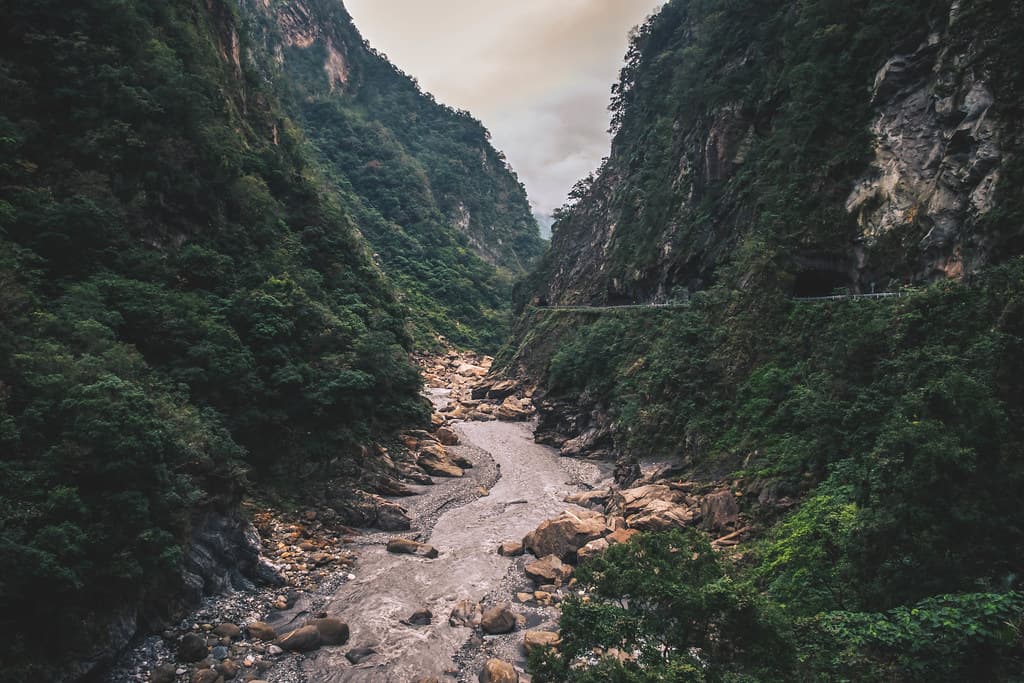
Taiwan Adventure Guide: Taroko Gorge & the East Coast
Categories
Tags
Taiwan packs dramatic mountains (covering about two-thirds of the island), world-class night markets, hot springs, and tropical beaches into one compact, safe, and friendly destination. First-timers should combine Taipei, Taroko Gorge, the east coast, Sun Moon Lake, and Kenting over ten to fourteen days. The best weather is October to November and March to May; avoid typhoon season from roughly June to October when storms are possible.
Taiwan Adventure Guide: Taroko Gorge & the East Coast
Taiwan is the surprise package of East Asia. Most travelers arrive expecting a single dense city and leave having fallen for an island of soaring mountains, marble canyons, tropical coastlines, and steamy hot springs — all stitched together by one of the world's best train networks and a food culture that may be the best street food on the planet. About two-thirds of Taiwan is covered in mountains, much of it protected as national parks, and within a couple of hours you can trade a Taipei night market for a misty alpine sunrise over a sea of clouds. It is safe, friendly, English-friendly enough, and packed with adventure.
Quick Facts at a Glance
- Capital: Taipei
- Currency: New Taiwan dollar (NTD); cards widely accepted, cash for night markets
- Languages: Mandarin (official), plus Taiwanese (Hokkien) and Hakka; English signage in cities and on transit
- Visa: Visa-free up to 90 days for US, Canada, EU, UK, Australia, and many others
- Population: Around 23.5 million
- Size: Roughly the size of Belgium or the US state of Maryland
- Best for: Hiking, food, hot springs, cycling, coastal scenery
- Recommended duration: 10–14 days
- Budget: Mid-range by Asian standards; street food is famously cheap
- Getting around: High Speed Rail (HSR) down the west coast, Taiwan Rail (TRA) all around, Taipei MRT
- Smart card: EasyCard or iPass for all transit and many shops
Why Visit Taiwan?
Taiwan's appeal is how much variety it crams into a small, well-organized island.
What Makes Taiwan Special
- Dramatic mountains: Roughly two-thirds of the island is mountainous, with 286 peaks over 3,000 meters.
- World-class food: Night markets, beef noodle soup, soup dumplings, and the invention of bubble tea.
- Hot springs: One of the world's great hot-spring cultures, from Beitou to Guanziling.
- Safe and friendly: One of Asia's safest, most welcoming destinations for solo and first-time travelers.
- Easy logistics: Excellent trains, cheap transit, visa-free for most Western visitors.
- East Asian ease: Modern, democratic, and English-friendly without losing its distinct identity.
Taiwan Region by Region
Taipei
The capital is the natural gateway and a destination in itself. Visit the night markets (Shilin, Raohe, Ningxia), ride to the top of Taipei 101 or hike Elephant Mountain for the classic skyline view, soak in Beitou hot springs, and explore the treasures of the National Palace Museum. Day-trip to the once-mining town of Jiufen, with its lantern-lit lanes above the sea, and to Shifen for sky lanterns and waterfalls. Taipei also has excellent day hikes in nearby Yangmingshan National Park.
Taroko Gorge and Hualien
Taroko Gorge, on the east coast, is Taiwan's most famous natural wonder — a marble-walled canyon cut by the Liwu River. Highlights include Shakadang Trail, the Eternal Spring Shrine, the towering cliffs of Swallow Grotto, and the dramatic Qingshui Cliff. Beyond sightseeing, Taroko offers serious hiking, including the famous (and permit-required) Zhuilu Old Trail along a vertiginous cliff. The gateway city of Hualien makes a comfortable base. Note that access changes — check current conditions after any recent typhoons.
The East Coast — Hualien to Taitung
Taiwan's east coast is its wildest, most scenic stretch, with the mountains dropping straight into the Pacific. Drive or cycle from Hualien south past Qingshui Cliff, the artistic town of Dulan (a surf and coffee hub), the striking Sanxiantai arch bridge, and the Indigenous Amis communities of the East Rift Valley. It is the slow, scenic antidote to the busy west coast.
Tainan
Tainan, Taiwan's oldest city and its food capital, rewards a couple of days. Wander temples like Confucius Temple (one of the oldest in Taiwan) and Koxinga's Shrine, browse restored old streets and cafes, and eat your way through its celebrated snack stalls — Tainan is the birthplace of many Taiwanese dishes.
Kenting National Park
At the island's southern tip, Kenting is tropical Taiwan — palm-lined beaches, coral reefs, surf spots, and a lively night market along the main drag. It is the country's beach-holiday HQ and a great place to decompress, with Eluanbi lighthouse at the island's southernmost point.
Sun Moon Lake
Inland, Sun Moon Lake is famous for its serene beauty and one of the world's most celebrated cycling routes around its shore. The Ita Thao area is home to the Indigenous Thao people, with cultural performances, food stalls, and boat rides. It is a peaceful, scenic contrast to the coasts.
Alishan and Jade Mountain
Alishan, a high mountain area reached by a charming forest railway, is famous for sunrises over a sea of clouds, ancient cypress forests, and high-mountain oolong tea. Nearby rises Jade Mountain (Yushan), at 3,952 meters Taiwan's highest peak and a serious multi-day hike requiring a permit. Both are cool, misty refuges from the lowland heat.
Top Things to Do
Hiking and Mountains
- Walk the marble trails of Taroko Gorge
- Catch the Alishan sunrise over a sea of clouds
- Hike Elephant Mountain and Yangmingshan near Taipei
- Climb Jade Mountain (permit required) for Taiwan's highest summit
Food and Night Markets
- Graze Shilin, Raohe, or Taichung's Fengjia night markets
- Eat beef noodle soup, xiaolongbao, and oyster omelets
- Try stinky tofu if you dare
- Sip bubble tea at its birthplace
Hot Springs and Coast
- Soak in Beitou's sulfurous springs near Taipei
- Cycle around Sun Moon Lake
- Surf or beach-camp in Kenting and at Dulan
Indigenous and Cultural Sites
- Visit the Thao at Sun Moon Lake's Ita Thao
- Explore the Amis communities of the east coast
- Tour the National Palace Museum in Taipei
Suggested 10–14 Day Itinerary
This is a classic loop around the island. The west side moves fast on the HSR; the east side rewards a car or the slower TRA train.
Days 1–3 — Taipei
Arrive in Taipei; explore night markets, Taipei 101, the National Palace Museum, and Beitou hot springs. Day-trip to Jiufen and Shifen.
Days 4–5 — Taroko Gorge and Hualien
Take the train to Hualien; spend two days in Taroko Gorge hiking the marble canyons.
Days 6–7 — East Coast
Drive or take the scenic train south along the east coast — Qingshui Cliff, Dulan, Sanxiantai — to Taitung.
Days 8–9 — Kenting
Cross to the south coast and base yourself in Kenting for beaches, surfing, and the Eluanbi lighthouse.
Days 10–11 — Tainan
Head up the west coast to Tainan for two days of temples, old streets, and the country's best food.
Days 12–14 — Sun Moon Lake or Alishan
End with the highland interior — cycling at Sun Moon Lake or sunrise at Alishan — before the HSR whisks you back to Taipei for your flight.
Best Time to Visit
Autumn (October–November) — Best Overall
Warm but not humid, with clear skies and the best mountain visibility. Ideal for hiking and city-sightseeing alike.
Spring (March–May) — Also Excellent
Mild and pleasant, with cherry blossoms in February and March at Alishan and Yangmingshan. Spring can bring some rain, but conditions are generally good.
Summer (June–September)
Hot, humid, and the typhoon season — storms can disrupt travel, especially on the east coast. Mountain trails may close. Coastal Kenting is at its tropical best between storms.
Winter (December–February)
Cool and damp in the north, but mild and pleasant in the south (Kenting, Tainan). A good time to soak in hot springs and eat your way through night markets.
Getting There and Around
Fly into Taiwan Taoyuan International Airport (TPE) near Taipei (or Kaohsiung in the south). Once there:
- High Speed Rail (HSR): Runs down the west coast from Taipei to Kaohsiung in about 90 minutes — fast, comfortable, book ahead for busy periods.
- Taiwan Rail (TRA): The conventional rail circles the whole island, including the scenic east coast.
- Taipei MRT: Clean, cheap, and comprehensive; covers the city and links to TPE airport.
- Buses: Extensive and cheap, useful for mountain areas not served by rail.
- EasyCard / iPass: Load-and-tap smart cards work on virtually all transit and in many shops.
- Rental car / scooter: Great for the east coast and Kenting if you have an international license.
Where to Stay
- Budget: Hostels and cheap business hotels in Taipei, Hualien, Tainan, and Kenting.
- Mid-range: Comfortable hotels and B&Bs in every city; excellent value in Tainan and Hualien.
- Boutique: Design guesthouses in Tainan's old streets and along the east coast.
- Hot-spring resorts: Around Beitou, Guanziling, and Jiaoxi.
- Luxury: International five-stars in Taipei, plus a handful of high-end lake-and-mountain lodges.
Food and Drink
Taiwanese food is reason enough to visit. Highlights:
- Beef noodle soup (niu rou mian): The beloved national dish.
- Xiaolongbao: Delicate soup dumplings, perfected at Din Tai Fung and countless local shops.
- Lu rou fan: Braised minced pork over rice — comfort in a bowl.
- Oyster omelet: A night-market staple with a sweet-savory sauce.
- Stinky tofu: Fermented, fried, pungent — try it once.
- Bubble tea (boba): Invented in Taiwan in the 1980s.
- Pineapple cakes: Buttery pastries, the classic edible souvenir.
- Mango shaved ice: A summer obsession.
Costs and Budgeting
Taiwan offers remarkable value for a developed East Asian country. Street food and night-market meals are cheap and outstanding; mid-range hotels are reasonable; public transit is excellent value. The main splurge is luxury accommodation in Taipei and entry to major sights in peak periods. Hiking, hot springs (the public pools), and night-market grazing cost very little. As a rough guide, expect prices well below Japan and comparable to or below South Korea, with plenty of room to travel cheaply.
Safety and Practical Tips
- Safety: Taiwan is exceptionally safe; violent crime is rare.
- Typhoons: In summer and early autumn, storms can disrupt transport and close mountain trails — monitor forecasts and build flexibility into your plans.
- Earthquakes: Taiwan is seismically active; follow local guidance if one occurs.
- Mountain permits: Trails like Jade Mountain and the Zhuilu Old Trail require permits booked in advance.
- Etiquette: Taiwanese are polite and helpful; tipping is not expected. Remove shoes when entering homes and many guesthouses.
- Water: Tap water is generally safe in cities, but bottled or filtered water is widely used.
- Weather: Pack layers — Taipei can be cool and damp while Kenting is tropical, and mountains are much colder than the coast.
A Deep Dive on Night Markets and Street Food
Taiwan's night markets are arguably the best street-food culture in the world, and eating your way through them is the country's essential ritual. Each market has its own personality: Shilin, the largest and most famous, sprawls across a maze of stalls near the Jiantan MRT and is a good first stop for visitors; Raohe, with its ornate temple entrance, is compact and beloved by Taipei foodies; Ningxia is small, old-school, and considered the purist's choice for traditional snacks; and down in Taichung, Fengjia claims to be the country's biggest. The atmosphere — neon signs, sizzling griddles, calls of vendors, crowds spilling between stalls — is half the point.
A strategy helps. Arrive hungry around 6pm, bring cash and small change, and share portions so you can try more. Don't miss oyster omelets slicked with sweet-and-savory red sauce, stinky tofu deep-fried with pickled cabbage (the smell is worse than the taste — genuinely delicious once you commit), pepper buns baked in a clay urn, grilled king oyster mushrooms, fried chicken cutlets bigger than your face, scallion pancakes with egg and cheese, and mango shaved ice piled high with condensed milk. Wash it all down with fresh fruit tea or, of course, bubble tea in its birthplace. Vegetarians eat extraordinarily well in Taiwan thanks to a strong Buddhist tradition — look for the su (素) character on signs. The cheapest, most authentic, and most memorable meals of your trip will almost certainly come from a night market stall and a plastic stool.
Hiking Taiwan: From Day Trails to Big Walls
Taiwan is a serious hiking destination hiding in plain sight, with a network of trails from riverside strolls to multi-day big-wall expeditions. Around Taipei, Yangmingshan National Park offers accessible day hikes through volcanic terrain, hot springs, and seasonal flowers; Elephant Mountain delivers the classic Taipei 101 skyline shot in a 30-minute climb; and Beef Mountain and the Pingxi crags add more rugged options. On the east coast, Taroko Gorge ranges from the flat riverside Shakadang Trail to the vertiginous Zhuilu Old Trail along a cliff hundreds of meters above the river, a permit-required route that is one of Asia's great day hikes.
The crown jewel is Jade Mountain (Yushan), at 3,952 meters the highest peak in Northeast Asia, climbed on a two-day permit trip with a stay at the Paiyun Lodge. Other standout high-altitude objectives include Snow Mountain (Xueshan), Snow South, and the dramatic Qilai and Taroko high-route traverses. The Alishan area offers gentler, forested walks among giant cypress trees at altitude. Permits for the major peaks are competitive and must be booked in advance through the park system; bring full mountain kit, as conditions above 3,000 meters can be cold, windy, and rapidly changing, with afternoon cloud buildups a daily feature. For hikers used to the Alps or the Rockies, Taiwan's combination of dense subtropical forest, dramatic relief, and warm hospitality is a revelation.
Hot Springs: A National Obsession
Taiwan sits on a seam of volcanic activity, and soaking in its natural hot springs is a beloved national pastime. Beitou, a district of Taipei reachable by MRT, is the most accessible, with public bathhouses like the historic Beitou Hot Spring Museum, sleek private spas, and the steaming Thermal Valley. Further afield, Guanziling in the south offers the rare mud hot springs, Jiaoxi near Yilan has smooth, clear-carbonate water, and the rugged Zhaori hot springs on Green Island are among the few true seaside saltwater hot springs in the world. Japanese colonial influence shaped the etiquette and architecture, and many springs now range from rustic public pools to five-star spa resorts. Follow local custom — shower thoroughly before entering, keep hair and towels out of the water, and soak quietly — and a hot-spring day becomes one of Taiwan's most restorative pleasures.
Cycling Sun Moon Lake and Beyond
Taiwan has quietly become one of the world's great cycling destinations, and the loop around Sun Moon Lake is regularly voted among the most beautiful cycle routes on the planet. The 30-kilometer circuit rolls past temples, tribal villages, tea plantations, and shimmering water framed by mountains, with well-maintained paths and rental shops in every town. Sunrise rides before the mist burns off are magical. Beyond the lake, the East Rift Valley offers long, flat, scenic rides through rice paddies and Indigenous Amis villages, and the dramatic cliffs of the east coast road from Hualien to Taitung are a bucket-list ride for fit cyclists. Taiwan even manufactures much of the world's high-end cycling gear (Giant and Merida are Taiwanese companies), so rentals and service are excellent. Bring padded shorts, rent a road or e-bike, and discover why cycling has become central to how locals and visitors experience the island.
Typhoons, Earthquakes, and Resilience
Taiwan's dramatic geography comes with seismic and weather realities that shape travel planning. Typhoon season runs roughly from June to October, with the highest risk in August and September; storms can close mountain trails, cancel ferries and flights, and bring days of heavy rain and wind. Build flexibility into itineraries during this window, monitor the Central Weather Bureau, and treat warnings seriously — Taiwan's preparedness is excellent, but storms deserve respect. The island is also seismically active, and while buildings are engineered to modern standards, occasional earthquakes occur; follow local guidance and your hotel's instructions if one happens. The silver lining of these dynamics is a culture of impressive resilience and rapid response — roads reopen quickly, trails are repaired, and life returns to normal with remarkable speed. Traveling with a buffer day or two and a loose plan lets you adapt to whatever Taiwan's dynamic environment delivers.
Indigenous Taiwan: Beyond the Stereotype
Long before the Han Chinese majority shaped modern Taiwan, the island was home to Austronesian peoples whose descendants remain central to its identity. Taiwan is now recognized by linguists and anthropologists as the likely homeland of the Austronesian language family, whose branches stretch from Madagascar to Polynesia and Hawaii. Sixteen Indigenous groups are officially recognized, including the Amis of the east coast rift valley, the Bunun of the central mountains (famous for their eight-part pasibutbut millet song), the Atayal of the north, the Paiwan and Rukai of the south, and the Thao around Sun Moon Lake.
For travelers, engaging with Indigenous Taiwan adds enormous depth. At Sun Moon Lake, the Ita Thao village offers Thao cultural performances, food, and a window into life along the water. On the east coast, the Amis harvest festival in July and August is one of Taiwan's great cultural events, with singing, dancing, and feasting open to respectful visitors. In the south, the Paiwan and Rukai are renowned for their intricate wood and stone carving, beautifully patterned textiles, and the noble house architecture you can visit in villages like Wutai. Beyond the tourist sites, Indigenous communities face the familiar tensions of land, language preservation, and recognition — supporting community-based tourism, buying crafts directly from artists, and learning even a little about the deep pre-Han history of the island is a meaningful way to travel beyond the standard itinerary.
Taipei in Depth: Neighborhoods and Rhythm
Taipei rewards neighborhood-by-neighborhood exploration more than any single sight. Start in the old core of Wanhua and Longshan Temple, one of the city's most atmospheric places of worship, where incense coils and chanting mark a spiritual rhythm centuries older than the surrounding streets. Wander Dadaocheng, a once-grand trading quarter of herb shops, fabric stores, and restored cafes along the river. Ximending is the neon-lit youth district of cinemas, bubble tea, and fashion, a kind of mini Harajuku. Zhongshan offers design stores and the excellent Museum of Contemporary Art, while Da'an and the East District are for boutique shopping and some of the city's best restaurants and cafes.
For panoramic views beyond Taipei 101 and Elephant Mountain, ride the Maokong Gondola to the tea-growing hills above the city for tea houses and views, or head to the Miramar Ferris wheel. The National Palace Museum holds one of the world's great collections of Chinese imperial art, brought from the mainland in the 1940s — budget at least half a day. The city's cafe culture, craft beer scene, and independent bookstores are thriving, and the MRT makes hopping between neighborhoods effortless with an EasyCard. Taipei is the kind of city where the more you walk its streets, the more it gives back.
Taiwan for First-Timers: A Quick-Start Guide
For a first trip, a few orientation points make everything easier. Arrive in Taipei at Taoyuan Airport and take the Airport MRT straight into the city — about 40 minutes, clean, and cheap. Get an EasyCard immediately at any convenience store; it works on the MRT, buses, ferries, and even in shops, and eliminates ticket fumbling. Convenience stores (7-Eleven, FamilyMart, and the like) are everywhere and astonishingly useful — they print train tickets, take deliveries, sell hot food and coffee, and accept payment for almost anything, often open 24 hours. Free Wi-Fi is widespread, and a tourist SIM is cheap and easy to pick up at the airport.
Plan around Taiwan's geography: the west coast (Taipei, Taichung, Tainan, Kaohsiung) is flat, fast, and well served by the High Speed Rail, ideal for city-hopping; the east coast (Hualien, Taitung) is slower, wilder, and best explored by rental car or the scenic TRA train. Two weeks lets you circle the whole island at a relaxed pace; one week can cover Taipei, Jiufen, and Taroko Gorge if you move efficiently. Travel light, pack for both humid cities and cool mountains, and embrace the rhythm of night-market dinners and dawn hikes. Taiwan is one of the most forgiving, rewarding countries in Asia for first-timers — and once visited, it tends to become a favorite.
Final Thoughts
Taiwan is the kind of destination that consistently exceeds expectations. Travelers arrive for the food and the famous gorge and leave having discovered a whole island of surprises — a misty sunrise at Alishan, a surf session at Dulan, a temple in Tainan, a quiet cycle around Sun Moon Lake. It does almost everything well: dramatic nature, great cities, genuine adventure, and a food scene that alone justifies the flight. For a first trip to East Asia, or a return for someone who thinks they've seen it all, Taiwan is hard to beat. Browse itineraries and operator listings on the tours marketplace and more stories on the travel blog.
Frequently Asked Questions
Taiwan is one of the safest countries in Asia, with very low violent crime, friendly locals, and excellent infrastructure. Solo travelers move around with ease, public transport is reliable, and English signage is common in cities and on the rail network. Standard common sense with belongings is more than enough.
October to November and March to May offer the most comfortable weather — mild, relatively dry, and clear in the mountains. Summer (June to September) is hot, humid, and brings typhoon risk. Winter (December to February) is cool and damp in the north but pleasant in the south. February and March bring cherry blossoms to Alishan and Yangmingshan.
Ten to fourteen days lets you circle the island properly, taking in Taipei, Taroko Gorge, the east coast, Tainan, Kenting, and either Sun Moon Lake or Alishan. You can enjoy a rewarding Taipei-and-Taroko taster in five to seven days, but you will want more time once you arrive.
Citizens of the United States, Canada, the European Union, the United Kingdom, Australia, and many other countries enjoy visa-free entry to Taiwan for stays of 90 days (sometimes longer) with a valid passport. Confirm current rules before travel, as Taiwan periodically updates its visa-free list.
Taiwan is moderately priced by East Asian standards — more affordable than Japan or Singapore, slightly pricier than parts of Southeast Asia. Street food and night-market meals are famously cheap, public transport is excellent value, and mid-range hotels are reasonable. Luxury hotels in Taipei are the main splurge.
Taiwan is famous for its dramatic mountains and hiking (including Taroko Gorge and Jade Mountain), the world's best night markets and street food, bubble tea, hot springs, the Sun Moon Lake cycling route, bustling Taipei, and its friendly, safe, and democratic society.
Yes — Taroko is a hiker's paradise, with trails ranging from short riverside walks to multi-day routes like the Zhuilu Old Trail. Access can change due to rockfall, typhoon repair, or permit requirements, so check current conditions at the park headquarters and book any permit-required trails in advance.
Do not miss beef noodle soup, xiaolongbao soup dumplings, oyster omelets, braised pork rice (lu rou fan), stinky tofu, bubble tea, and pineapple cakes. The best strategy is to graze your way through night markets like Shilin, Raohe, and Fengjia, trying a little of everything.
Adventure Knit Editorial
Destination research compiled and fact-checked by the Adventure Knit editorial team from published sources, operator itineraries, and official tourism boards. Spot something out of date? Tell us at hello@adventureknit.com.
Related Stories
 Montenegro
Montenegro Travel Guide: Bay of Kotor & Durmitor
Complete Montenegro travel guide covering the Bay of Kotor, the walled towns of Budva and Kotor, Durmitor National Park, the Adriatic coast and the northern mountains.
 Romania
Transylvania & the Carpathians: Romania Adventure Guide
Complete Romania travel guide covering Transylvania, Bran and Peleș castles, the Carpathian mountains, painted monasteries of Bucovina and the Danube Delta.
 Georgia
Hiking the Caucasus: Svaneti & Georgia Trekking Guide
Complete guide to Svaneti trekking in Georgia's Caucasus Mountains — the Mestia to Ushguli trek, day hikes, difficulty, guesthouses, culture, costs, and practical tips.
Enjoyed this article?
Explore more stories from our adventures around the world