
Belize Great Blue Hole & Cayes: Diving & Snorkeling Guide
Categories
Tags
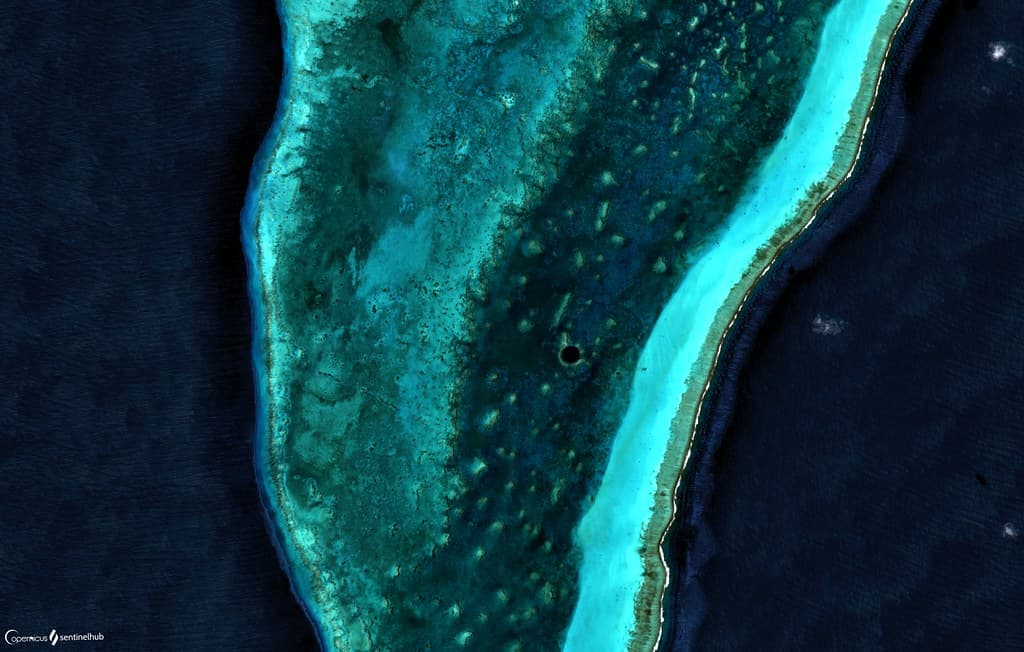
Belize's Great Blue Hole is a roughly 300-meter-wide, 124-meter-deep flooded sinkhole inside Lighthouse Reef Atoll, about 60 km offshore. It is the most famous dive site on the Belize Barrier Reef — a UNESCO World Heritage site — and is best reached on a day trip from Ambergris Caye, Caye Caulker, or Belize City. The classic dive is for certified divers, but snorkelers and scenic flights can also experience it.
Belize Great Blue Hole & Cayes: Diving & Snorkeling Guide
Few underwater landmarks are as instantly recognizable as the Great Blue Hole — that near-perfect dark circle in the turquoise Caribbean, made famous by Jacques Cousteau and photographed from space. It sits inside the Belize Barrier Reef, the second-largest barrier reef on Earth and a UNESCO World Heritage site, which fringes the entire coast of Belize with a chain of palm-tufted cayes, atolls, and drop-offs. The Blue Hole gets the fame, but it is the whole reef system — the shallow snorkeling, the wall dives alive with sharks and rays, and the easygoing island life — that makes Belize one of the Caribbean's great dive destinations.
Quick Facts at a Glance
- Location: Great Blue Hole, inside Lighthouse Reef Atoll, ~60 km offshore
- Reef system: Belize Barrier Reef — second-largest in the world, UNESCO-listed
- Blue Hole dimensions: ~300 m across, ~124 m (407 ft) deep
- Signature dive: ~30 m (100 ft) descent past stalactite formations
- Best bases: Ambergris Caye (San Pedro) and Caye Caulker
- Day trip length: Full day (early start, 2–3 hour boat ride each way)
- Certification needed: Open Water minimum for the Blue Hole dive; none for snorkeling
- Visibility: Often 20–30 m (60–100 ft) in the dry season
- Water temp: Around 26–30°C (79–86°F) year-round
- Currency: Belize dollar (BZD), pegged 2:1 to USD; USD widely accepted
- Language: English (official) and Belizean Creole; Spanish also common
- Time zone: GMT−6 (no daylight saving)
Why Dive Belize?
Belize does Caribbean diving about as well as it can be done, with a few things that set it apart.
What Makes Belize Special
- The Great Blue Hole: One of the planet's most iconic dive sites.
- A huge, healthy barrier reef: The Mesoamerican Reef at its best, with walls, atolls, and shallow gardens.
- Three offshore atolls: Lighthouse, Turneffe, and Glovers — rare in the Caribbean.
- Shark and ray encounters: Nurse sharks, reef sharks, and southern stingrays are routine.
- Easy English-speaking logistics: English is the official language; the country is compact and visitor-friendly.
- Island variety: From upscale San Pedro to the barefoot vibe of Caye Caulker.
The Belize Barrier Reef and Cayes
The Great Blue Hole
The Great Blue Hole is a collapsed, flooded limestone cave inside Lighthouse Reef Atoll. From the air it is a startlingly dark blue circle; underwater, its walls drop vertically before a sandy slope leads down past dramatic, overhanging stalactite formations at around 30 meters — relics of a dry cave system from the last ice age, when sea levels were far lower. The classic dive circles these formations and often meets Caribbean reef sharks patrolling the thermocline. Visibility inside the hole is unusually clear but life-thin in its deeper anoxic layers, which is exactly the point — it is a geological dive rather than a fish-life one.
Lighthouse, Turneffe, and Glovers Atolls
Beyond the Blue Hole, the three offshore atolls offer some of the Caribbean's best diving. Lighthouse Reef also has Half Moon Caye (a red-footed booby sanctuary) and Long Caye wall dives. Turneffe Atoll is the largest, famous for walls, mangroves, and the legendary Elbow dive with its schools of fish and pelagics. Glovers Reef is the most remote and pristine, a kayaking and snorkeling paradise.
Ambergris Caye (San Pedro)
The largest and most developed caye, Ambergris is the main tourist hub, with resorts, restaurants, and a large dive-industry base. From San Pedro you can dive the local reef in minutes, visit Hol Chan Marine Reserve and Shark Ray Alley (a guaranteed close encounter with nurse sharks and rays), and run day trips to the Blue Hole and Turneffe. It is the comfortable, full-service option.
Caye Caulker
Smaller, cheaper, and slower, Caye Caulker operates on the motto "go slow." It shares the same reef access as Ambergris, with excellent snorkeling and diving closer to backpacker budgets, plus the same Blue Hole day trips. The Split — a channel cut through the island — is the social swimming spot.
Mainland Add-Ons
Many visitors combine the cayes with the mainland: the Maya ruins of Xunantunich and Caracol, the Actun Tunichil Muknal (ATM) cave with its skeletons and Maya artifacts, and the wildlife of the Mountain Pine Ridge or the Cockscomb Basin jaguar reserve.
Top Things to Do
Diving and Snorkeling
- Dive the Great Blue Hole and its stalactites (certified divers)
- Snorkel Hol Chan Marine Reserve and Shark Ray Alley
- Wall-dive Turneffe Atoll's Elbow and Lighthouse Reef
- Kayak and snorkel remote Glovers Reef
Marine Life
- Snorkel with nurse sharks and southern stingrays
- Spot manatees in the mangroves
- Look for whale sharks at Gladden Spit (in season, Mar–Jun around the full moon)
- Watch sea turtles and tarpon on the reefs
Above Water
- Fly over the Great Blue Hole for the iconic aerial shot
- Birdwatch at Half Moon Caye (red-footed boobies)
- Explore Maya ruins (Xunantunich, Caracol) on the mainland
- Tube through the ATM Cave
Suggested 7–10 Day Belize Diving Itinerary
Days 1–4 — Ambergris Caye or Caye Caulker
Base yourself on your chosen caye; do a couple of local reef dives or snorkels (Hol Chan, Shark Ray Alley) to settle in and check gear.
Day 5 — Great Blue Hole Day Trip
Full-day trip to the Great Blue Hole and Lighthouse Reef, with two or three dives or snorkel stops and a visit to Half Moon Caye.
Days 6–7 — Turneffe or Glovers
Add a day trip to Turneffe Atoll (or an overnight at Glovers) for wall dives and pelagics.
Days 8–10 — Mainland (Optional)
Head to the mainland for Maya ruins, the ATM cave, and jungle wildlife before flying home from Belize City.
Best Time to Visit
Dry Season (Late November–May) — Best Overall
Calm seas, good visibility, and reliable Blue Hole access. April to June are prime, with the warmest, clearest water.
Hurricane Season (June–November)
Still diveable early in the window, but conditions are less predictable. The highest storm risk is later in the season (August–October), when Blue Hole trips can be cancelled. Prices are lower and crowds thinner.
Whale Shark Season
Whale sharks gather at Gladden Spit (near Placencia) in spring, most reliably in March to June around the days after the full moon, when snapper spawn and the sharks come to feed.
Getting There and Around
Fly into Philip S. W. Goldson International Airport (BZE) near Belize City. From there:
- Domestic flights: Tropic Air and Maya Island Air fly to San Pedro (Ambergris), Caye Caulker, and other airstrips — fast and scenic.
- Water taxis: Frequent boats run from Belize City to San Pedro and Caye Caulker (about 30–60 min).
- Dive boats: The way to reach the Blue Hole and atolls, organized through your dive shop.
- Rental cars: Useful only for mainland exploration; the cayes are golf-cart territory.
Where to Stay
- Budget: Hostels and cheap guesthouses on Caye Caulker.
- Mid-range: Comfortable hotels and dive lodges on both Caye Caulker and Ambergris Caye.
- Beach resorts: Upscale resorts on Ambergris, often with in-house dive shops.
- Dive resorts and liveaboards: Dedicated dive lodges and a few liveaboard options for the serious diver.
- Mainland lodges: Jungle lodges near San Ignacio for ruin and cave trips.
Costs and Budgeting
Belize is mid-range for the Caribbean — pricier than Central America's mainland, more affordable than many Caribbean islands. The Blue Hole day trip is a significant per-day cost, reflecting the long boat ride and multiple sites. Diving in general, accommodation on Ambergris Caye, and imported goods are the main expenses; Caye Caulker, local food (rice and beans, stew chicken), and snorkeling are gentler on the wallet. Certified divers should budget for several days of diving plus the Blue Hole trip. Prices here are deliberately qualitative, as they vary with the season and operator.
Safety and Practical Tips
- Dive within your limits: The Blue Hole dive is deep — be certified, current, and honest about your experience.
- Surface intervals and safety stops: Follow your divemaster's plan exactly, especially after deep dives.
- Marine hazards: Watch for fire coral and sea urchins; don't touch coral or marine life.
- Sun and hydration: The tropical sun is fierce — use reef-safe sunscreen and drink plenty of water.
- Motion sickness: Blue Hole trips involve long boat rides; take medication if prone.
- General safety: Belize is generally safe for tourists; use normal caution with belongings, and avoid walking isolated areas at night in Belize City.
- Insurance: Carry dive-specific travel insurance that covers decompression treatment.
Inside the Blue Hole: What the Dive Is Really Like
The Great Blue Hole is one of those sites whose reputation can distort expectations, so it helps to know what the dive actually delivers. The boat anchors near the rim, and the descent begins immediately down a near-vertical wall of pale limestone. The water clarity is startling, and for the first 15 meters or so you'll see some reef life — groupers, occasional Caribbean reef sharks, jacks — but the deeper you go, the sparser and more otherworldly it becomes. The signature moment arrives at around 30 meters (100 feet): enormous, overhanging stalactites projecting from the wall, remnants of a dry cave system from the last ice age when sea levels were far lower. The light is blue and diffuse, the water is still and cool (a thermocline drops the temperature noticeably), and the sense of scale is immense.
The classic dive circles these formations briefly before ascending; total bottom time is short, because you're at the edge of recreational depth limits, and the dive is more about atmosphere and geology than fish life. Caribbean reef sharks often appear in the gloom, sometimes in loose groups, adding drama. Visibility inside the hole is famously clear but life-thin below the thermocline, since the deep water is anoxic — this is what makes the dive eerie and beautiful rather than a fish-watching experience. After the Blue Hole, the day-trip dives Half Moon Caye Wall and the Aquarium, which are teeming with life and offer the vivid coral, turtles, eagle rays, and sharks that the Blue Hole itself does not. The Blue Hole is a must-do for serious divers for its singularity; set expectations on geology and atmosphere, and the rest of the day delivers the classic Caribbean reef spectacle.
Hol Chan, Shark Ray Alley, and Easy Snorkeling
For snorkelers and new divers, the protected marine reserves close to Ambergris Caye and Caye Caulker offer some of the most rewarding shallow-water experiences in the Caribbean. Hol Chan Marine Reserve, a channel cut through the barrier reef, is a magnet for marine life — turtles, groupers, snappers, moray eels, and occasional manatees drift through its currents, and the snorkeling is easy and calm. Just a short boat ride away, Shark Ray Alley guarantees close encounters with nurse sharks and southern stingrays that have grown accustomed to the presence of boats and people. The sharks are harmless bottom-dwellers, and the experience — slipping into water with a dozen of them circling — is a bucket-list moment for many first-time visitors.
A few notes make these trips better. Go early to beat the crowds, since Hol Chan and Shark Ray Alley are popular and can get busy by mid-morning. Wear a rash vest for sun protection, as you'll be in the water for extended periods. Don't touch or chase the sharks and rays — give them space and let them approach on their terms. Reef-safe sunscreen only. These sites are the perfect introduction to the reef for non-divers, and even serious divers value them for the sheer density and accessibility of life. From Caye Caulker, the snorkel trip to Caye Caulker Marine Reserve and the nearby Coral Gardens rounds out an easy few days in the water without ever needing a certification.
The Three Atolls: Lighthouse, Turneffe, and Glovers
Beyond the main barrier reef, Belize's three offshore atolls — Lighthouse, Turneffe, and Glovers — are rare in the Caribbean and central to the country's diving reputation. Lighthouse Reef Atoll, home of the Blue Hole, also has the magnificent Half Moon Caye Wall, a vertiginous drop-off alive with eagle rays, turtles, and sharks, and Half Moon Caye itself, a tiny island bird sanctuary for the red-footed booby and the endemic Belizean iguana. Turneffe Atoll, the largest of the three, is famous for its mangrove-fringed channels, the legendary Elbow dive with its schooling fish and pelagics, and opportunities to see dolphins, manatees, and tarpon. Glovers Reef, the most remote and pristine, is a near-perfect ring of reef and palm with spectacular wall diving and is partly protected as a marine reserve.
The atolls are reached by day trips from Ambergris Caye, Caye Caulker, or Belize City (long boat rides, early starts, and big days), or by staying at dedicated dive resorts and liveaboards based on or near the atolls themselves. For serious divers, a few nights at a Turneffe or Lighthouse dive lodge transforms the experience — you dive the Blue Hole and the walls at a relaxed pace, with multiple dives per day and no multi-hour transit. For snorkelers and kayakers, the calmer lagoons of the atolls offer shallow reef and the chance to camp on near-deserted cays. Whatever your level, the atolls are where Belize's reef is at its most pristine and dramatic.
Whale Sharks, Tarpon, and Big-Pelagic Seasons
Belize offers a few headline wildlife spectacles worth timing a trip around. The most famous is the whale shark aggregation at Gladden Spit, off the coast near Placencia, where mutton snapper spawning around the full moon in March, April, May, and June draws whale sharks — the largest fish in the sea — to feed on the eggs. Snorkeling and diving with these gentle giants, under regulated guidelines, is one of the great Caribbean wildlife experiences, and Placencia is the base from which to arrange it. Sightings are never guaranteed, but the full-moon windows are the time to try.
Elsewhere, the tarpon — large, silvery, prehistoric fish — gather in impressive numbers at sites like the Silver Caves off Lighthouse Reef and around Turneffe, particularly in the warmer months. Nurse sharks and Caribbean reef sharks are routine on wall dives, and eagle rays glide past in pairs. Nesting sea turtles — loggerheads, hawksbills, and greens — come ashore on remote beaches in season, particularly on the southern cayes. On the mainland side, the West Indian manatee grazes in the mangroves and river mouths, with Swallow Caye Wildlife Sanctuary near Belize City a good place to encounter them. For wildlife-focused travelers, layering these encounters on top of the Blue Hole makes for one of the Caribbean's richest marine itineraries.
Combining Reef and Mainland: Ruins, Caves, and Jungle
One of Belize's great strengths is how easily the reef combines with a genuinely rewarding mainland. After several days on the water, head inland for a different kind of adventure. The Maya civilization built extensively across this region, and the sites of Xunantunich (near San Ignacio, with its towering El Castillo and views into Guatemala), Caracol (deep in the Mountain Pine Ridge, the largest Maya site in Belize), Cahal Pech, and Lamanai (reached by a scenic river boat trip) rival ruins anywhere in Mexico or Guatemala, with the bonus of far fewer crowds.
The standout mainland experience is the Actun Tunichil Muknal (ATM) Cave, an adventure-archaeology expedition in which you swim, climb, and squeeze through a river cave to reach a dry chamber containing the calcified skeletons and artifacts of Maya sacrificial victims. It is physically demanding and utterly unforgettable — often cited as the single highlight of a Belize trip. Beyond ATM, the Mountain Pine Ridge offers waterfalls (the spectacular Big Rock Falls), the hidden Rio Frio Cave, and swimming holes, while the Cockscomb Basin Wildlife Sanctuary — the world's first jaguar reserve — offers hiking through pristine rainforest (you'll almost certainly not see a jaguar, but the forest itself is magnificent) and tubing on the river. The combination of Blue Hole diving, ATM cave, and Maya ruins in a single 10-day trip is one of the most satisfying and varied itineraries anywhere in the Americas.
Ambergris Caye vs Caye Caulker in Depth
Choosing between the two main cayes shapes the whole trip, so it's worth getting right. Ambergris Caye and its town San Pedro are the larger, more developed option, with a paved-road feel, golf-cart traffic, a wide range of resorts and condos, the best restaurant scene in the cayes, and the largest concentration of dive shops. San Pedro suits travelers who want comfort, nightlife, and a full-service base — and it's also where you'll find the fanciest overwater-style accommodations in Belize. The reef sits just offshore, so local dives are a five-minute boat ride.
Caye Caulker, by contrast, operates on the motto "go slow." It's smaller, cheaper, more laid-back, and more popular with backpackers, divers on a budget, and travelers who prefer charm over polish. The famous Split — a channel cut through the island by a hurricane — is the social heart, with swimming, sunbathing, and reggae-fueled bars. Dive shops on Caye Caulker are excellent and slightly cheaper than San Pedro's, and Blue Hole day trips run from here too. The reef access is identical. Choose Ambergris for comfort, variety, and a busier vibe; choose Caye Caulker for budget, atmosphere, and the quintessential barefoot Caribbean. Many travelers split a week between the two to get the best of both.
Learning to Dive in Belize
Belize is one of the easiest and most rewarding places in the world to learn to dive, and many travelers arrive uncertified and leave as committed divers. The combination of warm water (26–30°C year-round), excellent visibility, calm shallow training sites inside the barrier reef, and a high concentration of professional, English-speaking dive shops makes the experience friendly and low-stress. On both Ambergris Caye and Caye Caulker, dive shops run Open Water certification courses year-round, often completing the classroom, confined-water, and open-water dives over three or four days, with the option to do the classroom portion online before you arrive. The shallow patch reefs and Hol Chan Marine Reserve are ideal training grounds, full of life and free of strong current.
For certified divers who haven't been in the water for a while, a refresher dive is a good idea before the deeper Blue Hole day; most shops offer a quick skills session. Advanced courses open up deeper sites like the Blue Hole itself and the more challenging wall dives, and many travelers use a Belize trip to upgrade their certification. Beyond recreational diving, free-diving courses are increasingly available, and the warm, clear water makes Belize a great place to learn. Whatever your starting point, plan at least one easy shallow dive or snorkel on your first day to settle in, check your gear and buoyancy, and tune up your comfort before tackling the headline sites. Diving in Belize is genuinely accessible, and the reef rewards every level of experience.
Practical Tips for a Belize Dive Trip
A few practicalities smooth a Belize diving trip considerably. Bring certification cards (or digital equivalents) and logbooks, and consider dive-specific travel insurance that covers recompression treatment — standard travel policies often exclude scuba, and the nearest chamber may require evacuation. ** reef-safe sunscreen** is mandatory in marine reserves and protects the coral you came to see. Motion-sickness medication is wise for the long Blue Hole boat rides, which can be choppy. Cash (USD or BZD) is useful for tips, small operators, and the cayes, though cards are widely accepted. Booking ahead for Blue Hole day trips and popular dive shops in peak season is essential, as boats fill.
In the water, dive within your limits, follow your divemaster's plan exactly, and observe safety stops religiously after the deep Blue Hole dive. Surface conditions matter as much as depth — listen for instructions, swim carefully near boats, and use a surface marker buoy when appropriate. On land, the sun is fierce: hydrate, use a hat, and pace yourself between dive days. Belize is English-speaking, which removes a layer of friction for many travelers, and the country is generally safe for tourists with normal common sense. With a little preparation and respect for the reef, Belize delivers some of the most accessible, varied, and genuinely fun diving anywhere in the Americas — a place that turns first-timers into enthusiasts and rewards experienced divers with sites like nowhere else.
Final Thoughts
Belize is one of those rare places that genuinely delivers for every level of water-lover, from the first-time snorkeler at Shark Ray Alley to the seasoned diver circling the Blue Hole's stalactites. The reef is vast, healthy, and remarkably accessible, the cayes offer a style for every budget, and the mainland adds Maya ruins and jungle caves for rest days. The Blue Hole deserves its fame — but it is the combination of that one iconic dive with the everyday excellence of the barrier reef that makes Belize special. Find Belize diving operators on the tours marketplace and more diving stories on the travel blog.
Frequently Asked Questions
Yes. While the famous stalactite formations are deep (around 30–40 meters) and reserved for certified divers, snorkelers can swim along the shallow rim of the Blue Hole and see reef life near the surface. Most day trips welcome both snorkelers and divers, so non-divers can still experience the setting, though the underwater spectacle is far more dramatic for divers.
The Great Blue Hole is about 124 meters (407 feet) deep at its center. The standard recreational dive descends to about 30 meters (100 feet) to view the overhanging stalactite formations and sometimes reef sharks patrolling the thermocline. Recreational dives stay within no-decompression limits and do not approach the deep, anoxic center.
Yes. The classic Blue Hole dive to the stalactites sits around 30 meters, so you need at least an entry-level Open Water certification, and many operators prefer Advanced Open Water or recent dive experience. The dive is deep and can feature thermoclines and limited visibility at depth, so being comfortable and current matters. Snorkeling from the surface needs no certification.
The driest and calmest months are April through June, with the best visibility and most reliable Blue Hole access. The broader dry season runs roughly from late November to May. Hurricane season is June through November, with the highest storm risk later in that window; seas can be rough and Blue Hole trips occasionally cancel.
The Blue Hole sits inside Lighthouse Reef Atoll, about 60 km offshore. Most visitors join a full-day trip from Ambergris Caye (San Pedro), Caye Caulker, or Belize City. Boats depart early, the ride out takes roughly two to three hours, and trips include two or three dives or snorkel stops plus lunch on the boat or a nearby cay.
Very. The shallow reef inside the barrier reef offers calm, warm, easy training conditions, and dive shops on Ambergris Caye and Caye Caulker run certification courses year-round. Beginners can build confidence on shallow patch reefs before attempting deeper, more advanced sites like the Blue Hole, which is better suited to experienced divers.
Expect nurse sharks, reef sharks, southern stingrays, green moray eels, sea turtles, tarpon, and huge schools of reef fish on the wall dives. The shallow cayes host manatees, and snorkelers at sites like Hol Chan Marine Reserve and Shark Ray Alley get close to harmless nurse sharks and rays. Whale sharks occasionally visit the southern atolls in season.
Ambergris Caye (San Pedro) is larger and more developed, with more resorts, restaurants, and dive shops — the busier option. Caye Caulker is smaller, cheaper, and more laid-back, with a backpacker, go-slow vibe. Both make excellent Blue Hole bases. Choose Ambergris for comfort and nightlife, Caye Caulker for budget and atmosphere.
Adventure Knit Editorial
Destination research compiled and fact-checked by the Adventure Knit editorial team from published sources, operator itineraries, and official tourism boards. Spot something out of date? Tell us at hello@adventureknit.com.
Related Stories
 French Polynesia
French Polynesia Guide: Tahiti, Bora Bora & Moorea
Complete French Polynesia travel guide covering Tahiti, Moorea, Bora Bora, the Tuamotu atolls and Marquesas, with itineraries, diving, costs and tips.
 Seychelles
Seychelles Island-Hopping Guide: Mahé, Praslin & La Digue
Complete Seychelles island-hopping guide covering Mahé, Praslin, La Digue and outer islands. Best beaches, hiking, giant tortoises, costs and practical tips.
 Tonga
TongaSwimming with Humpback Whales in Tonga: Complete Guide
Complete guide to swimming with humpback whales in the Kingdom of Tonga. Where to go, how permits and operators work, best months, costs, ethics and safety.
Enjoyed this article?
Explore more stories from our adventures around the world