
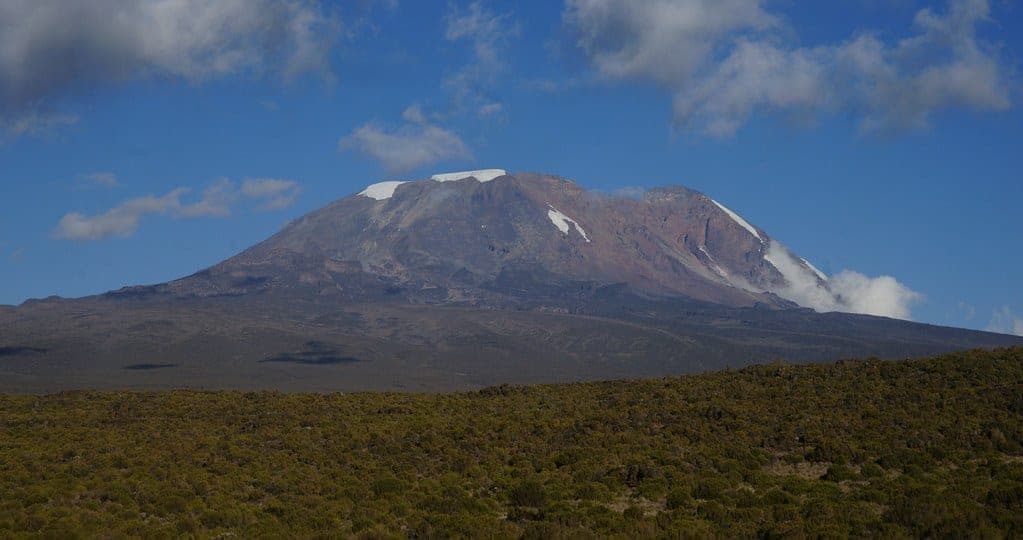
Kilimanjaro's Lemosho Route: The Quiet Way to the Roof of Africa
Categories
Tags
The Lemosho Route approaches Kilimanjaro from the west via Londorossi Gate, crosses the Shira Plateau, and joins the southern circuit to summit Uhuru Peak at 5,895 m — usually over 8 days. Its longer, gentler start gives the best acclimatization schedule of the classic routes, which is why operators consistently report summit rates around 90% on the 8-day itinerary. The first days are far quieter than Machame. Expect supported climbs from roughly US$2,000-2,500 at the value end; best months are January-February and June-October.
Why trekkers pick Lemosho
Every classic route ends at the same place — Uhuru Peak, 5,895 m, the Roof of Africa. What differs is how your body is treated on the way up. The Lemosho Route's answer is: gently. It starts low and far to the west, spends two quiet days working up through forest and heath before merging with the busier southern circuit, and — on the 8-day itinerary that has become the standard — arrives at the summit camp with more acclimatization nights behind you than any other classic line.
That schedule is why Lemosho's summit rates are the ones operators brag about, with figures in the region of 90% commonly quoted for the 8-day version. On a mountain where the thing that sends people down early is almost always altitude rather than fitness, the extra day is not a luxury. It is the strategy.
Park fees and figures below were accurate at the time of writing. Kilimanjaro National Park revises tariffs periodically — confirm current numbers with your operator before you budget.
The route, day by day
A typical 8-day itinerary:
- Londorossi Gate → Mti Mkubwa Camp (~2,750 m). Registration, a drive to the trailhead, then a short afternoon through rainforest.
- Mti Mkubwa → Shira 1 Camp (~3,500 m). Out of the trees and onto the Shira Plateau — a huge, high caldera of moorland with Kibo, the summit cone, ahead of you all afternoon.
- Shira 1 → Shira 2 Camp (~3,850 m). A gentle plateau crossing; many itineraries add an acclimatization walk above camp.
- Shira 2 → Lava Tower (~4,630 m) → Barranco Camp (~3,960 m). The climb-high, sleep-low day that does the most physiological work.
- Barranco Wall → Karanga Camp (~4,035 m). The Wall is an hour's hands-and-feet scramble on a worn path — imposing from below, straightforward in practice.
- Karanga → Barafu Camp (~4,670 m). Short day to the summit camp; eat, hydrate, sleep by nightfall.
- Summit night: Barafu → Uhuru Peak (5,895 m) → Mweka Camp. Away around midnight, six to eight hours to Stella Point on the crater rim, 45 more minutes to Uhuru for sunrise, then a very long descent.
- Mweka Camp → Mweka Gate. Three to four hours down through forest; summit certificates at the gate.
What the western start buys you
Two things. First, quiet: Machame and Umbwe traffic doesn't join until Shira, so your forest and plateau days are shared with far fewer trekkers, and the Shira crossing — one of the mountain's genuinely beautiful stretches, a former volcanic caldera at 3,500–3,850 m — is walked at plateau pace rather than in a queue.
Second, shape: starting lower and further out means your first three camps rise in modest steps (2,750 → 3,500 → 3,850 m) before the route does anything aggressive. By the time you hit Lava Tower on day 4 you have three nights of adaptation behind you; a 6-day Machame climber hits the same point with two.
Costs
More days mean more park fees (conservation, camping and rescue fees are charged per day and add up to several hundred US dollars over a week-plus) and more crew wages, so Lemosho sits a notch above Machame: realistic supported 8-day climbs start around US$2,000–2,500 at the value end. Budget crew tips on top — customary guidance is around US$250–400 per climber for an 8-day climb — plus flights, visa, insurance that covers trekking to 6,000 m, and hotel nights either side.
For a live example with real dates and pricing, the Kilimanjaro Lemosho Route Trek: 8-Day Itinerary currently listed on Adventure Knit follows the schedule above with a professional mountain crew.
Lemosho or one of the others?
- Lemosho — quietest start, best acclimatization, highest summit rates; costs a little more because it takes longer.
- Machame — same southern-circuit scenery from day 3 onward, one day shorter, the best-value all-rounder.
- Marangu — hut accommodation instead of tents and gentler walking, but a weaker acclimatization profile.
The full comparison — day counts, summit odds, prices — is in Kilimanjaro's routes compared. Everything currently bookable in Tanzania is on the Tanzania tours page, with companion reading on our Tanzania hub.
The practical checklist
- Book the 8-day itinerary; the 7-day variant gives away Lemosho's main advantage.
- Check the quote covers park fees, transfers to Londorossi, tents, meals and crew wages.
- Train with consecutive long hill days and test every piece of summit-night kit beforehand.
- Carry water where it can't freeze on summit night; insulated hoses or bottles inside your jacket.
- Plan a rest day in Moshi or Arusha before the climb — and consider a safari after: the northern circuit parks start two hours away.
Frequently Asked Questions
Time. The 8-day itinerary spreads the same altitude gain over more nights, adds a climb-high-sleep-low day at Lava Tower, and puts a short rest day's walk directly before the summit camp. Operators widely quote success rates in the region of 90% on 8-day Lemosho climbs — clearly higher than 5-6 day itineraries on any route.
Roughly 70 km end to end, walked over 7 or 8 days — 8 is the standard and the version worth booking. The route starts at Londorossi Gate on the western side and descends via the Mweka trail on the south, so nothing is repeated.
The days themselves are similar — five to seven hours of trekking, the same Barranco Wall scramble, the same midnight summit push. Lemosho is 'easier' only in the sense that the extra day makes altitude sickness less likely, which is the thing that actually stops people. It is also quieter for the first two days before the routes merge.
More days on the mountain mean more park fees and crew wages, so Lemosho is usually a step above Machame in price: realistic supported 8-day climbs start around US$2,000-2,500 and rise with service level. Confirm that park fees, transfers, tents, meals and crew wages are all included in any quote.
At Londorossi Gate on Kilimanjaro's western side, about a 3-4 hour drive from Moshi or Arusha. After registration you drive on to the trailhead and start with a short forest day to Mti Mkubwa (Big Tree) Camp.
The dry windows: January to early March and June to October. June-October is the coldest and busiest stretch; January-February is slightly warmer and quieter. Avoid the April-May long rains.
Adventure Knit Editorial
Destination research compiled and fact-checked by the Adventure Knit editorial team from published sources, operator itineraries, and official tourism boards. Spot something out of date? Tell us at hello@adventureknit.com.
Related Stories
 Tanzania
Climbing Kilimanjaro via the Machame Route: The Whiskey Route Explained
A practical guide to Kilimanjaro's Machame Route: the day-by-day profile, why 7 days beats 6, the Barranco Wall, costs, packing, and how it compares to Marangu and Lemosho.
 Tanzania
Kilimanjaro's Marangu Route: The Hut Route, Honestly Assessed
A practical guide to Kilimanjaro's Marangu Route: the only route with huts, the real story behind the 'easiest route' label, why 6 days beats 5, costs and packing.
 Tanzania
Kilimanjaro Routes Compared: Machame vs Marangu vs Lemosho
Machame, Marangu or Lemosho? A side-by-side comparison of Kilimanjaro's three classic routes: days, summit rates, accommodation, crowds and cost — and which climber each one suits.
Enjoyed this article?
Explore more stories from our adventures around the world