
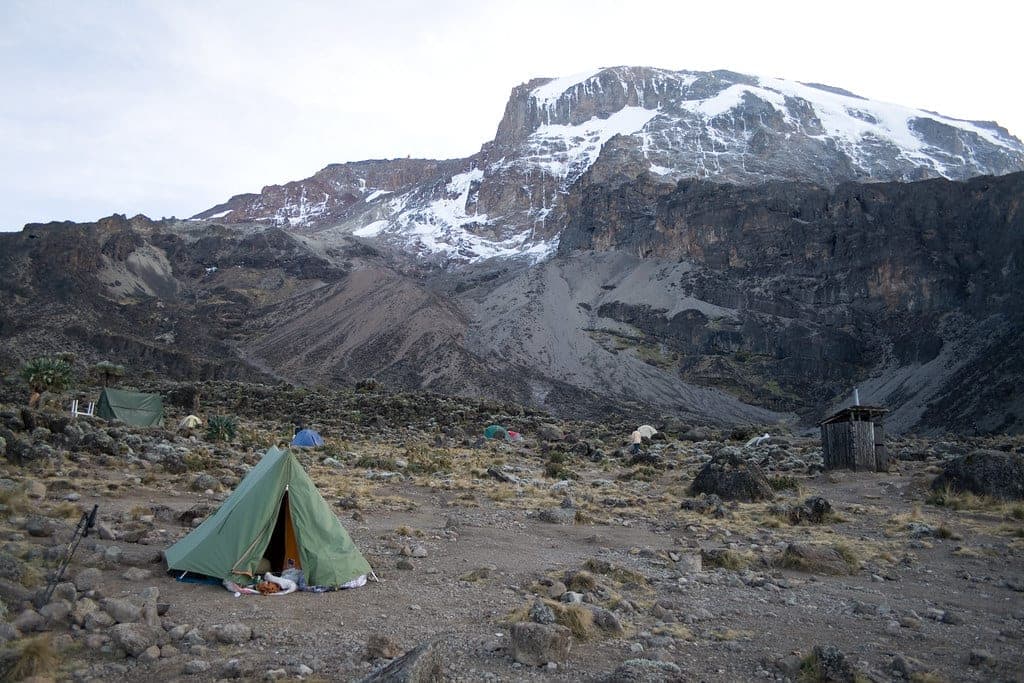
Climbing Kilimanjaro via the Machame Route: The Whiskey Route Explained
Categories
Tags
The Machame Route is Kilimanjaro's most popular camping route, usually walked in 6 or 7 days from Machame Gate on the mountain's southern side to Uhuru Peak at 5,895 m. Nicknamed the Whiskey Route, it is steeper than Marangu but has a better acclimatization profile because it climbs high and sleeps low, notably at Lava Tower and the Barranco Wall. Most operators recommend the 7-day version for a meaningfully higher summit chance. Budget climbs typically start around US$1,800-2,200 including park fees; the best months are January-February and June-October.
The Machame Route, plainly
The Machame Route — the "Whiskey Route", against Marangu's "Coca-Cola" — starts at Machame Gate (about 1,800 m) on Kilimanjaro's southern flank and reaches Uhuru Peak at 5,895 m, the highest point in Africa. It is the most-walked camping route on the mountain for a simple reason: it packs the best scenery-per-day of the classic lines, and its shape happens to be good for acclimatization.
You sleep in tents the whole way (your crew carries and pitches them), ascend through five distinct climate zones, and descend by a different path — the Mweka trail — so almost nothing is walked twice.
Park fees and permit rules below were accurate at the time of writing. Kilimanjaro National Park revises its tariffs periodically — confirm current figures with your operator before you budget.
The route, day by day
A typical 7-day itinerary:
- Machame Gate → Machame Camp (~3,000 m). A long first day through montane rainforest — colobus monkeys, moss, usually mud.
- Machame Camp → Shira Camp (~3,840 m). Out of the forest onto heather moorland, with the first big views of Kibo, Kilimanjaro's summit cone.
- Shira → Lava Tower (~4,630 m) → Barranco Camp (~3,960 m). The classic climb-high, sleep-low day, and the one that does the most for your acclimatization. Expect to feel the altitude at Lava Tower; descending to Barranco usually clears it.
- Barranco Wall → Karanga Camp (~4,035 m). The Wall is a hands-and-feet scramble, over in about an hour, followed by rolling valleys.
- Karanga → Barafu Camp (~4,670 m). A short day to the summit camp. Eat, hydrate, sleep by early evening.
- Summit night: Barafu → Uhuru Peak (5,895 m) → Mweka Camp. Departure around midnight, roughly six to eight hours to the crater rim at Stella Point, another 45 minutes along the rim to Uhuru for sunrise, then a long descent — 2,800 vertical metres down — the same day.
- Mweka Camp → Mweka Gate. Three to four hours down through the forest, certificates at the gate.
The 6-day version deletes the Karanga night and runs days 4 and 5 together — cheaper, but it puts a long day immediately before summit night, which is exactly where you don't want one.
Why its acclimatization profile works
Kilimanjaro's difficulty is not the walking, it is the speed of ascent: you gain nearly 4,000 m in under a week, which is faster than high-altitude doctrine would ever recommend. Machame mitigates this better than most short routes because day 3 takes you to 4,630 m and back down to sleep at 3,960 m. That single saw-tooth is worth a lot; it is the main reason Machame's summit rates beat Marangu's 5-day itinerary by a wide margin in operator statistics.
Walk slowly — your guides will chant pole pole (slowly, slowly) until it loses all meaning — drink three to four litres a day, and tell your guide about any symptoms early. Headaches at altitude are common; getting worse while ascending is the signal that matters.
What it costs, honestly
The government takes a substantial, non-negotiable share: conservation fees, camping fees, and rescue fees add up to several hundred US dollars per climber for a week, before an operator pays a single wage. Add a licensed guide, assistant guides, a cook, and roughly three porters per climber, plus food and equipment, and a realistic supported 7-day Machame climb starts around US$1,800–2,200 at the value end.
Budget separately for tips — customary guidance is in the region of US$250–350 per climber for the whole crew on a week-long climb — plus flights, visas, and a night in Moshi or Arusha either side.
For a live example of real pricing, the 7 Days Climb Kilimanjaro — Machame Route currently listed on Adventure Knit runs the full itinerary above with a professional mountain crew — dates and the current price are on the listing.
Packing notes that matter
Layers over bulk: summit night can sit around −10 to −20 °C with wind, while the forest days are warm and wet. Non-negotiables: broken-in waterproof boots, a warm (comfort-rated well below freezing) sleeping bag, insulated jacket, waterproof shell, headlamp with spare batteries, and water storage that won't freeze on summit night (insulated bladder hose or bottles carried inside your jacket). Most operators rent quality gear in Moshi — ask rather than buying once-in-a-lifetime kit.
Machame, Marangu or Lemosho?
- Machame — best all-rounder: scenery, acclimatization shape, cost. Busier than Lemosho.
- Marangu — the only route with hut accommodation, gentler gradients, but up-and-down the same trail and a weaker acclimatization profile on the short itinerary.
- Lemosho — starts further west, quieter early days, one more day on the mountain, generally the highest summit rates. Usually a little dearer.
We compare all three in detail — day counts, summit rates, costs — in Kilimanjaro's routes compared. Everything currently bookable in the country is on the Tanzania tours page, and the companion guides live on our Tanzania hub.
The practical checklist
- Book the 7-day version unless you have recent high-altitude experience.
- Confirm what the price includes: park fees, transfers, tents, meals, and crew wages should all be in it.
- Train with long back-to-back hill days, not gym sessions.
- Arrange travel insurance that explicitly covers trekking to 6,000 m — many standard policies stop at 4,500 m.
- Arrive in Tanzania at least one full day before the climb; a same-day start after long-haul flights is a bad idea.
Frequently Asked Questions
It is a non-technical trek — no ropes or climbing skills — but a genuinely hard one: five to seven hours of walking most days, a scramble up the Barranco Wall, and a summit night that starts around midnight and climbs roughly 1,200 vertical metres in the cold and dark. Fitness helps, but altitude is the real difficulty; the 7-day itinerary exists precisely to manage it.
Seven. The extra night splits the approach to the summit camp and gives your body one more acclimatization cycle, and operators consistently report meaningfully higher summit rates on the 7-day version. The 6-day variant saves money but stacks two demanding days back-to-back right before the summit push.
Tanzania's park, camping, and rescue fees alone run to several hundred US dollars per climber for a week on the mountain, which is why realistic operator prices for a supported 7-day climb generally start around US$1,800-2,200 and rise with service level. Quotes far below that usually mean cut corners on crew wages, food, or equipment. Fees change — confirm current pricing with your operator.
A steep 250-odd-metre lava cliff climbed on the morning after Lava Tower. It looks alarming from camp but is a hands-and-feet scramble on a well-worn path rather than technical climbing, and most trekkers top out in about an hour. One short move, the so-called Kissing Rock, asks you to hug the cliff briefly.
The two dry windows: January to early March, and June to October. June-October is coldest and busiest; January-February tends to be a little warmer with quieter trails. The long rains of April-May are best avoided — trails are muddy and views vanish.
Yes — Kilimanjaro National Park requires all climbers to be accompanied by a licensed guide, and every climb is supported by a crew of porters and a cook. Solo unsupported ascents are not permitted.
Adventure Knit Editorial
Destination research compiled and fact-checked by the Adventure Knit editorial team from published sources, operator itineraries, and official tourism boards. Spot something out of date? Tell us at hello@adventureknit.com.
Related Stories
 Tanzania
Kilimanjaro's Lemosho Route: The Quiet Way to the Roof of Africa
A practical guide to Kilimanjaro's Lemosho Route: the 8-day itinerary, the Shira Plateau crossing, why its summit rates are the highest of the classic routes, costs and packing.
 Tanzania
Kilimanjaro's Marangu Route: The Hut Route, Honestly Assessed
A practical guide to Kilimanjaro's Marangu Route: the only route with huts, the real story behind the 'easiest route' label, why 6 days beats 5, costs and packing.
 Tanzania
Kilimanjaro Routes Compared: Machame vs Marangu vs Lemosho
Machame, Marangu or Lemosho? A side-by-side comparison of Kilimanjaro's three classic routes: days, summit rates, accommodation, crowds and cost — and which climber each one suits.
Enjoyed this article?
Explore more stories from our adventures around the world