
Planning a Uganda Gorilla and Chimp Safari: Permits, Seasons and Real Costs
Categories
Tags
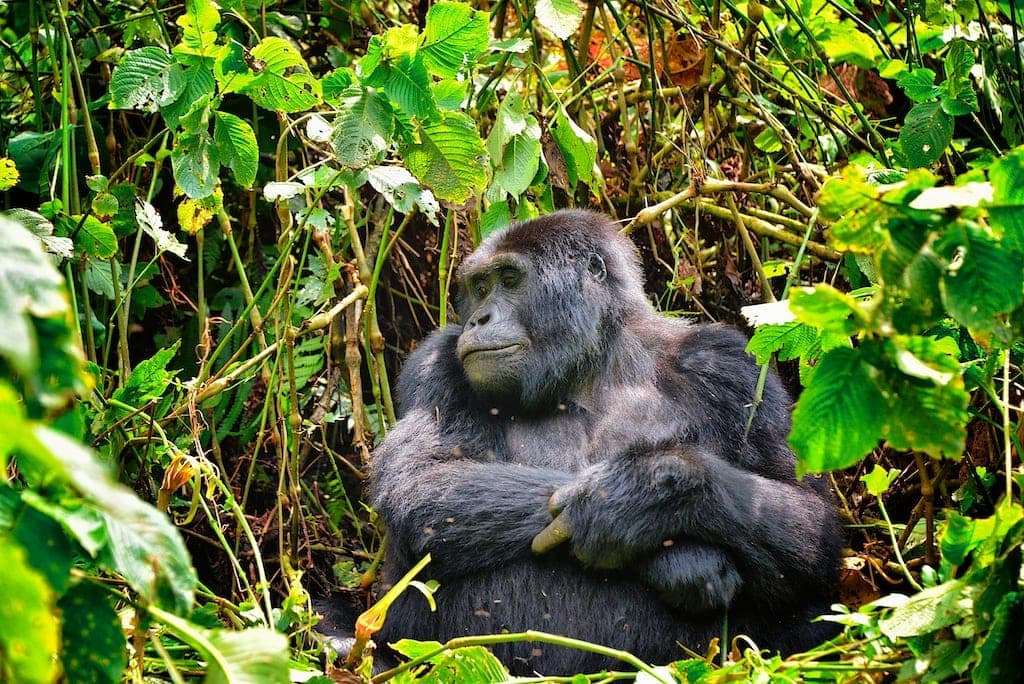
Uganda is the only country where you can track mountain gorillas and chimpanzees in the same week without crossing a border. Recent permit fees for foreign non-residents are around 800 US dollars for gorilla trekking in Bwindi and 250 US dollars for chimpanzee tracking in Kibale, with permits — not flights — the real planning constraint. Ten days is the comfortable trip length for the full Entebbe-Kibale-Queen Elizabeth-Bwindi circuit, and the drier months of June-September and December-February are the most popular time to go.
Planning a Uganda gorilla and chimp safari
Uganda is the only country where you can track mountain gorillas and chimpanzees in the same week without crossing a border, and do it for meaningfully less than the equivalent trip in Rwanda. The planning problem is not choosing what to see — it is permits, driving distances, and sequencing.
This guide covers the decisions that actually change the shape and cost of the trip.
Permit prices and park rules below were accurate at the time of writing. The Uganda Wildlife Authority (UWA) reviews its tariff periodically, so confirm current figures at ugandawildlife.org or through your operator before committing to a budget.
Permits are the constraint, not flights
Everything else in a Uganda itinerary bends around permit availability.
| Activity | Where | Recent fee (foreign non-resident) | Time with the animals |
|---|---|---|---|
| Gorilla trekking | Bwindi, Mgahinga | ~US$800 | 1 hour |
| Gorilla habituation | Bwindi (Rushaga) | ~US$1,500 | Up to 4 hours |
| Chimpanzee tracking | Kibale | ~US$250 | 1 hour |
| Chimpanzee habituation | Kibale | ~US$300 | Full day |
Each habituated gorilla family takes a maximum of eight visitors per day, which is the hard ceiling on supply. In the peak months — June to September and December to February — permits for the popular sectors are commonly gone months ahead. If your dates are fixed, secure permits first and build the rest of the trip around them.
For comparison: a gorilla permit in Rwanda has sat at US$1,500. Rwanda's advantage is proximity — Volcanoes National Park is a two-to-three-hour drive from Kigali, against a long day's drive to Bwindi from Entebbe. Uganda's advantage is price, and the fact that the same trip gives you chimpanzees and a full savannah park as well.
Which Bwindi sector to trek from
Bwindi is not one trailhead. It has four:
- Buhoma (north) — the original sector, the widest lodge choice, good road access from Queen Elizabeth National Park.
- Ruhija (east) — high and cool, quieter, good for pairing with Bwindi's birding.
- Rushaga (south) — the most habituated families, and the only sector offering the gorilla habituation experience.
- Nkuringo (south-west) — famously steep, spectacular views, the hardest trekking.
Your permit is issued for a specific sector, so book your lodge only once you know which one you have. Turning up in Buhoma with a Rushaga permit means a three-hour transfer before an early briefing.
What the trek is actually like
Briefing at the trailhead is around 07:30–08:00. From there, trekking runs anywhere from 30 minutes to eight hours depending on where the family has moved overnight. Bwindi ranges from about 1,160 m to 2,607 m, and "impenetrable" is not marketing — much of the going is off-path, through wet vegetation, on steep ground.
Once you reach the family, you get one hour, at a nominal distance of 7 metres, wearing a mask. Rangers enforce both.
Two things make a large difference to how the day goes:
- Hire a porter. They cost around US$20 plus a tip, they carry your pack, they haul you up the steep sections, and the money goes into the communities that live with the gorillas. There is no reason not to.
- Be honest about fitness. Sedan-chair carries are available and can be arranged in advance for a few hundred dollars, but they need to be booked, not improvised at the trailhead.
The minimum age for gorilla trekking is 15. For chimpanzee tracking in Kibale it is 12.
A realistic route and how long it takes
Ten days is the comfortable length for the full circuit; seven is workable if you fly one leg.
A common sequence:
- Entebbe — arrive, overnight by the lake.
- Kibale (2 nights) — a five-to-six-hour drive west; chimpanzee tracking from Kanyanchu, plus the Bigodi wetland walk.
- Queen Elizabeth National Park (2 nights) — game drives, a Kazinga Channel boat, and the Ishasha sector's tree-climbing lions on the way south.
- Bwindi (2–3 nights) — gorilla trekking, community visits, forest walks.
- Return — either the long drive back to Entebbe, or a scheduled light aircraft from Kihihi or Kisoro (roughly 1.5 hours), which buys back a full day.
Roads are better than their reputation but distances are long and average speeds low. Assume any drive will take longer than the map suggests, and refuse itineraries that stack a long transfer onto a trekking day.
When to go
The drier stretches — June to September and December to February — mean firmer trails, easier photography and higher permit demand. The wetter months (March to May, October to November) bring mud and afternoon downpours, but also thinner crowds, greener forest, and better odds on last-minute permits. Gorillas and chimps are tracked year-round in every month; there is no closed season.
What it costs
Beyond permits, the swing factor is accommodation. Bwindi and Kibale both run everything from community bandas to lodges at several hundred dollars a night, and vehicle-with-guide hire for a private trip is typically the second-largest line after permits.
A useful way to sanity-check a quote: add up the permits (a gorilla and a chimp permit alone is roughly US$1,050 per person at recent rates), then look at what remains for vehicle, guide, lodges, park entry and meals across the number of nights. If the remainder looks implausibly small, something in the itinerary is being cut.
Entry requirements and health
- Visa: apply for Uganda's e-visa in advance, or the East Africa Tourist Visa if you are also visiting Kenya or Rwanda.
- Yellow fever: a vaccination certificate is required on entry.
- Malaria: Uganda is a malaria-risk country throughout; take prophylaxis and repellent seriously.
- Insurance: make sure your policy covers trekking at altitude and, ideally, medical evacuation. Bwindi is a long way from a hospital.
- Do not trek while ill. Great apes catch human respiratory infections, and rangers can and do turn away visibly sick visitors.
Booking it
Both Uganda trips currently listed on Adventure Knit are built around this circuit and are run by a local operator, not a reseller:
- Gorillas & Chimps Luxury Safari — an hour with gorillas in Bwindi, an hour with chimpanzees in Kibale, luxury lodges throughout.
- Uganda Ultimate Luxury Safari — the same primate encounters plus Murchison Falls, Queen Elizabeth and Lake Mburo for Big Five game drives and walking safaris.
Everything bookable in the country sits on the Uganda tours page, and the companion guides — including the Kibale chimpanzee tracking guide and the Bwindi gorilla trekking guide — are collected on our Uganda hub.
Frequently Asked Questions
A Uganda gorilla trekking permit has recently cost about 800 US dollars for foreign non-residents, against roughly 1,500 US dollars in Rwanda. Rwanda's advantage is proximity — Volcanoes National Park is a two-to-three-hour drive from Kigali, versus a long day's drive from Entebbe to Bwindi. Uganda's advantage is price, plus the same trip can include chimpanzees in Kibale and a full savannah park.
Ten days is the comfortable length for the full circuit of Entebbe, Kibale for chimpanzees, Queen Elizabeth National Park for game drives, and Bwindi for gorillas; seven days is workable if you fly one leg, such as the roughly 1.5-hour light aircraft from Kihihi or Kisoro back toward Entebbe. Distances are long and average speeds low, so avoid itineraries that stack a long transfer onto a trekking day.
Each habituated gorilla family takes a maximum of eight visitors per day, which is the hard ceiling on supply. In the peak months of June to September and December to February, permits for popular Bwindi sectors are commonly gone months ahead. If your dates are fixed, secure permits first and build the rest of the trip around them; wetter months offer better odds on last-minute permits.
Bwindi has four trailheads: Buhoma in the north has the widest lodge choice and good road access from Queen Elizabeth National Park; Ruhija is high, cool, and quieter with good birding; Rushaga in the south has the most habituated families and is the only sector offering the gorilla habituation experience; Nkuringo is famously steep with spectacular views and the hardest trekking. Permits are issued for a specific sector, so book your lodge only once you know which one you have.
The minimum age for gorilla trekking is 15, while chimpanzee tracking in Kibale has a minimum age of 12. During the gorilla encounter itself, visitors get one hour with the family at a nominal distance of 7 metres while wearing a mask, and rangers enforce both rules.
A gorilla and a chimp permit alone total roughly 1,050 US dollars per person at recent rates. Beyond that, accommodation is the biggest swing factor, ranging from community bandas to lodges at several hundred dollars a night, with private vehicle-and-guide hire typically the second-largest cost after permits. A useful sanity check on any quote is to subtract the permits and see whether what remains plausibly covers vehicle, guide, lodges, park entry, and meals.
Adventure Knit Editorial
Destination research compiled and fact-checked by the Adventure Knit editorial team from published sources, operator itineraries, and official tourism boards. Spot something out of date? Tell us at hello@adventureknit.com.
Related Stories
 Uganda
Queen Elizabeth National Park: The Kazinga Channel, Ishasha's Tree-Climbing Lions and Uganda's Busiest Ecosystem
A practical guide to Queen Elizabeth National Park, Uganda: the Kazinga Channel boat cruise, Kasenyi's lions, the tree-climbing lions of Ishasha, crater lakes, and how the park bridges Kibale and Bwindi on a Uganda safari.
 Uganda
Murchison Falls National Park: Where the Nile Explodes Through a Seven-Metre Gap
A practical guide to Murchison Falls National Park, Uganda: the boat cruise to the falls, game drives on the northern bank, the top-of-the-falls hike, Ziwa's rhinos en route, and how it fits a Uganda safari.
 Uganda
Chimpanzee Tracking in Kibale Forest, Uganda: How It Actually Works
A practical guide to chimpanzee tracking in Kibale National Park, Uganda: permits, the two daily departures, the habituation experience, what to pack, and how it fits a gorilla safari.
Enjoyed this article?
Explore more stories from our adventures around the world