
Lake Manyara National Park: Tree-Climbing Lions, Flamingos and the Groundwater Forest
Categories
Tags
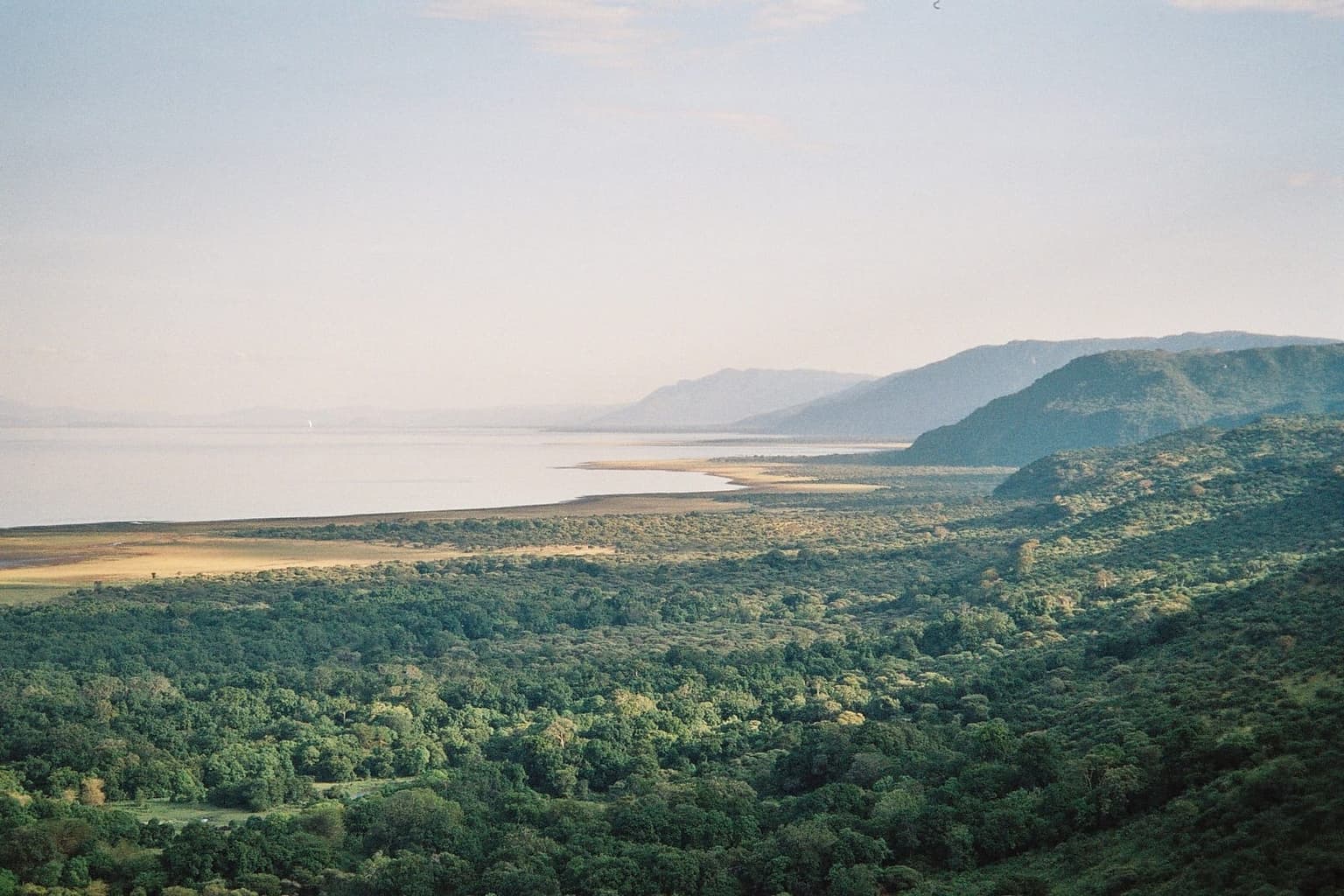
Lake Manyara National Park sits under the Rift Valley escarpment about 1.5-2 hours' drive from Arusha, squeezed between the cliff and a shallow alkaline lake that can cover most of its roughly 330 km². It is known for three things: lions that habitually rest in trees, large flamingo flocks on the soda lake when water levels suit, and a lush groundwater forest full of elephants, baboons and blue monkeys. It works best as a half-day to one-day stop between Arusha and Ngorongoro on a northern-circuit safari; the June-October dry season gives the most reliable game viewing.
A small park with an outsized reputation
Lake Manyara is the smallest stop on Tanzania's northern circuit — a strip of land rarely more than a few kilometres wide, pinned between the rust-red wall of the Rift Valley escarpment and a shallow soda lake that can flood most of the park's roughly 330 km². Ernest Hemingway called this corner of Tanzania "the loveliest I had seen in Africa", and the compression is exactly what makes it work: within a single half-day drive you pass through groundwater forest, acacia woodland, open floodplain and lakeshore.
Its fame rests on two images. The first is lions draped along acacia branches — Manyara's prides made tree-climbing famous, for reasons still debated (flies, heat, vantage, habit). The second is the lake itself turning pink with lesser flamingos when water and algae conditions align. Neither is guaranteed on any given day; both are unforgettable when they land.
What a game drive here is like
You enter through the groundwater forest — an oddity this far from a river, fed by springs seeping from the escarpment base. It feels closer to Uganda than to the Serengeti: enormous fig and mahogany trees, blue monkeys, and olive baboon troops that rank among the largest anywhere. Elephants browse here at close range.
The forest opens onto floodplain, where buffalo, zebra, wildebeest and giraffe graze against the escarpment backdrop, and hippo pools mark the lake's inflow. Along the shoreline, birdlife takes over: pelicans, storks, spoonbills and — conditions permitting — flamingo flocks. Over 400 species have been recorded, making Manyara one of the circuit's best birding stops.
When to go
- June–October (dry season): animals concentrate toward the lake and the springs; the forest thins enough to see into. The most reliable overall game viewing.
- November–May (green season): the forest is at its lushest, waterfalls run off the escarpment, and flamingo numbers often peak — at the cost of some dispersed game and muddier tracks.
Manyara is less brutally seasonal than Tarangire; a green-season visit here still works.
How it fits an itinerary
Manyara's slot is the bridge day: 1.5–2 hours from Arusha on the way to the Ngorongoro highlands, it gives you a first game drive without a long transfer, and most itineraries continue to Karatu or the crater rim the same evening.
That is precisely how the 8 Days Deluxe Lodge Safaris: A Tanzania Northern Circuit currently listed on Adventure Knit uses it — Manyara's tree-climbing lions, then the Serengeti and the Ngorongoro Crater, with lodge stays throughout. The 6 Days Tanzania Experience in Luxury Tented Camp runs the same circuit from premium tented camps and adds Tarangire's baobab country.
Everything currently bookable in the country is on the Tanzania tours page; companion guides to Serengeti, Ngorongoro, Tarangire and the full northern circuit are on our Tanzania hub.
Practical notes
- Half a day is enough for the classic northern loop of the park — don't let an itinerary sell it to you as a full destination unless it includes the southern reaches.
- Park fees are charged per 24 hours and revised periodically; confirm they're included in your quote.
- Morning beats afternoon in the forest — baboons and elephants are active, light cuts through the canopy, and tour traffic is thinner.
- Keep windows up around baboons at the gate and picnic sites; Manyara's troops are professional opportunists.
- Flamingos are a bonus, not a promise — if they are your priority, ask your operator about current lake conditions before locking the itinerary.
Frequently Asked Questions
Nobody is entirely certain — escaping biting flies and heat at ground level, getting a lookout, or simply a learned habit passed down within prides are the usual explanations. Manyara's prides made the behaviour famous, though it is never guaranteed on a given day; the same habit is seen in the Serengeti and in Uganda's Ishasha sector.
Often, and sometimes in spectacular numbers — the alkaline lake draws lesser flamingos to feed when water levels and algae conditions suit, typically looking their best in and around the wet months. The flocks move between Rift Valley soda lakes, so numbers vary from visit to visit; treat a pink horizon as a bonus rather than a promise.
A half day covers the northern circuit of the park well — groundwater forest, the floodplain and the lakeshore — which is why most itineraries pair it with a drive onward to Karatu or the Ngorongoro rim the same day. A full day adds the quieter south and the Maji Moto hot springs.
About 125 km — roughly 1.5 to 2 hours on good tarmac, en route to Ngorongoro and the Serengeti, which is exactly why it earns its slot on northern-circuit itineraries.
Elephants and olive baboons (the park's troops are enormous) are near-certain, plus hippos, giraffes, zebra, wildebeest, buffalo and blue monkeys in the forest. Lions are present but sparser than in Ngorongoro or the Serengeti — the tree-climbing sighting is a highlight precisely because it isn't guaranteed.
Adventure Knit Editorial
Destination research compiled and fact-checked by the Adventure Knit editorial team from published sources, operator itineraries, and official tourism boards. Spot something out of date? Tell us at hello@adventureknit.com.
Related Stories
 Tanzania
Tarangire National Park: Baobabs, Big Elephant Herds and the Quiet Corner of the Northern Circuit
A practical guide to Tarangire National Park, Tanzania: the dry-season elephant gatherings along the Tarangire River, ancient baobabs, when to go, and how it fits a Serengeti-Ngorongoro safari.
 Tanzania
Tanzania's Northern Circuit: How to Plan the Classic Safari Loop
The Tanzania Northern Circuit explained: how Tarangire, Lake Manyara, Serengeti and Ngorongoro fit together, how many days each deserves, lodge vs tented camp vs budget camping, and sample itineraries.
 Tanzania
Serengeti Migration Tanzania: The Great Wildlife Spectacle
Expert guide to witnessing the Great Migration in Serengeti National Park, Tanzania. Wildebeest migration, river crossings, predator action, and best viewing times.
Enjoyed this article?
Explore more stories from our adventures around the world