
Tanzania's Northern Circuit: How to Plan the Classic Safari Loop
Categories
Tags
Tanzania's Northern Circuit is the classic safari loop out of Arusha linking Tarangire, Lake Manyara, the Serengeti and the Ngorongoro Crater. The workable minimum is 4 days (Tarangire, Serengeti, Ngorongoro); 6-8 days is the comfortable version that adds Lake Manyara and real time on the Serengeti plains. Accommodation sets the price tier: budget camping safaris run roughly US$250-350 per person per day, mid-range lodges and tented camps US$350-550, and luxury US$600+. The June-October dry season is the most reliable; January-February adds the wildebeest calving in the southern Serengeti.
The loop, in one paragraph
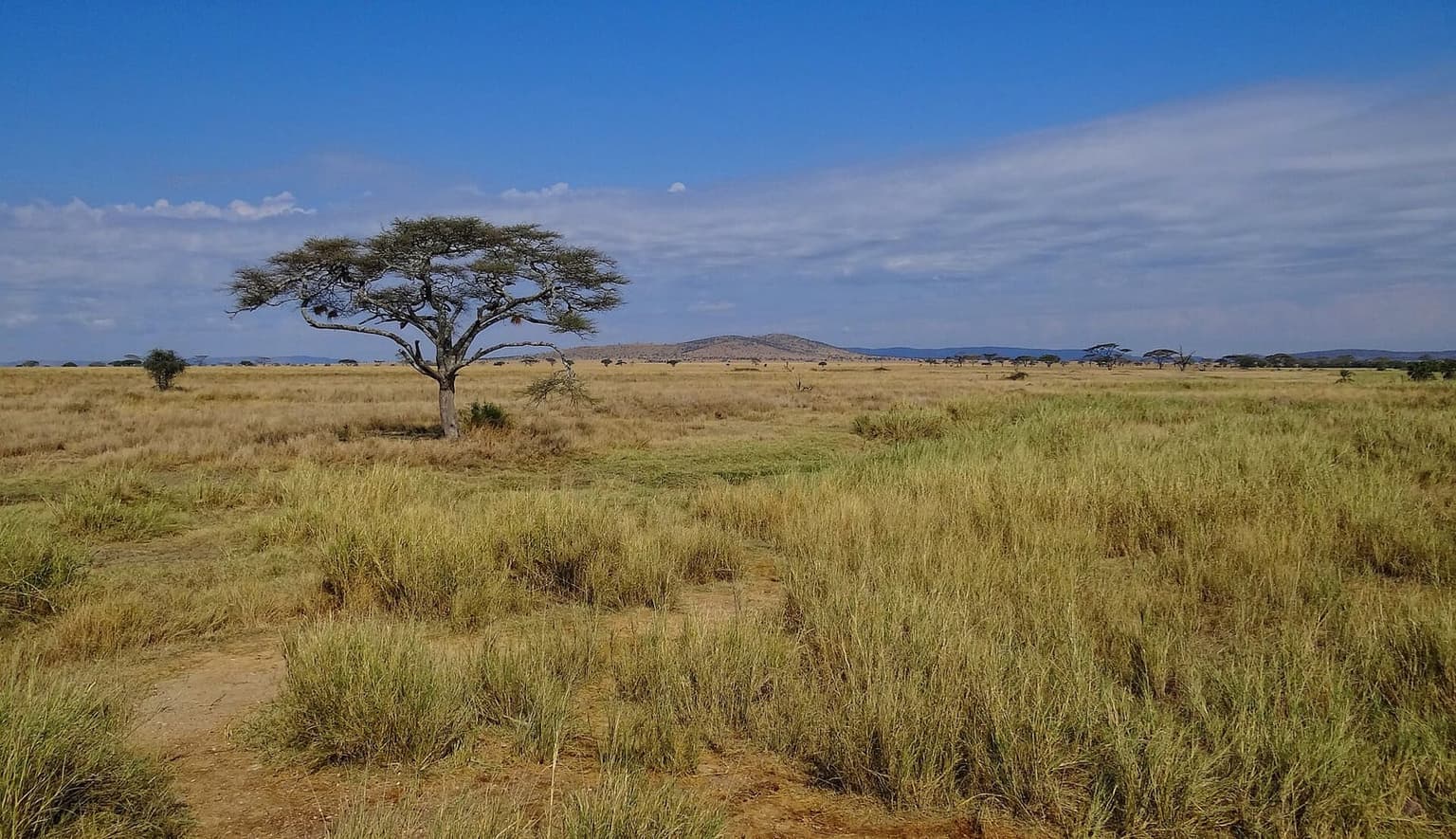
Fly into Kilimanjaro International, stage in Arusha, and the classic circuit unrolls westward: Tarangire (two hours away — baobabs and the dry season's great elephant gatherings), Lake Manyara (the Rift-wall park of groundwater forest, tree-climbing lions and flamingos), up through Karatu to the Ngorongoro Crater (a collapsed caldera holding the densest big-game viewing in Africa), and on across the highlands to the Serengeti (endless plains and the Great Migration). Then back the way you came. It is the most complete short safari on the continent, which is why "Tanzania safari" almost always means this.
How many days each park deserves
- Tarangire — 1 day (2 with the quiet south). At its extraordinary best June–October.
- Lake Manyara — half a day, as the bridge between Arusha and the highlands.
- Ngorongoro Crater — 1 descent. Crater time is limited and fees are charged per descent, but the caldera floor packs more per hour than anywhere else: resident Big Five including some of Tanzania's last black rhino.
- Serengeti — 2 to 3 nights. The park is vast (roughly 15,000 km²) and where the migration is depends on the month; one night is a drive-through, not a visit.
Four days covers Tarangire–Serengeti–Ngorongoro at a brisk pace. Six days is the comfortable standard. Eight days is the version that stops feeling like a transfer schedule.
The three price tiers
Accommodation, not wildlife, sets the budget — everyone shares the same parks and the same substantial park fees:
- Budget camping (~US$250–350 pp/day): public campsites, crew-cooked meals, the same game drives as everyone else. The best wildlife-per-dollar in Africa.
- Mid-range lodges & tented camps (~US$350–550): en-suite rooms or walk-in canvas with real beds and hot showers.
- Luxury (US$600+): premium tented camps and lodges in prime locations, small-group or private vehicles, finer everything.
Two live examples currently listed on Adventure Knit bracket the range: the 4 Days Budget Safari — Tarangire, Serengeti & Ngorongoro runs the essential loop at roughly US$280 per day, while the 8 Days Deluxe Lodge Safaris: A Tanzania Northern Circuit does the full circuit from lodges with private vehicles. Between them, the 6 Days Tanzania Experience in Luxury Tented Camp covers all four parks from premium canvas. A cost breakdown across all tiers is in our Tanzania safari cost guide.
When to go
- June–October: the dry-season default. Game concentrates at water, grass is low, roads are dry. Migration herds are in the central-to-northern Serengeti, with river crossings typically July–September.
- January–February: calving season on the southern Serengeti plains — hundreds of thousands of wildebeest calves and the predator activity that follows. A short dry spell, quieter than July.
- November–December & March: shoulder rains; green, cheaper, patchier.
- April–May: the long rains. Lowest prices, fullest rivers, hardest roads.
Combining with Kilimanjaro or Zanzibar
The circuit pairs naturally: climbers come off Kilimanjaro into Arusha and roll straight onto safari; beach-bound travellers fly Arusha → Zanzibar afterward. If you're doing both climb and safari, put the climb first — game drives are the recovery your legs will ask for.
Everything currently bookable in the country is on the Tanzania tours page, and all our Tanzania guides live on the Tanzania hub.
The practical checklist
- Count nights per park, not parks per trip — under four days, cut a park.
- Confirm the quote includes park fees, crater fees, vehicle, fuel and meals; these are the bulk of real cost.
- Book June–October and January–February dates months ahead; camps are finite.
- Pack layers — highland mornings at the crater rim (2,300 m) are genuinely cold, middays on the plains are hot.
- Budget tips for your driver-guide and crew; customary guidance is in the region of US$10–20 per traveller per day.
Frequently Asked Questions
Four core stops: Tarangire (dry-season elephant herds and baobabs), Lake Manyara (groundwater forest, tree-climbing lions, flamingos), the Serengeti (the plains and the Great Migration), and the Ngorongoro Crater (the collapsed caldera with year-round Big Five density). Arusha is the gateway town; some itineraries add Arusha National Park as a warm-up.
Four days is a real, workable minimum covering Tarangire, the Serengeti and Ngorongoro with one night in each area. Six days makes the driving humane and adds Lake Manyara; eight days gives the Serengeti the two-to-three nights it deserves. Under four days, drop a park rather than compressing all of them.
June to October for the dry-season standard: concentrated game, dry roads and the migration in the northern Serengeti mid-year. January-February is the strong alternative — calving season fills the southern Serengeti plains with wildebeest and predators. April-May is the long rains: cheapest and greenest, with some camps closed and black-cotton roads at their worst.
In practice, yes. Distances are long, park tracks punish ordinary vehicles, Ngorongoro requires appropriate vehicles for the crater road, and a professional driver-guide is how you actually find wildlife. Nearly all visitors travel in an operator's 4x4 safari vehicle with a pop-up roof.
Budget camping safaris typically run about US$250-350 per person per day; mid-range lodge and tented-camp trips about US$350-550; luxury from US$600 upward. Park and crater fees are a large fixed share of every tier and change periodically — always confirm they are included in a quote.
Adventure Knit Editorial
Destination research compiled and fact-checked by the Adventure Knit editorial team from published sources, operator itineraries, and official tourism boards. Spot something out of date? Tell us at hello@adventureknit.com.
Related Stories
 Tanzania
Lake Manyara National Park: Tree-Climbing Lions, Flamingos and the Groundwater Forest
A practical guide to Lake Manyara National Park, Tanzania: the famous tree-climbing lions, flamingo flocks on the soda lake, the groundwater forest, and how a half-day here fits a northern-circuit safari.
 Tanzania
What a Tanzania Safari Really Costs: Budget to Luxury, Line by Line
An honest breakdown of Tanzania safari costs: where the money actually goes, per-day pricing for budget camping, tented camps and luxury lodges, the fees nobody can discount, and how to spot a quote that cuts corners.
 Tanzania
Tarangire National Park: Baobabs, Big Elephant Herds and the Quiet Corner of the Northern Circuit
A practical guide to Tarangire National Park, Tanzania: the dry-season elephant gatherings along the Tarangire River, ancient baobabs, when to go, and how it fits a Serengeti-Ngorongoro safari.
Enjoyed this article?
Explore more stories from our adventures around the world